
Is Starting a Bakery Right for You?
Opening a bakery can look exciting from the outside. You will have creative freedom, beautifully displayed desserts, loyal customers, and the chance to build something of your own.
But behind every successful bakery is a business that demands consistency, planning, and long working hours.
Dan Mesches, President and CEO of Sprinkles, summed it up well when talking about the realities of hospitality businesses in a Restrocast episode. “My lesson to folks that are early in this business is be here if you have a passion to be here, if you’re not, use it for your stepping stone, but find something else. If you don’t love this business, you’re going to hate this business.”
Before you start looking for locations or buying equipment, it’s important to ask a more practical question: Is this the right business for you? To find out the answer, here are a few things to consider-
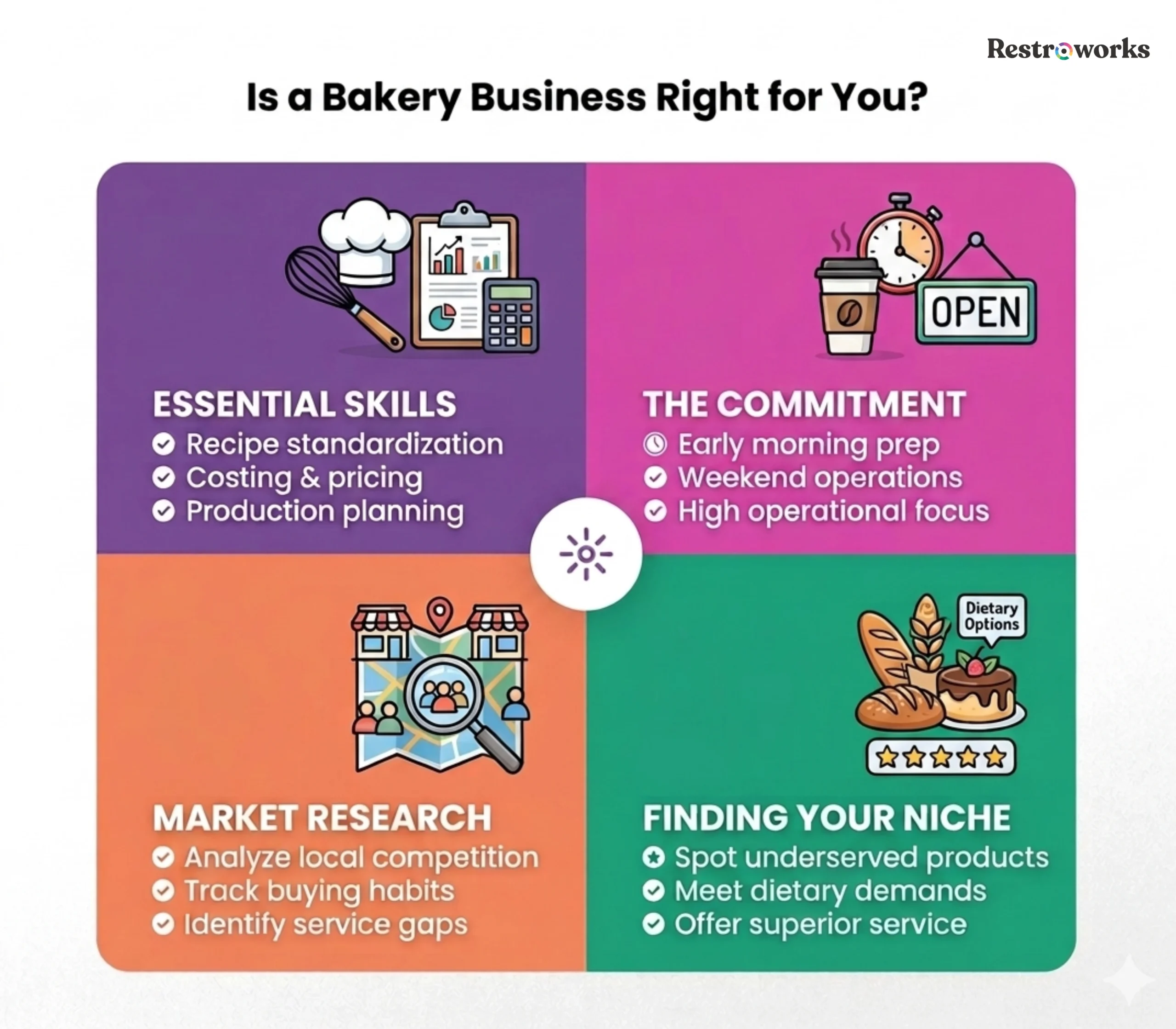
Skills and Experience Needed
You don’t need formal culinary training to start a bakery, but what you do need is a strong understanding of baking fundamentals and everyday operations. Some important skills include-
- Baking and recipe standardization
- Time management and production planning
- Inventory and ingredient management
- Basic food costing and pricing
- Customer service and communication
Bonus points if you have experience in a commercial kitchen, café, or bakery, as it can help manage high-volume production. Many bakery owners also start small from home and learn gradually.
Time and Financial Commitment
A bakery is one of the more operationally demanding food businesses. You’ll often start kitchen prep early in the morning and work through weekends.
In addition to baking, you will spend time on operational aspects such as purchasing ingredients, managing orders and deliveries, communicating with customers, marketing, and staff coordination.
Then you have to think about the financial commitment, which will depend on the type of bakery you plan to open. A home bakery can operate on a small investment, while a retail bakery with dine-in space, commercial equipment, and staff will need a much larger budget.
Market and Competitor Research
One of the biggest mistakes you can make is assuming demand exists without properly validating it. Just because a bakery performs well in one area doesn’t mean the same concept will work everywhere.
Before finalizing your business idea, spend time understanding your local market. Start by observing the market demand and competition across factors like-
- What types of bakeries already exist nearby
- Which products do customers buy most frequently
- Local pricing patterns, peak demand timings, and customer dietary preferences
- Delivery demand versus walk-in traffic in your area
- Competitor product variety, pricing strategy, and customer reviews
- Packaging quality, online ordering experience, wait times, and overall service quality
This research helps you identify market gaps. For example, your area may already have multiple celebration cake businesses, but very few specializing in artisan breads, desserts, or healthy options.
Understanding demand early can help you choose the right niche, create a more focused menu, and avoid entering an overcrowded segment without a clear differentiator.
Types of Bakery Businesses
The bakery model you choose will affect your costs, operations, staffing, and customers. You can choose from several bakery formats, but the choice should fit your startup costs, production capacity, and long-term business goals. Not sure where to get started? Check out the Build Your Bakery Podcast with Jonica Thompson to get into the A to Z of starting a bakery.
A. Home Bakery
For 43% of home bakers, baking brings them a sense of comfort. And with a home bakery, many are now turning their passion into a profitable business. You can operate from a residential kitchen and focus on made-to-order products such as custom cakes, cookies, or specialty baked goods.
This format allows you to start small and build a customer base before expanding into larger operations. Take it from Chef Amanda Schonberg, who helps bakery businesses understand how to start and grow the business and scale and expand with digital products in the Baking for Business Podcast.
- Pros: Home bakeries feature lower startup costs, flexible working hours, and the ability to start small.
- Cons: Since you’re operating from home, the production capacity is limited, which can make it tricky to scale.
- Ideal For: Bakers with limited capital who want to test the market with minimal risk
B. Online-Only Bakery
An online-only bakery operates through its website, social media, or delivery platforms without a customer-facing retail space. Customers can visit these platforms and order treats to be delivered to their doorstep.
- Pros: Without a physical storefront, the bakery has low overhead and access to a broader customer base. You can also operate from home or a commercial space.
- Cons: The operations rely on shipping and delivery logistics and face tough competition with established e-commerce platforms.
- Ideal For: Bakers who don’t want to invest in a physical storefront and are good at selling online.
The Protein Bakery is a strong example of the earliest online bakeries in the U.S., with a niche positioning. Founder Stephen Lincoln built the brand around a specific market gap: indulgent baked goods that still cater to health-conscious customers.
What started in 1999 with phone calls and email ordering grew through word-of-mouth in fitness and acting communities before eventually expanding into a physical storefront in New York.
C. Storefront Bakery
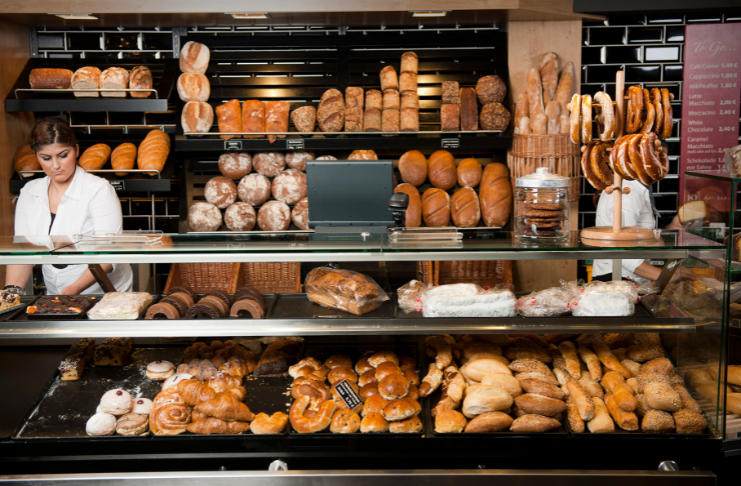
A storefront bakery operates from a physical retail location where customers can walk in and purchase baked goods directly. This format focuses on product display, foot traffic sales, and brand visibility in local markets.
- Pros: You can directly interact with customers and build a local customer base by offering a memorable experience.
- Cons: Higher startup and operational costs (rent, utilities, staff), need for a prime location, and greater competition.
- Ideal For: Bakers looking to create a community presence and provide a tangible customer experience.
D. Mobile Bakery and Food Truck
A mobile bakery or food truck operates by selling baked goods from a moving setup, allowing businesses to serve customers at events, markets, and high-footfall locations. This way, owners get the flexibility of location and can reach different customer segments without committing to a fixed retail space.
- Pros: Flexibility in location, lower overhead than a storefront, and the ability to participate in events and festivals.
- Cons: Limited space for baking and storage, and the need for regular maintenance of the vehicle.
- Ideal For: Entrepreneurs who want to sell their baked goods to different customer segments.
E. Bakery and Café Hybrid Format
A bakery and café hybrid offers a wide menu of fresh-baked goods, beverages, and meals, with seating. Customers can purchase takeaway items or stay to enjoy coffee, desserts, or light meals, helping increase average order value.
- Pros: Higher revenue potential per customer, stronger brand experience, and more opportunities for repeat visits.
- Cons: Higher startup and operating costs due to seating space, additional staff, and high menu complexity.
- Ideal For: Neighborhood locations and bakeries looking to build strong customer loyalty and brand presence.
How to Start a Bakery Business?
The bakery industry continues to grow as customers look for fresh, artisanal, and specialty baked products. Whether you plan to open a neighborhood bakery, launch a niche dessert concept, or start a cafe business, success depends on understanding what your local market actually wants and building your offering around it.
Here are the various steps to opening your retail or home baking business–
Step 1: Create a Bakery Business Plan
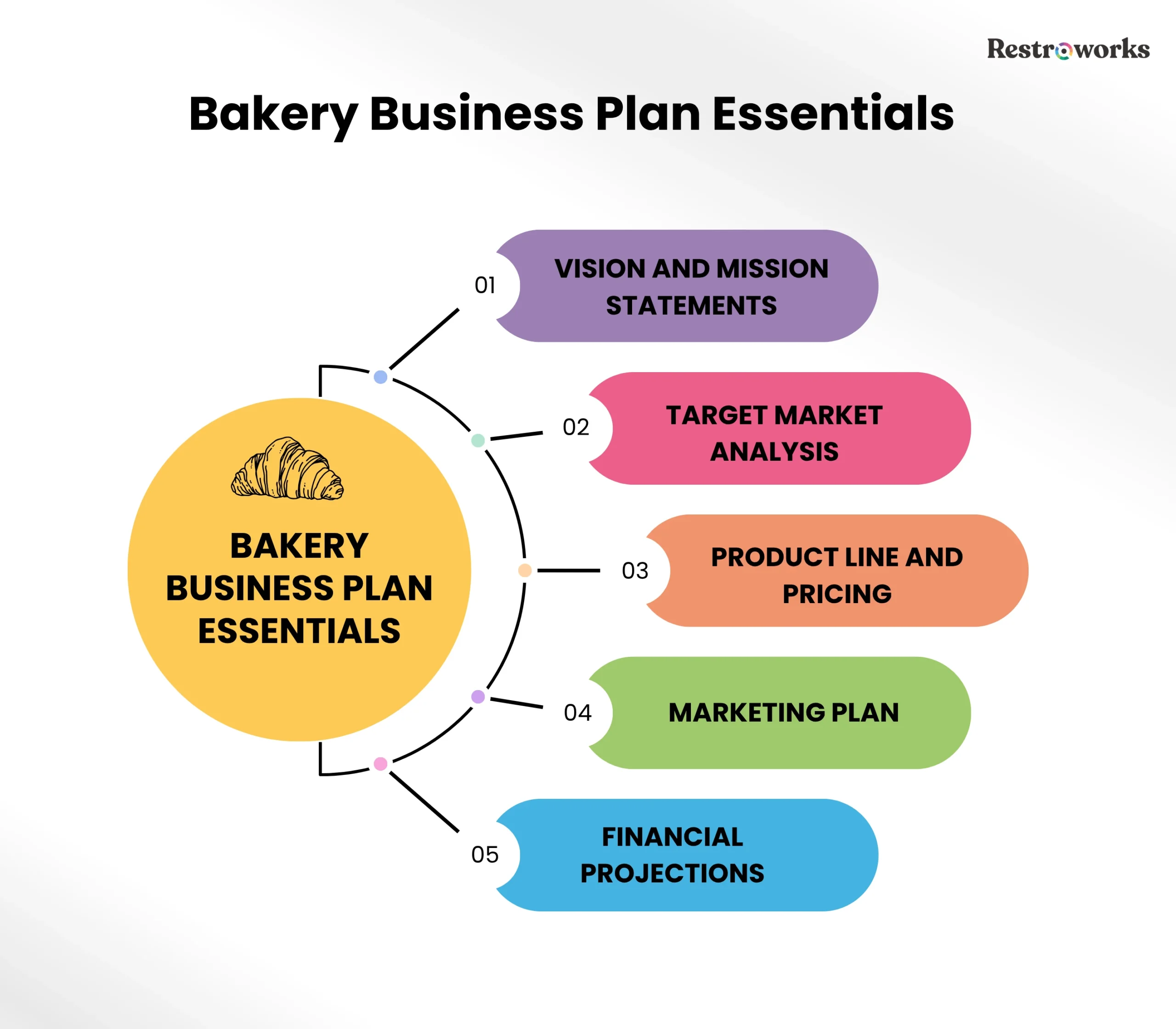
The initial step in opening your new bakery is to write a business plan. This plan is vital for establishing a bakery because it outlines the type of bakery you wish to open, its structure, the products you will offer, your marketing strategies, and financial forecasts.
Not to forget, a solid plan will also help in guiding your operations, conducting competitor and market analysis, and securing funding. A baking business plan starts with an executive summary and includes the following main sections:
- Vision and Mission Statements: These short statements outline what you want your bakery to become (vision) and how you plan to accomplish that (mission). For example, a mission might be “to provide high-quality, locally sourced baked goods to the community.”
- Target Market Analysis: Explains your target customer demographics, such as age, location, income level, and lifestyle. Research local preferences, dietary trends, and consumption habits to ensure your product offerings meet consumer demand.
- Product Line: Provide a detailed look at the types of products you will offer, like breads, pastries, specialty cakes, or gluten-free items. Outline what differentiates your products from competitors and why customers would choose them.
- Marketing Plan: Describe your strategies for promoting your business spaces, both online and offline, for your bakery. Include social media plans, local business partnerships, community event participation, and unique tactics like special promotions or loyalty programs.
- Financial Projections: This includes your estimated revenue, operating costs, and profit margins over a specific period, usually three to five years. Financial projections are critical for attracting investors who want to see evidence of profitability.
Step 2: Choose the Right Location and Plan the Layout
A good location will decide if customers know about you and how many of them will visit. Even great products can struggle if the location does not match your target audience or customer behavior. So to choose the right location for your baking business, consider the following factors-
- Visibility and Foot Traffic: Busy shopping streets, office areas, and high-footfall neighborhoods can help attract more walk-in customers.
- Target Demographics and Community Fit: Choose a location that matches your bakery concept and pricing. So, for instance, if you’re in a family-oriented neighborhood, offering kid-friendly products and seating might be a good fit.
- Layout Design: A functional layout helps both operations and customer flow. Separate zones for ordering, display, seating, and production can make the space more organized and easier to manage during busy hours.
Step 3: Determine the Costs and Secure Funding
Opening a bakery is a major financial decision, one that requires you to carefully estimate and plan different cost factors.
Your startup costs will depend on the type of bakery you plan to open, the location, and the menu. A home bakery may require a relatively small investment, while a retail bakery with commercial equipment and dine-in seating can cost significantly more. On average, you can open a small bakery within $15,000 to $50,000.
Some of the most common startup expenses will include-
- Kitchen equipment and appliances
- Rent deposits and interior setup
- Licenses and permits
- Initial inventory
- Packaging and branding
- POS and billing systems
- Staff hiring and training
- Marketing and launch promotions
Along with one-time setup costs, don’t forget to calculate your monthly operating expenses and keep a financial buffer for slower sales periods or unexpected costs.
Now, once you estimate your budget, the next step is securing funding through sources like-
- Small Business Loan: Small business loans are designed to support small businesses with startup capital. These loans generally feature lower interest rates and are accessible to individuals with borderline credit.
- Business Line of Credit: A business line of credit operates similarly to a credit card. You’re approved to use up to a certain amount and only pay interest on the amount you use. As you repay the balance, more credit becomes available.
- Investor Funding: If you want to start with a large-scale bakery operation or premium positioning, you may need to find investors. This type of funding can help you scale faster, invest in better infrastructure, and operate without relying entirely on traditional commercial loans or personal capital.
Step 4: Fulfill the Legal Requirements and Get Bakery Licenses
Behind every bakery launch is a long list of paperwork that most people do not think about at first. Taxes, licenses, permits, employee requirements, and business registration may not feel as exciting as designing your menu, but handling them properly can save you from expensive issues later.
The exact requirements depend on your state, city, and the type of bakery you plan to operate, so it’s important to check the business licenses and permits required to start a bakery in your area.
For example, home bakeries usually fall under Cottage Food laws, which allow you to prepare and sell non-perishable baked goods from your home kitchen without a commercial license. Or your country or region might also have specific business license requirements.
In general, your bakery will require the following permits to operate-
- Kitchen health and safety inspections from the local health department
- Food handler’s license
- Business license
- Foodservice permit
- Certificate of occupancy
- Zoning permits and approvals
- Fire safety compliance
If you plan to hire employees, you will also need an Employer Identification Number (EIN) from the IRS. This number is used for payroll taxes, opening a business bank account to keep personal and business finances separate, applying for loans, and other important business activities.
Step 5: Buy Essential Bakery Equipment
It is easy to get excited by professional mixers, large ovens, and fully designed kitchen setups, but the smartest approach is to build your kitchen around your menu and production needs. So it’s best to start with the essentials that support your current operations, then upgrade as your new business grows.
At the basic level, you will need the following equipment categories-
- Production Equipment: Commercial mixers, ovens, bowls, utensils, and proofers form the backbone of bakery operations.
- Storage and Refrigeration: Refrigerators, freezers, and ingredient storage units help maintain product quality and reduce spoilage.
- Preparation and Finishing Tools: Work tables, baking trays, cooling racks, measuring tools, and small equipment will support daily prep and consistency.
- Display and Service Equipment: If you’re planning to open a retail bakery with counter-style or sit-down service, you’ll need to invest in display cases, POS systems, tableware, and packaging materials to support customer-facing sales.
When choosing equipment, focus on practicality rather than buying everything at once. Think about your available kitchen space, production needs, electricity setup, cleaning requirements, and long-term maintenance costs.
Step 6: Hire and Train Bakery Staff
As your bakery grows, building the right team becomes just as important as creating great products. After all, the people handling the kitchen and service will be the ones responsible for a smooth customer experience, consistent product quality, and efficient operations.
The roles you hire for will depend on your bakery model and menu, where you’ll need bakers and pastry chefs, counter staff and cashiers, delivery staff, and managers.
Here are some tips for hiring bakery employees–
- Post job openings on platforms such as job boards, social media accounts, and local community centers to find the right people.
- Offer fair wages, learning opportunities, and supportive management to improve employee retention (which is at 38% for bakeries) and build a stronger team culture that prioritizes employee well-being.
- Provide comprehensive training on recipes, food safety, equipment handling, customer service standards, and day-to-day processes.
- Cross-training staff across multiple responsibilities, such as having counter staff learn basic prep work, is a smarter way to manage operations during peak hours.
Staff salaries are a major cost for bakeries, with the median annual wage for bakers being $36,650 in May 2024. Account for these costs and consider offering additional benefits like health insurance, paid time off, or bonuses to attract skilled workers.
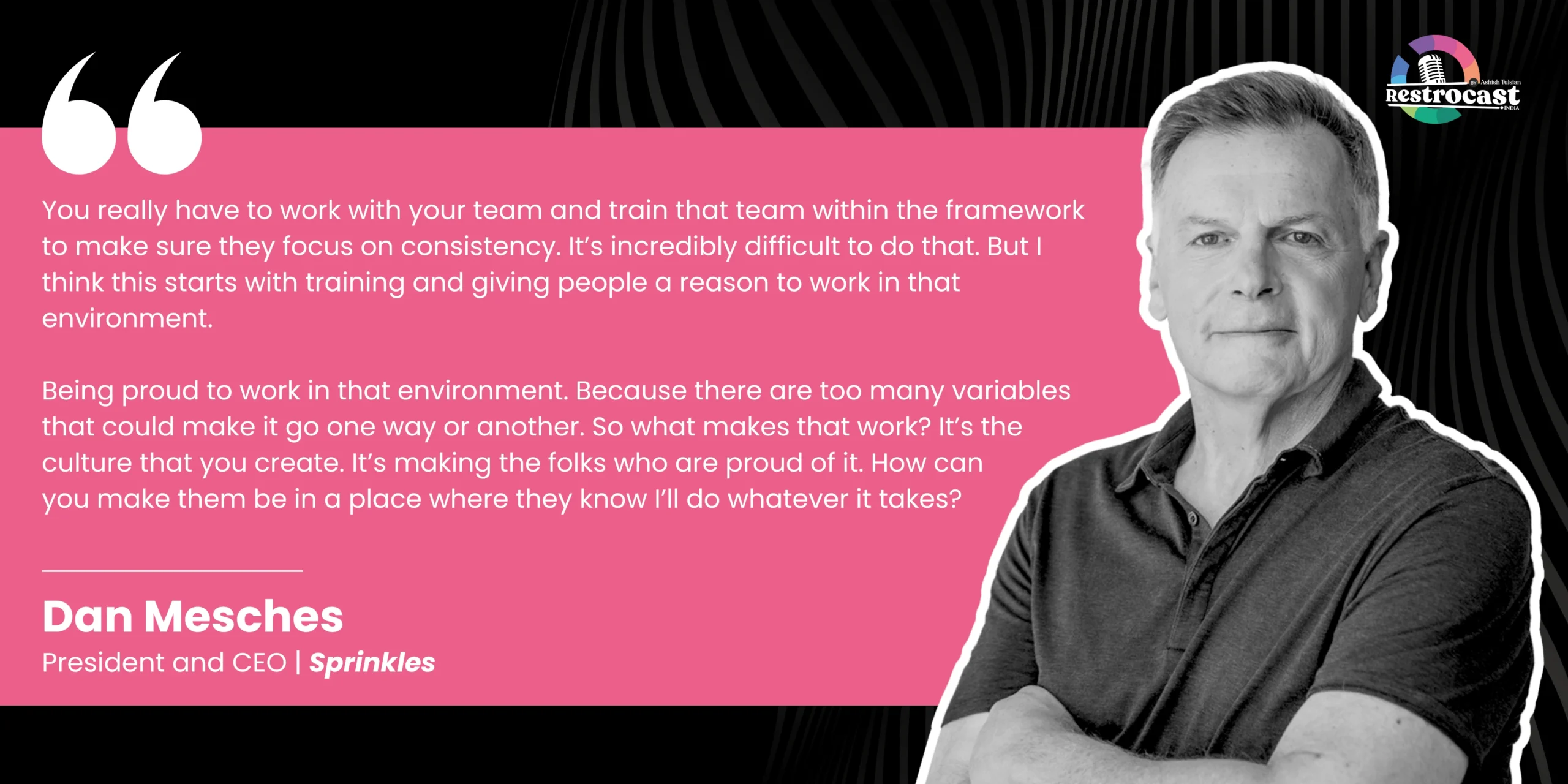
Dan Mesches talks about creating a great environment for your staff. According to him-
Step 7: Develop Your Bakery Menu
One of the easiest ways to overwhelm production is by trying to sell too many products at once. A big menu with amazing cake, cookies, and dessert options may look impressive at first, but it will increase your ingredient costs, food waste, and operational complexity.
So, start with a smaller and more focused menu. This will give you time to perfect your recipes, understand customer preferences, and ensure consistency before expanding your offerings.
List all your menu ideas and group them by ingredients, prep requirements, and bakery equipment needs to see which ones you can realistically deliver. Then consider a balanced product mix of pastries, cakes, cookies, and bread, with a few specialty items to keep the menu competitive. Identifying a specialty can set your bakery apart and attract customers looking for unique offerings.
EXPERT OPINION
Step 8: Price Your Menu
Pricing bakery products is not just about looking at competitors and covering ingredient costs. Your prices also need to account for labor, packaging, utilities, delivery fees, and the time required to prepare each item.
A simple way to approach pricing is to calculate the total cost of producing one item first, then add your target profit margin. You can research competitors to understand pricing trends, but avoid copying these prices because your ingredient quality, production costs, and positioning may be very different.
So, how can you find your menu pricing? Here’s an example to start-
1. Calculate Ingredient/Food Costs
Start by listing the cost of every ingredient used in that recipe, such as-
- Flour
- Sugar
- Butter
- Eggs
- Chocolate
- Vanilla extract
- Baking powder
- Cream and toppings
Then break those costs down based on the specific recipe. For example, if the combined cost of flour, butter, sugar, eggs, and chocolate for one batch of brownies is $9 and you bake 18 brownies per batch, the ingredient cost per brownie comes down to $9 ÷ 18 = $0.50
2. Add Labor Costs
Next, calculate the time chefs have spent preparing, baking, decorating, and packaging the product. Following the same example, if one batch takes 90 minutes to complete, and the average wage for your staff is $24 per hour. So a batch of brownies will be worth $36 of their time.
From this, the labor cost per brownie comes to be $30 ÷ 18 = $1.60.
3. Include Overhead Costs
Next, factor in the operational expenses of running and maintaining the bakery, like-
- Packaging
- Utilities
- Website and software subscriptions
- Delivery costs
- Maintenance and cleaning supplies
For example, if your monthly overhead is $300 and you sell 600 items monthly, your overhead cost per item will be $0.50
4. Calculate Total Cost Per Item
Now add all your costs-
- Ingredient cost: $0.50
- Labor cost: $1.50
- Overhead cost: $0.30
Total cost per brownie = $2.30. This is your pricing baseline. If you sell below that amount, you will be losing money and operating with low margins.
Step 9: Source Inventory and Manage Supplier Relationships

With your menu items finalized, it’s time to purchase the necessary ingredients and products. This includes baking ingredients like flour, butter, chocolate, and dairy, packaging materials, cleaning and kitchen supplies.
The first step is to decide where to source your supplies. Most bakeries source products through wholesale distributors, local vendors, or a mix of both, depending on pricing, quality, and availability. But before finalizing vendors, compare-
- Product quality
- Bulk pricing
- Minimum order quantities
- Delivery schedules
- Replacement and refund policies
It’s also important to consistently track your inventory shipments using restaurant inventory management software. This ensures you are always aware of your stock levels and can manage your supplies effectively.
Selecting the right POS system for your bakery’s operations is a significant decision. The best POS system for emerging bakeries should be user-friendly, scalable, and capable of growing alongside your business. The system should also streamline the payment process for both guests and staff, enhancing the overall customer experience.
Step 10: Launch Your Bakery
After months of planning, testing recipes, buying equipment, and handling paperwork, launch day is finally here. It is the moment customers experience your products, brand, and service for the very first time.
So, how can you make the launch bigger and better? Try these tactics-
- Social media teasers and countdowns
- Pre-orders and limited launch offers
- Influencer or local creator collaborations
- Free samples or tasting events
- Loyalty discounts for first-time customers
Before opening a bakery, make sure your kitchen operations, staff training, inventory, packaging, and ordering systems are fully ready. The first few weeks are also a great time to gather customer feedback. Pay attention to best-selling items, common customer requests, and operational bottlenecks to improve your menu and workflow early on.
Build a Marketing and Advertising Strategy for Your Baking Business

Running a successful bakery doesn’t stop at launch, and it’s not easy. A strong marketing strategy helps customers discover your bakery, remember your brand, and keep coming back. Learn from Rob and Jen Morris and their journey of building a profitable bakery business from home in The Food Blogger Pro Podcast.
Here are some ways to market your bakery-
- Build a Clear Brand Identity: Your logo, packaging, storefront, and social media should reflect the personality of your bakery, whether it feels cozy, premium, artisanal, or modern. Customers should immediately understand what your bakery is known for.
- Use Social Media Consistently: Platforms like Instagram, TikTok, and Facebook work especially well for bakeries because baked goods are highly visual. Product photos, behind-the-scenes videos, decorating clips, and seasonal launches can help attract attention and increase engagement.
- Improve Local Visibility: Set up your Google My Business profile, collect customer reviews, and use local keywords like “best bakery in [city]” to help nearby customers discover your business online.
- Focus on Customer Retention Strategies: Newsletters, loyalty programs, birthday offers, and limited-time seasonal products can encourage repeat orders and stronger customer relationships over time.
- Track Customer Feedback: Reviews, comments, and sales trends can help you understand which products customers love most and where your bakery experience can improve.
Case Study: How Pastreez Turned French Macarons Into a Nationwide Bakery Business
When Anthony Rosemond and his wife, Yami, launched Pastreez, they did not try to build a bakery selling every type of dessert. Instead, they focused on one highly specific product: authentic French macarons.
That niche-first approach became one of the biggest reasons the business stood out. How? With a strong organic and online presence-
- Researching U.S. search demand using SEO tools and identified strong interest around terms like “macarons near me.”
- Testing products at local farmers’ markets
- Focusing on organic growth through SEO, social media, email marketing strategies, and customer referrals. instead of relying heavily on paid ads
- Offering free samples instead of heavy discounting
The strategy worked. Pastreez grew into a nationwide online bakery business, reportedly selling over 1 million macarons with a small team while building a strong customer base through branding and niche positioning.
Starting a bakery is an exciting and rewarding journey that combines passion, creativity, and business spirit. From building a solid business plan to perfecting your recipes, each step brings you closer to opening the doors of your dream bakery.
As you navigate this path, remember that attention to detail, a commitment to quality, and a deep understanding of your market are key to future success.
KEY TAKEAWAYS