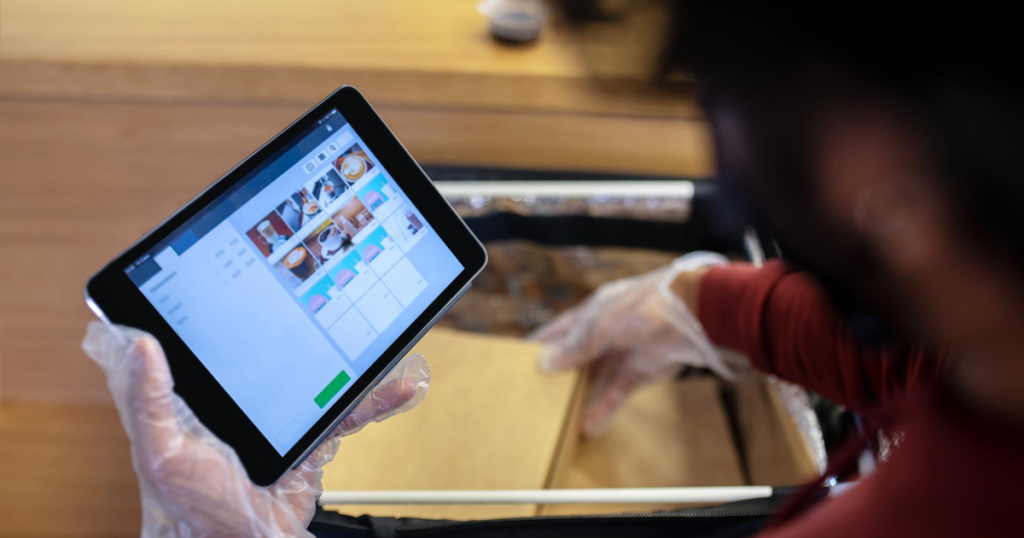

What is a Kitchen Display System?
Kitchen Display System (KDS) is a digital solution that replaces traditional order management methods like paper tickets to directly route the orders to the kitchen. Integrated with your POS system, a KDS displays real-time orders from various channels on a touchscreen, allowing for efficient tracking and updating of order status and preparation details.
Crucially, a KDS provides real-time analytics on kitchen performance, offering insights into order times and popular dishes. This data is instrumental in optimizing operations and enhancing service quality.
Ultimately, a KDS is more than an order display; it’s a strategic tool for elevating your restaurant’s efficiency and customer satisfaction.
What are the Benefits of Kitchen Display Systems?

Here are some benefits of installing KDS in your restaurant:
- Enhanced Speed of Service: Relying on your kitchen printer and paper tickets to manage orders means the risk of losing the orders in the whirlwind of a busy shift. A Kitchen Display System (KDS) brings clarity. It digitalizes the chaos, neatly displaying orders and organizing them in clear queues.
With a KDS, your staff stays perfectly in sync, ensuring every order is tracked and every dish gets remembered and included. It acts as a super-efficient assistant in the kitchen, keeping everything running smoothly.
- Streamlines Restaurant Operations: The system streamlines orders on an easily navigable tablet display, mitigating the risks of order mix-ups and lost tickets and ensuring smooth operations during peak hours.
- Efficiency in Staffing: The service industry today faces significant staffing challenges. Here, a KDS emerges as a vital tool. Organizing food prep stations effectively, a KDS enhances productivity, enabling your existing staff to serve more customers efficiently. Moreover, this technology is not just about efficiency; it’s also about employee satisfaction. A user-friendly, intuitive KDS can aid in quicker employee training, foster a less stressful work environment, and potentially reduce staff turnover.
The Curious Case of Café Bateel
Let us take the example of Café Bateel, renowned for its gourmet offerings across premium locations like Dubai’s Marina Walk and Jeddah’s Le Prestige Mall. The establishment faced significant challenges with its outdated POS system.
This system struggled to meet evolving customer needs and operational demands, which led to-
- Time-consuming tech implementations
- Inefficient handling of special requests
- Laborious manual reconciliation of online orders
A cloud-based restaurant management platform with a kitchen display system can transform café operations, streamlining processes for efficiency and customer satisfaction. Here’s how:
- Centralized Control: A unified system across all outlets enables seamless management and oversight.
- Efficient Training and Support: Comprehensive training for front-of-house staff and IT teams ensures smooth implementation, with ongoing support for uninterrupted operations.
- Enhanced Customer Insights: With real-time analytics and CRM integration, Café Bateel can leverage customer data for targeted marketing and improved sales strategies.
- Direct Integration with Delivery Aggregators: Direct integration with aggregators like Zomato and Hunger Station simplifies online order management, reducing errors and delays.
- Rapid Tech Deployment: New outlets can launch quickly and efficiently, minimizing setup time.
- Improved Customer Service: Role-based controls at the front-of-house enable staff to quickly and effectively meet diverse customer requirements.
- Automated Order Reconciliation: The direct integration with delivery services eliminates discrepancies and the need for manual order entry.
With KDS, Café Bateel overcame its operational challenges and enhanced its customer service, efficiency, and overall business strategy, setting a new standard in the gourmet café industry.

How to Choose the Right Kitchen Display System for Your Restaurant?
Picking the right KDS is about finding a system that fits your kitchen’s workflow, staff habits, and service goals. Here’s what to look for-
- Understand Your Kitchen Workflow: Map out how orders move from the front of house to the kitchen. If you run a fast-casual setup, you’ll need a KDS that can handle quick order routing and modifications. For fine dining, look for features that support detailed order notes and course management.
- Check for POS Compatibility: Make sure your KDS integrates seamlessly with your existing POS system. This prevents double entry, minimizes errors, and ensures real-time updates between servers and kitchen staff.
- Prioritize Real-Time Order Tracking: A good KDS shows every order’s status instantly, whether it’s “in progress,” “ready,” or “served.” This helps reduce confusion, avoid missed tickets, and keep your service consistent during rush hours.
- Look for Customizable Display Options: Choose a system that lets you customize ticket layouts, color codes, and station views. This flexibility helps different kitchen stations (grill, fryer, salad) focus only on what matters to them.
- Evaluate Hardware Durability: Kitchen environments are tough—heat, grease, and spills are common. Opt for touchscreen monitors or tablets built to withstand these conditions, ideally with easy-to-clean screens and protective casing.
- Consider Reporting and Analytics: A strong KDS offers insights into prep times, order volume, and staff performance—data that you can use to improve efficiency and reduce delays.
- Ensure Scalability and Support: Pick a system that can grow with your restaurant. Whether you expand to multiple outlets or add new menu items, your KDS should scale easily and come with reliable tech support when needed.
Conclusion
Kitchen Display Systems (KDS) represents a forward-thinking solution essential for future success. They are becoming a necessary tool for the future of the restaurant industry. As you navigate evolving challenges and shifting customer expectations, a KDS provides a way to boost efficiency, accuracy, and customer satisfaction.
Utilizing a KDS enables you to harness real-time data and streamline your kitchen operations, ensuring you meet the modern diner’s needs effectively. The trend is clear: KDS technology sets the standard for innovative and efficient restaurant management. An advanced KDS solution helps you transform your operations into an efficient and heightened customer engagement model if you want to stay ahead.