
Less than a decade ago, opening a restaurant meant investing in a high-rent retail space and hiring a full front-of-house team. But today? All you need is a fully functional kitchen to build a profitable restaurant brand that delivers deliciousness, right at customers’ doorsteps.
A cloud kitchen is a commercial kitchen built exclusively for food delivery — no dining room, no storefront, no waitstaff. Orders arrive through apps like Uber Eats, DoorDash, and Grubhub, and every dollar goes toward food preparation instead of front-of-house operations.
With the US cloud kitchen market projected to reach $27.47 billion by 2032, there’s no better way to enter the restaurant industry than opening a cloud kitchen.
This guide covers startup costs, cloud kitchen business models, provider comparisons, breakeven math, and the technology stack you need to launch in the US.
What you will learn
- What is a cloud kitchen business and how it operates?
- What are the different types of cloud kitchens you can operate?
- How to start a cloud kitchen and its revenue model.
What is a Cloud Kitchen?
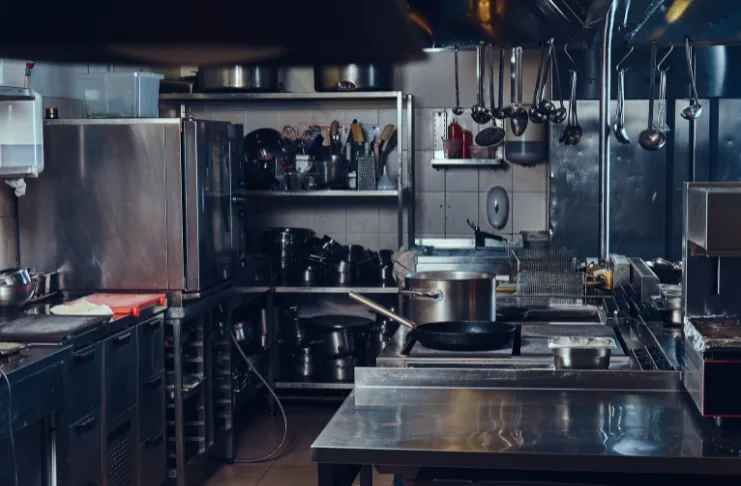
A cloud kitchen (a term used interchangeably with ghost kitchen, dark kitchen, and virtual kitchen) is a commercial kitchen space designed exclusively to prepare food for delivery. It has no dining area, no storefront, and no in-person service. All orders come through online ordering platforms and delivery apps.
Because there’s no investment in dining areas, décor, or service staff, a cloud kitchen restaurant becomes much more cost-effective. This also lets operators focus resources on food quality, efficiency, and online visibility.
Ghost kitchens are cost-effective to start because they eliminate overhead costs that brick-and-mortar restaurants carry: rent for a customer-facing physical location, dining furniture, decor, and front-of-house staff.
How Does a Cloud Kitchen Business Model Work?
The delivery-only business model runs on four interlocking systems.
1. Orders Through Online Platforms
Cloud kitchens receive all orders through third-party delivery apps or their own direct ordering systems. There is no walk-in traffic. The kitchen layout is built entirely around efficient food preparation and order dispatch, with dedicated zones for delivery drivers to collect orders.
2. Cost Efficiency
With no dining room, operators eliminate major cost categories: rent for a large physical location, dining furniture, front-of-house staff, and decor. This lets operators focus their budget on kitchen equipment, food quality, and technology.
3. Multiple Brands Under One Roof
A cloud kitchen can host multiple virtual restaurant brands from a single kitchen space. In a shared-space model, multiple operators use the same facility where the owner supplies all kitchen infrastructure. In a private-space model, a single operator runs one or multiple brands independently.
This multi-brand approach fills different dayparts (burgers for lunch, pizza for dinner, desserts late night) and makes better use of kitchen capacity. But there is a ceiling.
Operators report that reorder rates drop sharply beyond three concurrent menus. Uber Eats removed over 8,000 virtual restaurants from its platform in 2023, citing duplicate listings under different brands names and poor ratings.
So, start with one brand. Add a second only after sustaining a 4.5+ star average and a reorder rate above 20% for 90 days.
4. Technology at the Core
Streamlined cloud kitchen operations depend on a connected technology stack. Every operation needs a cloud kitchen POS system to manage orders from multiple platforms, a Kitchen Display System (KDS) to prioritize orders, inventory management tools to track stock and reduce food waste, and analytics to monitor costs, sales, and consumer behavior.
What are the Benefits of Starting a Cloud Kitchen?
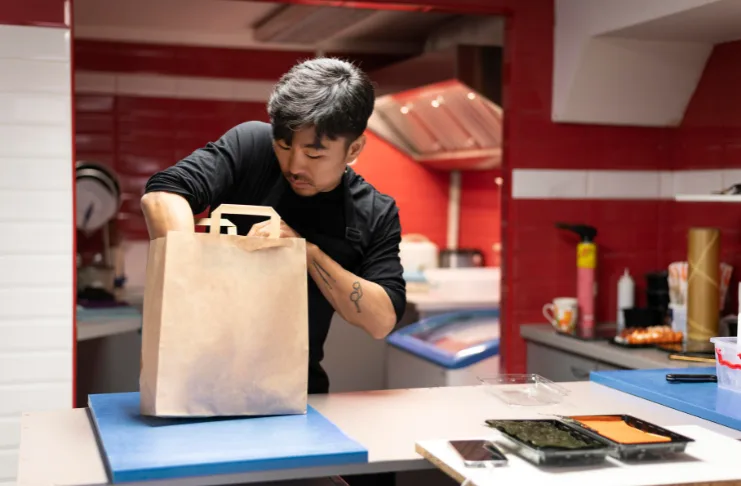
First-time operators with limited capital gain the most from the cloud kitchen model’s structural advantages over traditional restaurants.
1. Lower Startup Costs Than Brick-and-Mortar Restaurants
Opening a traditional restaurant costs $175,500 to $750,500 or more, according to a Restaurant Owner survey, with a median around $375,000. With a cloud kitchen, you can start with as little as $30,000 all-in — covering a shared-space lease deposit, essential equipment, initial food inventory, permits, and delivery app setup. This dramatically lowers the barrier to entry.
2. Scalability
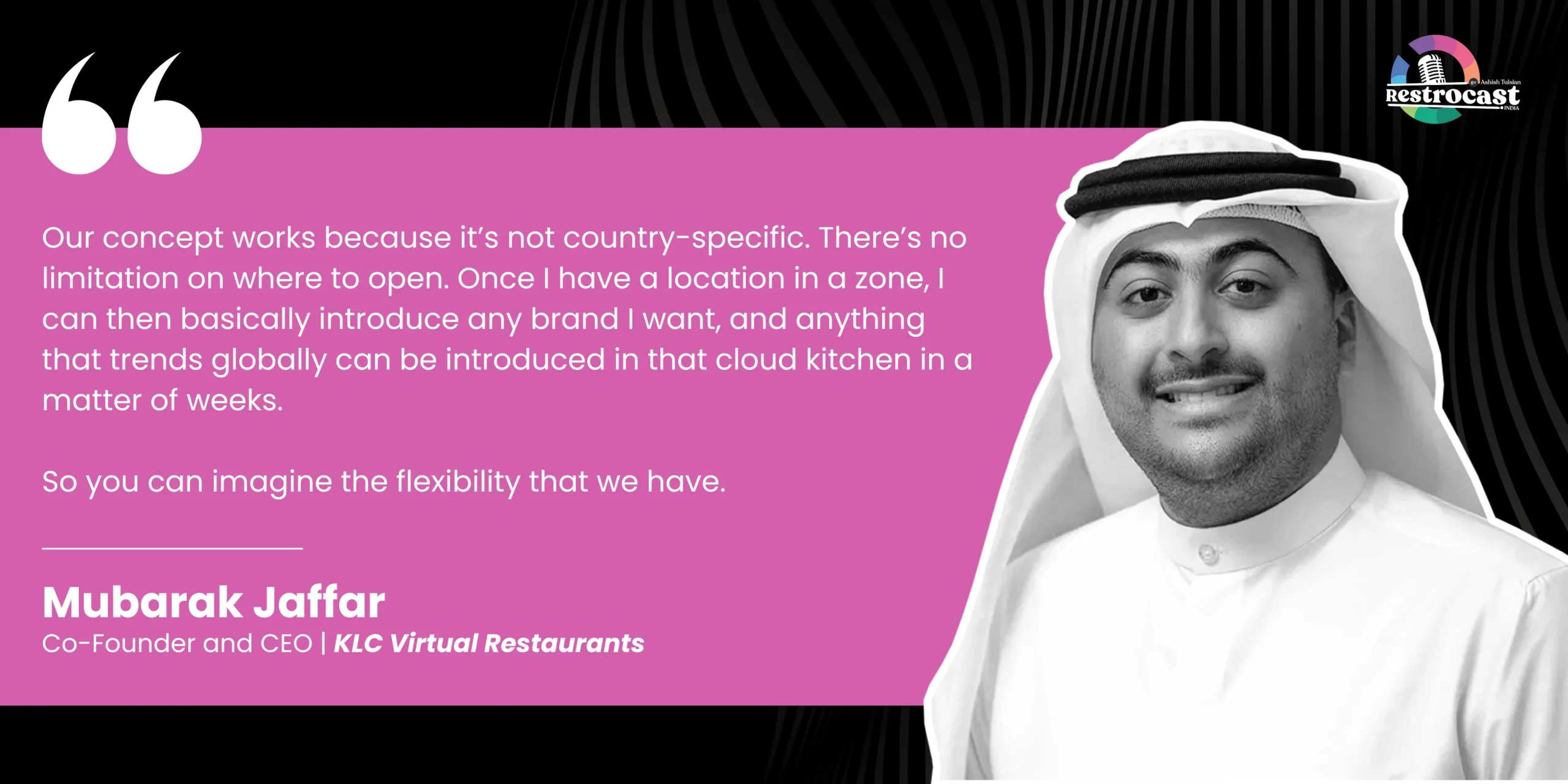
Ghost kitchens make it easier to scale. You can expand into new delivery zones, launch virtual brands, or increase production without building a new storefront.
Take it from Mubarak Jaffar, Co-Founder and CEO of KLC Virtual Restaurants. In a conversation on Restrocast, he mentions:
3. Broader Reach and Operational Efficiency
With delivery platforms, your food reaches customers across a much wider area than brick-and-mortar locations limited to foot traffic. Multiple kitchens across a city, each covering its own delivery radius, can serve a large portion of the market.
Without dine-in service, your team’s entire workflow centers on food preparation and dispatch. Ghost kitchens can also adapt menus based on consumer behavior and demand data from delivery apps.
Challenges of Running a Cloud Kitchen Business
Lower overhead does not eliminate risk. These are the most common operational and financial challenges facing cloud kitchen operators.
1. Competition and Limited Brand Visibility
Ghost kitchens operate in a crowded online marketplace where restaurants and virtual restaurants compete for visibility on the same delivery apps. Without a physical storefront, standing out requires strong branding, high-quality food photography, and consistent review management. Existing restaurants and food trucks also now offer food delivery, adding to the competitive pressure.
A survey cited by Built In found that 74% of US adults prefer ordering from restaurants with a physical location they can visit. Ghost kitchens must compensate with strong delivery-app ratings, consistent branded packaging, and a recognizable online identity.
2. Reliance on Third-Party Delivery Apps
Most ghost kitchens rely heavily on delivery apps for order volume. These platforms typically charge 15% to 30% in commissions, which eat into margins. If a platform changes its algorithm, raises fees, or deprioritizes your listing, it directly affects your revenue.
The bigger risk is structural: delivery apps control customer data, pricing visibility, and the discoverability algorithm. This business model builds order volume on their platform, not equity in your own brand. Building a direct ordering channel early is how cloud kitchen operators protect their business long-term.
3. Thin Margins Despite Lower Overhead
Cost savings do not guarantee profitability. Delivery commissions (15–30%) and rental fees (2,000–6,000 per month) push profit margins to around 8–15%. You may need three to four times the order volume of a full-service restaurant to match its absolute profit.
Common Mistakes That Close Cloud Kitchens
Most cloud kitchen failures trace to five patterns: launching with a full restaurant menu instead of a delivery-optimized one, underestimating packaging costs (4–6% of revenue), choosing a location based on rent rather than access to delivery drivers, failing to negotiate commission rates below the default 15–30%, and waiting too long to build a direct ordering channel.
EXPERT OPINION
Talking about his experience and challenges of building shared cloud kitchen spaces, Joe Frem, CEO and co-founder of Matbakhi, shares:
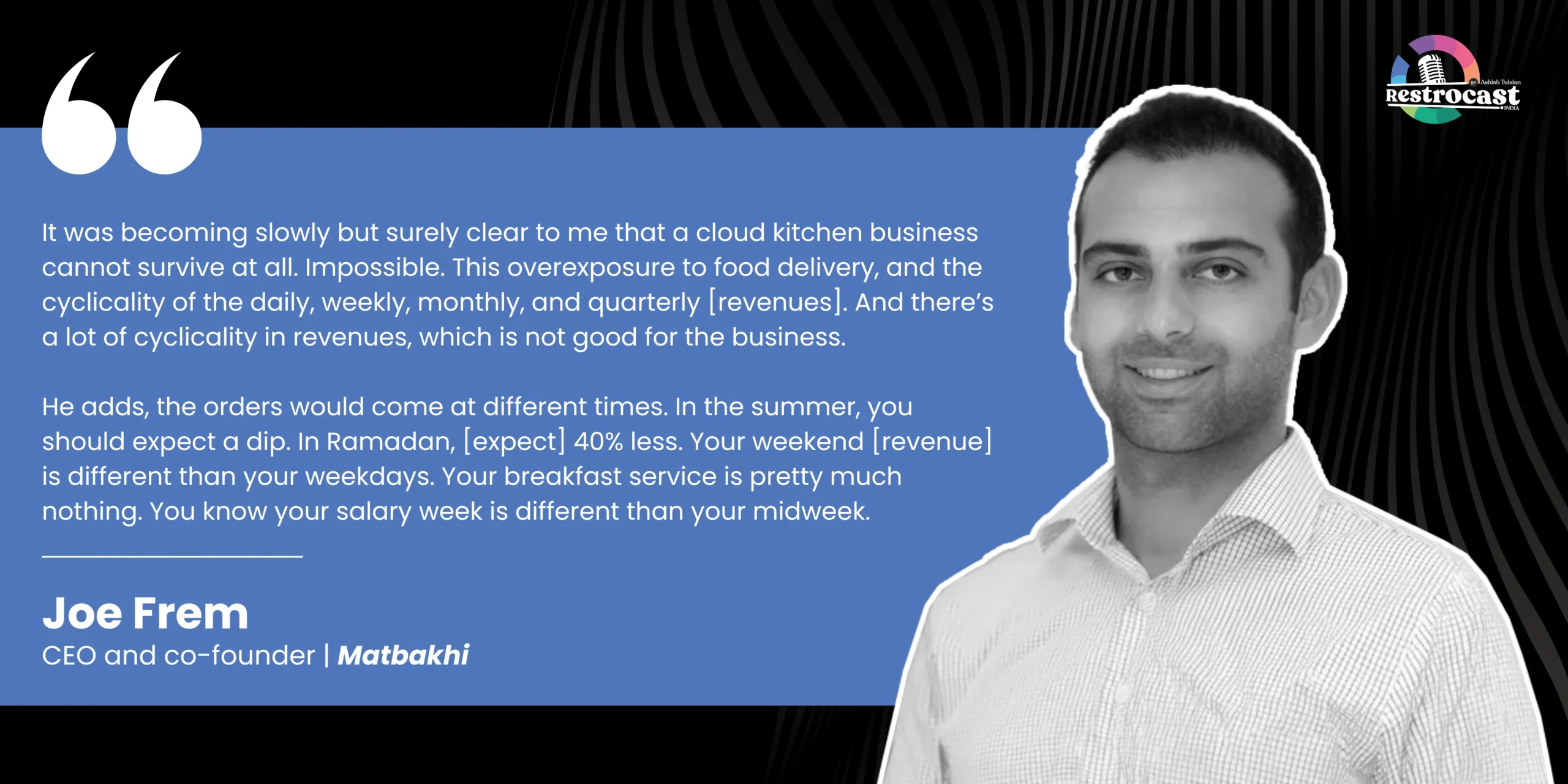
Catch up on more of this interesting conversation with Joe Frem on Restrocast:
Before signing with any provider, ask for the occupancy rate at your target location, the average monthly revenue of existing tenants, and whether the lease locks you into a minimum term. Use a cloud POS like Restroworks to centralize orders across delivery platforms regardless of which provider model you choose.
Lessons from Virtual Brand Case Studies
Chuck E. Cheese launched Pasqually’s Pizza & Wings as a virtual brand on delivery apps, selling its menu under a different name. Backlash was swift. Virtual restaurants built on deception lose trust and ratings quickly.
MrBeast Burger scaled to $100 million in revenue by licensing its brand to hundreds of existing kitchens. This business model proved virtual restaurants can grow without owning kitchen space, but quality-control challenges led to varying reviews and multiple lawsuits. The takeaway: a virtual brand needs its own delivery-designed menu and quality systems that hold even as you expand.
Cloud Kitchen vs Ghost Kitchen vs Virtual Kitchen
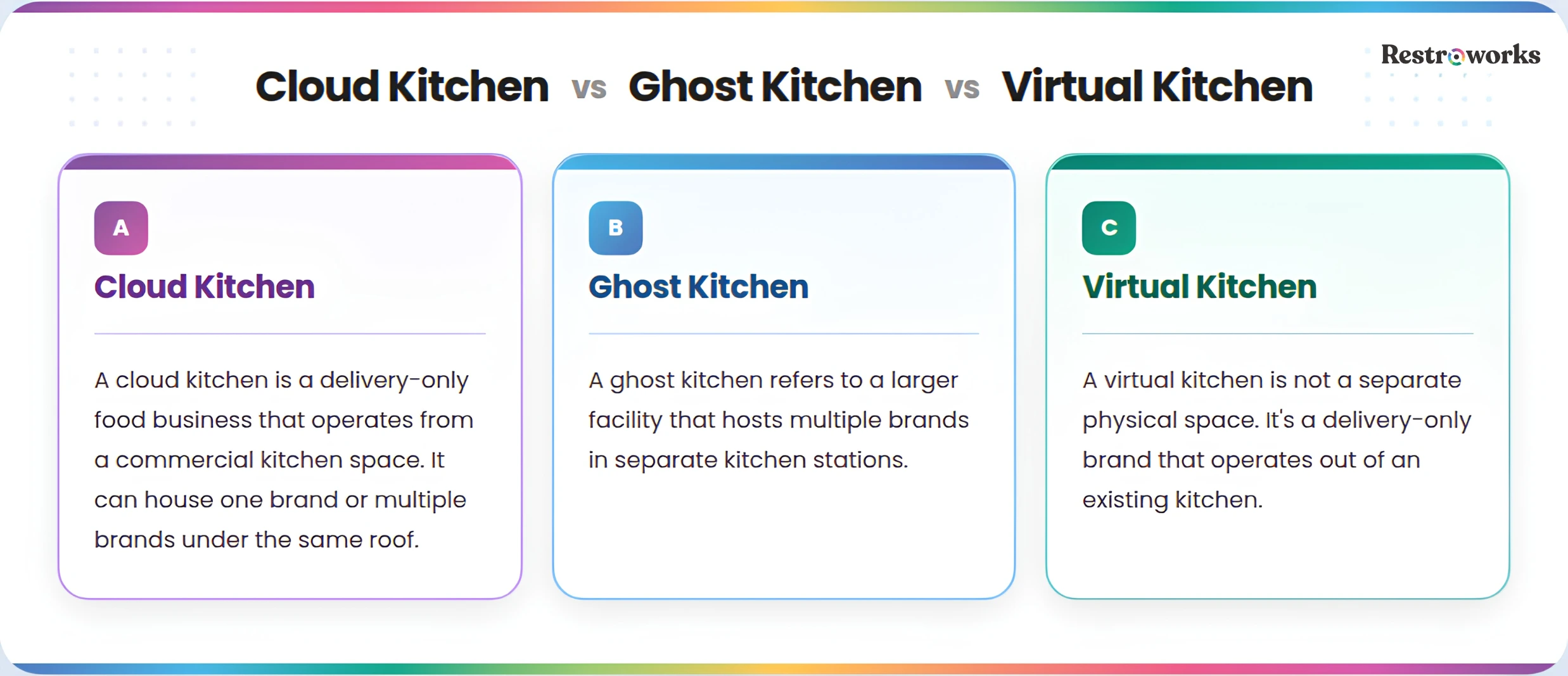
In everyday use, these three terms overlap, but in industry practice each emphasizes a different aspect of the delivery-only model.
- Cloud Kitchen: A delivery-only commercial kitchen space used by a single brand or multiple virtual restaurant brands. The space is designed for food preparation and delivery fulfillment, with no dine-in component.
- Ghost Kitchen: Under the ghost kitchen model, a centralized facility supports multiple restaurant brands from a single location with shared infrastructure. Several operators share equipment, staff scheduling, and delivery logistics within the same kitchen, splitting overhead costs while each brand maintains its own menu and identity.
- Virtual Kitchen: Not a separate physical space. A virtual kitchen is a delivery-only brand that operates out of an existing restaurant’s kitchen to deliver food through delivery apps. For example, a pizzeria might launch “Late Night Wings” as a virtual brand during off-peak hours, using its existing kitchens and equipment at minimal cost.
How to Start a Cloud Kitchen?
Follow these seven steps to start a cloud kitchen and go from concept to launch. Each step covers the decisions, costs, and timelines a first-time operator should expect.
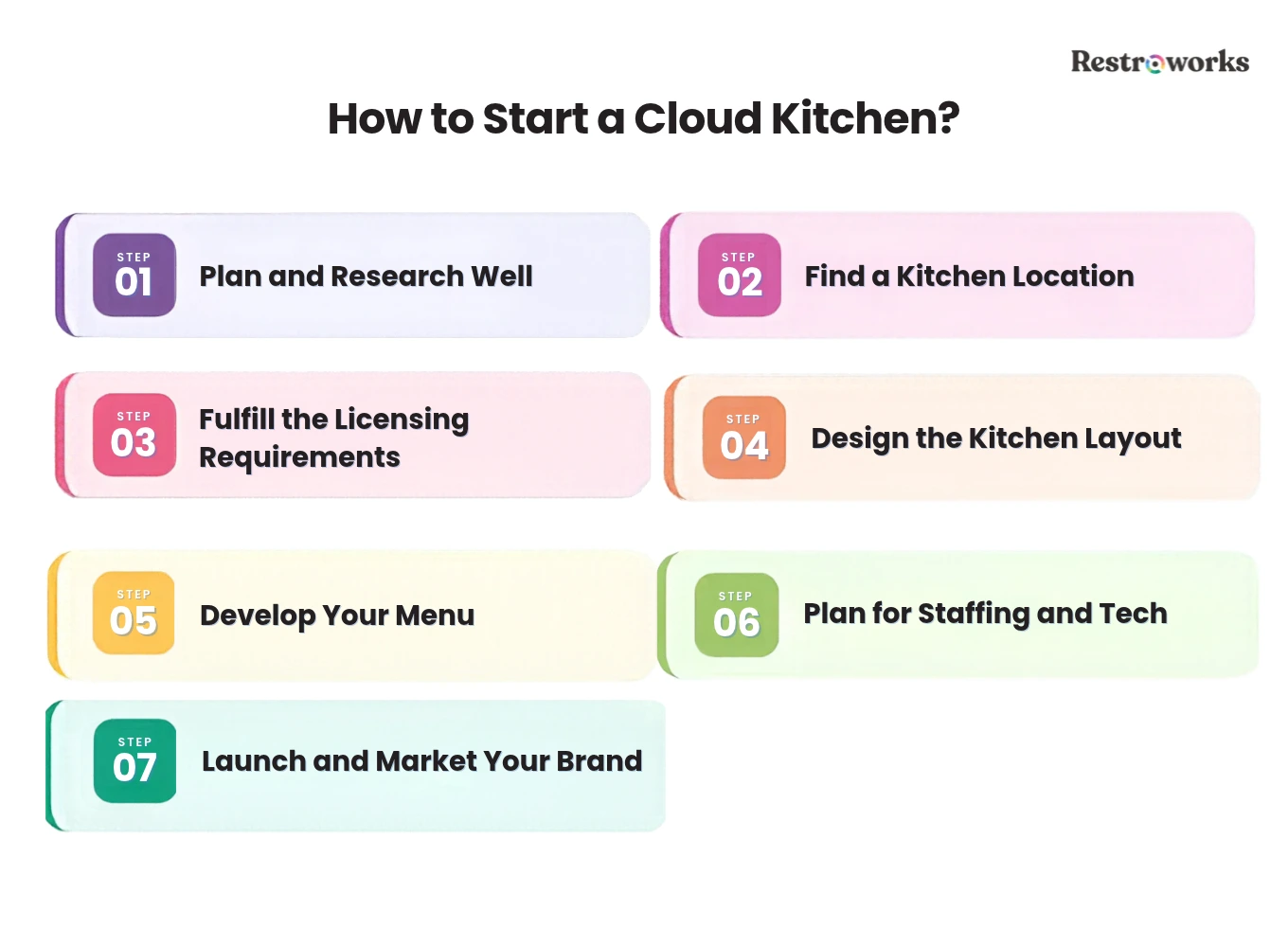
1. Research Your Market
Study delivery app listings in your target area to identify demand gaps and saturated cuisines. Understand how existing restaurants, food trucks, and other virtual restaurants compete in the online food delivery market before investing in your own cloud kitchen business.
2. Find a Kitchen Location
Choose a spot that maximizes your delivery radius while keeping costs manageable. Ghost kitchens are often located in lower-rent areas, which helps keep operating costs lean while maintaining access to delivery drivers.
- Radius of Access: Your dark kitchen should cover a larger delivery radius. Setting up in a central location works best.
- Cost Reduction: Opt for commercial spaces with a lower rent to reduce overhead costs.
- Prompt Delivery: Select a location closer to your target audience and with easy access for delivery drivers to ensure quick delivery.
3. Secure Licenses and Permits
US cloud kitchen registration and licensing requirements vary by state and city, but every operator needs at minimum:
- Business license
- Food service permit from the local health department
- Food handler’s certification
- Fire department permit
- Employer Identification Number (EIN)
- General liability insurance plus workers’ compensation
Some jurisdictions require a separate commissary kitchen permit for shared spaces. Verify zoning for food production before signing a lease. Budget $1,000 to $3,000 for initial permits.
Zoning alert: Ghost kitchen zoning rules vary by city. New York City enforces strict commercial-zone ventilation and fire safety codes for delivery-only kitchens.
Los Angeles requires a separate environmental health clearance for all food facilities. Chicago mandates shared kitchen licensing for multi-operator spaces. Confirm zoning for food production at your specific address before signing a lease.
4. Design Your Cloud Kitchen Layout
After the preliminaries, it is time to lay the foundation for a successful cloud kitchen. This is where you think about the kitchen layout, purchase the high-quality cooking equipment, and plan for the opening inventory.
A delivery-focused cloud kitchen layout prioritizes workflow efficiency over customer aesthetics. Allocate zones for cold prep, hot cooking, plating and packaging, and a driver staging area near the entrance. A 500-to-800-square-foot cloud kitchen space is sufficient for a single-brand operation.
Multi-brand kitchens add parallel prep stations but share packaging and driver staging zones to keep total footprint under 1,500 square feet.
5. Develop a Delivery-Optimized Menu
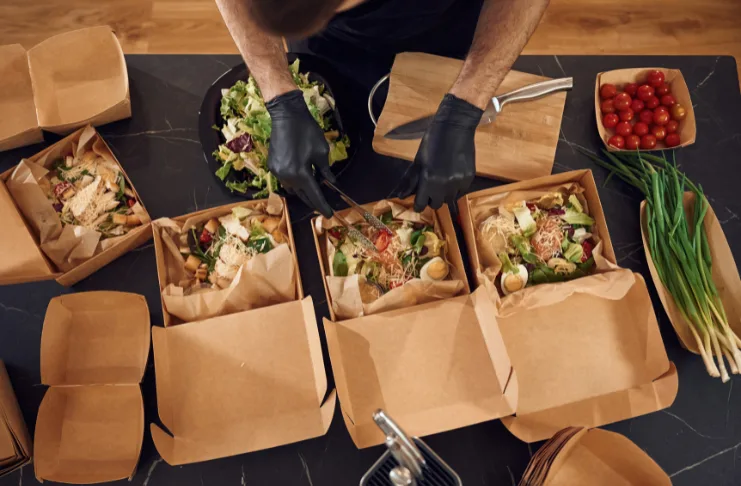
Build your menu for delivery: dishes that travel well, maintain food quality in transit, and are easy to package. Include delivery-only meals designed specifically for the cloud kitchen model. Monitor your food cost percentage and price menu items to cover both ingredients and delivery platform commissions.
6. Set Up Your Technology Stack and Hire Staff
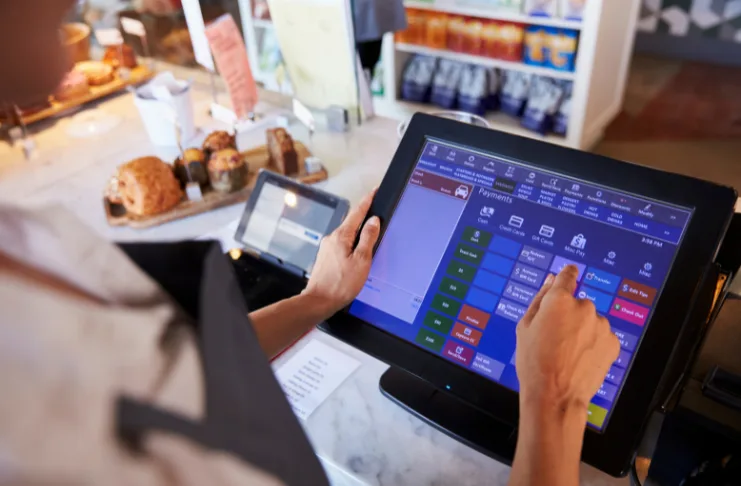
The minimum viable cloud kitchen technology stack includes a POS system integrating with at least three delivery platforms ($50-$200/month), a KDS for order routing ($30-$120/month), and an inventory tracker, often bundled with the POS system.
Start with a small, skilled team: an experienced head chef and one to two line cooks. Invest in training to maintain consistency, especially when running multiple restaurant brands as virtual restaurants.
7. Launch on Delivery Platforms and Market Your Brand
Evaluate DoorDash, Uber Eats, and Grubhub based on commission rates, delivery coverage, promotional tools, and POS integration. Diversify across multiple platforms. Cloud kitchens rely on broad distribution, and dependence on any single channel puts your cloud kitchen operations at risk.
Then focus on-
- Social media marketing with short food videos and real customer reviews
- Limited-time offers to generate early traction
- Encouraging satisfied customers to leave ratings
- Local SEO targeting “[cuisine] delivery near me” searches, if you offer direct ordering through the website
Plus, after reaching 50+ reviews with a 4.5+ star average, shift spend from promoted listings to your direct ordering channel.
Because you don’t have a physical presence, your brand lives online. That means your logo, packaging, tone, and customer experience must align to create a strong brand identity, as Wow Bao did.
Cost Breakdown of a Cloud Kitchen
Know your cost structure before signing a lease. Below is what to budget for setup and ongoing operations.
Startup Cost Tiers
If your food costs exceed 33% and commission rate exceeds 28%, the math does not work at volumes under 1,000 orders per month. Run these numbers with your actual menu prices before signing a lease.
When Does a Cloud Kitchen Break Even?
Consider a shared-space kitchen with a $22 average order value and a 25% delivery commission. At 500 orders per month, here’s how the monthly expenses add up:
Gross revenue = $11,000. After:
25% delivery commission= $2,750
Food costs at 30% = $3,300
Packaging at 5%= $550
Tech and marketing = $660
Rent = $3,500
Under these assumptions, the owner-operator kitchen generates a $240 monthly surplus at 500 orders, before any owner salary, taxes, or other unlisted expenses.
Adding a paid chef and cook (at, say, ~$3,500/month), the kitchen would need approximately 870 orders per month to break even, assuming the same $22 average order value and cost percentages.
So, keep $30,000 to $50,000 in cash runway to cover three to five months of losses while you build order volume.
Revenue Model of a Cloud Kitchen?
Revenue for a delivery-only kitchen flows through three main channels: platform orders, direct orders, and virtual brand extensions.
1. Delivery App Revenue
For most cloud kitchen operators, food delivery platforms are the starting point: they provide built-in demand, a delivery fleet, and visibility. But commissions take 15% to 30% per order.
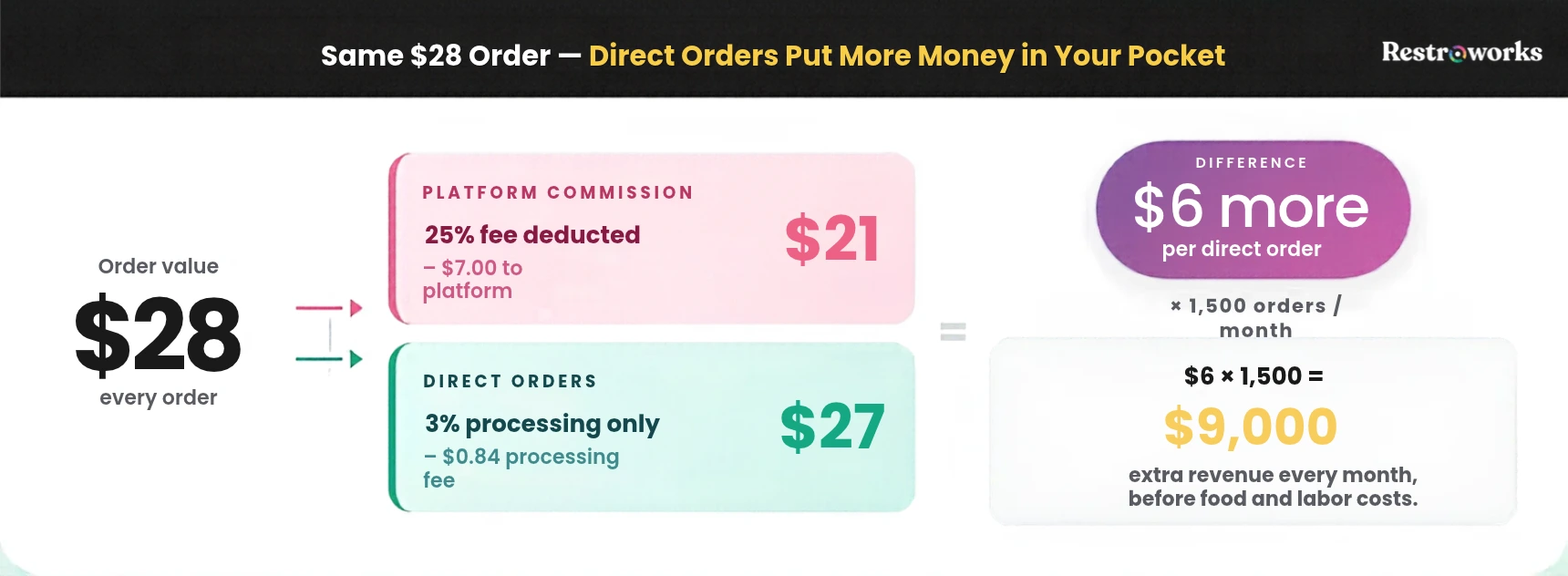
So if your average order value is $28 and commission is 25%-
- $7 goes to the platform
- $21 remains before food and labor
This makes your pricing strategy all the more important to achieve better profits.
2. Direct Orders and Commission Negotiation
Direct orders through your own ordering website are more profitable because you avoid the 25–30% platform commission and pay only 2–3% in payment processing fees.
You still need delivery, either your own drivers or a dispatch service like DoorDash Drive, but the net commission savings of ~$4–5 per order add up. Shifting 30% of 500 monthly orders to direct channels saves roughly $675 per month.
For example:
Using the same $28 example-
- In the absence of the 25% commission model, you eliminate the $7 fee and get to keep $28.
- Now, if you pay a 3% payment processing fee or $0.84, that’s roughly $27 in your pocket.
That is a $6 difference per order. Say you achieve 1,500 monthly direct orders; this math means you get to retain roughly $9,000 extra revenue before food and labor costs.
Commission rates are negotiable for kitchens generating over 200 orders per month on a single platform. Some operators negotiate revenue-share models well below standard rates by offering exclusivity and guaranteed volume, though exclusivity locks you into one platform, reducing total reach.
At 200+ orders, invest in your own ordering website. The cumulative commission savings pay back faster than rate negotiation alone.
Multiple Virtual Brands From One Kitchen
Running several virtual brands from the same kitchen increases revenue without doubling fixed costs. Rent, utilities, and much of the labor stay constant while revenue improves your overall contribution margin.
But expand carefully: quality degrades beyond three concurrent menus, and delivery apps penalize restaurant partners that sacrifice food quality for quantity.
The Future of Cloud Kitchens
The National Restaurant Association reports that more than one in four operators already use AI tools for demand forecasting, inventory management, and menu optimization.
Ghost kitchens adopt them faster because their operations are fully digital. As delivery logistics improve, location selection shifts from customer proximity toward operational efficiency, a trend that favors the cloud kitchen business model’s flexibility.
The delivery-only restaurants are definitely changing the restaurant industry. Not only are they successful, but they are also highly profitable. Plus, restaurant owners can develop multiple virtual restaurant brands and manage delivery operations effectively by working with a cloud kitchen provider or starting their own cloud kitchen business.
With more customers preferring to order in rather than dine out, the prospects for the food industry are only looking brighter.