
1. Restroworks- Unified Platform for Enterprise-Grade Operations
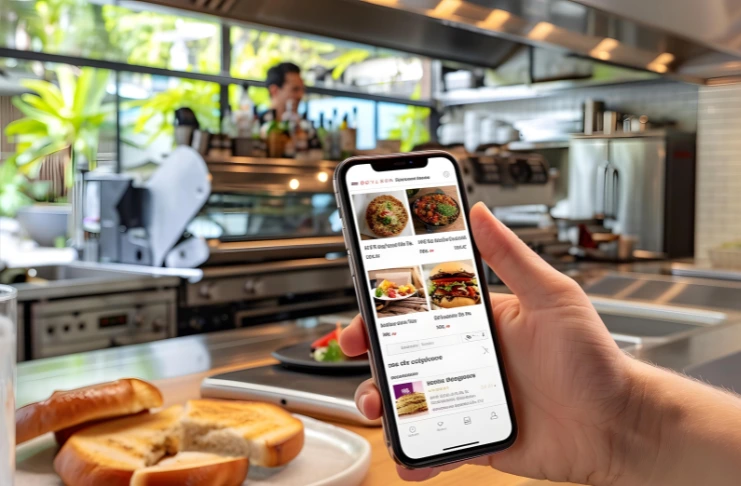
Restroworks is designed as a unified, enterprise-grade restaurant management suite. It combines POS, CRM, online ordering, reporting, inventory, and delivery operations.
Strengths:
- It is hardware agnostic, meaning you can use tablets or existing equipment.
- Deep order management, you can route orders to different kitchens or stations, support your own delivery drivers, and integrate with third-party apps.
- Built-in loyalty programs, customer profiles, and upselling capabilities.
- Scalability for multi-location chains with centralized menu control.
Potential Limitations/Considerations:
- For small independent restaurants, it may feel overpowered.
Use Case Fit:
Best for restaurant groups or owners who expect to scale quickly or run multiple outlets, but still want a unified restaurant online ordering system.
2. Menufy by HungerRush
Menufy (a branded online ordering storefront provider) and HungerRush (full-stack POS + delivery orchestration) often appear together because they complement each other or are offered in bundles.
Strengths:
- Menufy offers branded online ordering pages, easy web integration, and simple UX for customers.
- HungerRush supports in-store POS, loyalty, delivery management, and order routing.
- Together, they support both direct ordering and connections to third-party apps.
- Good for restaurants wanting a turnkey, lower-friction online ordering solution.
Limitations:
- Compared to platforms with deep analytics, this pairing may be more basic.
- For high-volume or very complex kitchens, you might need extra customization.
Use Case Fit:
Independent and mid-sized restaurants that want both a polished branded restaurant website ordering page and decent back-end logistics.
3. Square for Restaurants
Square has built a strong ecosystem for small-to-medium businesses. Its restaurant module extends its core POS and payments stack to support online ordering, delivery, and more.
Strengths:
- Easy to onboard and configure, familiar UI.
- Solid support for online ordering + in-store under one roof.
- Supports popular payment methods like Apple Pay.
- You can combine your own delivery drivers with third-party apps, depending on settings.
- Good for restaurants that want an integrated POS + ordering approach.
Limitations:
- For highly complex kitchens or multi-outlet enterprise operations, Square may hit scaling or customization limits.
- Advanced features (like custom loyalty) sometimes require add-ons or external integrations.
Use Case Fit:
Small to medium-sized restaurants seeking simplicity and scalability.
4. Revel Systems
Revel is a mature POS + restaurant management system with strong customization and modular architecture. It also supports ordering and delivery features.
Strengths:
- Rich reporting, real-time inventory sync, and customization.
- Supports kiosks, in-store ordering, and integration with delivery platforms.
- Flexible routing: you can mix your own delivery drivers and third-party apps.
- Strong enough for medium to large operations with occasional complexity.
Limitations:
- More training and setup are required compared to simpler systems.
- Costs tend to be higher for advanced features or modules.
Use Case Fit:
Restaurants in growth mode that want flexibility, reliability, and granular operational control via their online ordering system.
5. Toast
Toast is one of the best-known full-service restaurant platforms, combining POS, online ordering, delivery, kitchen management, analytics, and more.
Strengths:
- Truly end-to-end integration: in-house orders, pickup, delivery, all within one ecosystem.
- Strong order management and KDS features.
- Built-in support for loyalty programs and marketing.
- You can accept payments via Apple Pay, credit cards, etc.
- Ideal for restaurants seeking an all-in-one online ordering and POS system.
Limitations:
- Typically requires using Toast’s hardware and payment processing (some lock-in).
- Costs (hardware, subscription, transaction fees) can add up for smaller operations.
Use Case Fit:
Full-service restaurants or fast-casual chains that want one cohesive system and don’t want to juggle multiple software tools.
6. GloriaFood
GloriaFood is a lightweight, often affordable option focused on online ordering and delivery. It’s often used by small restaurants, cafés, and pizzerias.
Strengths:
- It offers free or very low-cost versions of online ordering software.
- You can embed your online ordering page directly into your restaurant’s website.
- Useful pre-ordering, pickup, and delivery support.
- You can optionally add loyalty modules.
Limitations:
- It may lack advanced POS or kitchen integration, so you may need to use it in conjunction with another POS.
- Analytics, multi-location support, or advanced routing features are relatively basic.
Use Case Fit:
Small restaurants, start-ups, cafés, or places testing an online food ordering system before going all-in.
What Is a Restaurant Ordering System?
A restaurant ordering system is a digital platform that enables restaurants to manage orders across multiple channels, including dine-in, delivery, and pickup. It typically includes:
- POS systems for in-house transactions
- Online ordering pages for web and mobile
- Kitchen Display Systems (KDS) for real-time communication
- Payment integrations like Apple Pay
- Delivery coordination with own delivery apps and drivers like Uber Eats or Uber Direct
The evolution from basic POS tools to full-stack online food ordering systems has transformed how restaurants operate.
These systems now offer advanced features, such as loyalty programs, CRM tools, and inventory synchronization, making them a game-changer for helping restaurants attract more customers and boost their profitability.
INDUSTRY INSIGHT
What are the Key Features to Look for in a Modern Ordering System?
Confused between the best online ordering systems? Here are the key features and capabilities your online ordering system should offer in 2025-
- Omnichannel Ordering: Customers expect flexibility, whether dining in, picking up, or requesting on-demand delivery. Your online ordering page should support all channels and adapt seamlessly across devices.
- POS System Integration: A reliable online ordering system must seamlessly integrate with your POS systems, KDS, and inventory tools to ensure smooth order management and minimize manual errors.
- Delivery Flexibility: Choose platforms that support both your own delivery drivers and third-party apps, such as Uber Eats or Uber Direct, giving you control over costs and reach.
- Loyalty Programs and CRM: Built-in loyalty programs and CRM tools help build customer loyalty by tracking preferences, offering personalized rewards, and encouraging repeat orders.
- Real-Time Dashboard: A centralized dashboard should display order status, delays, and cancellations in real-time, keeping staff informed and customers satisfied.
- Payment Options: Support for mobile wallets, such as Apple Pay, credit/debit cards, and saved payment methods reduces cart abandonment and improves conversions.
- Scalability and Multi-Location Support: Your online ordering platform should scale with your business, providing centralized menu control and analytics across all locations.
- Analytics and Reporting: Track online sales, customer behavior, and menu performance to make informed decisions and optimize marketing efforts.
- Reliability and Uptime: Prioritize platforms with proven uptime and built-in redundancies to avoid costly outages during peak hours.
- Local Compliance and Support: Ensure the system complies with regional tax laws and integrates with local delivery partners and payment gateways, especially important for restaurant owners in markets like India or Southeast Asia.
How an Online Ordering Process Flows?
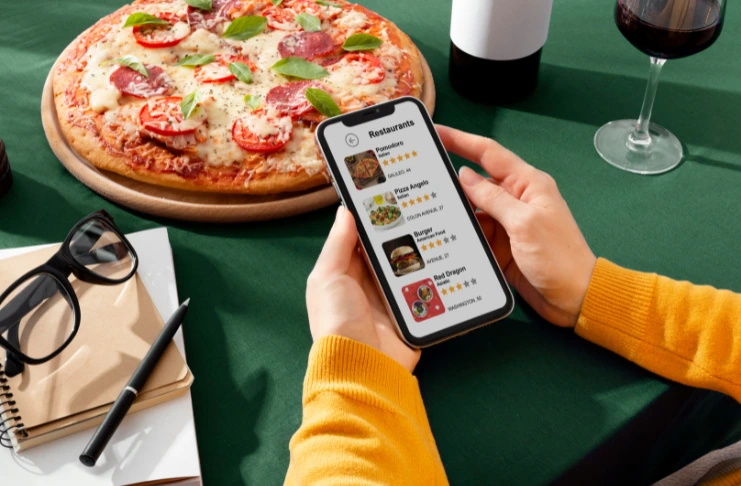
To succeed, you must map the customer journey and the online ordering process smoothly. Here’s how it should ideally work to increase sales, and where your chosen system must excel-
1. Order Discovery/Menu View
The customer lands on your online ordering page (on your site or app). The online menu must load quickly, allowing for modifiers, specials, time slots, and more.
2. Order Placement and Payment
The customer places items in the cart, chooses pickup/delivery/dine-in, and pays via credit card, Apple Pay, or other mobile wallets. The moment they click “Order,” the system should validate availability.
3. Order Confirmation and Routing
The order is routed instantly to the kitchen or dispatch system. If you use your own delivery drivers, the routing logic should decide whether to assign an in-house driver or push to third-party apps.
4. Order Preparation and Tracking
Kitchen staff see the order in KDS or the printers. The system may provide ETA updates or status messages to the customer.
5. Delivery/Pickup/In-Store Service
Delivery drivers get directions, order details, and updates. For pickups, customers see status changes. The system may integrate with mapping or rider apps (e.g., Uber Direct, Uber Eats) for delivery purposes.
6. Completion and Feedback/Loyalty
After the order arrives or is picked up, the system can prompt for feedback, offer a loyalty reward for the next order, or upsell.
7. Analytics and Follow-Up
Collect data (order frequency, average spend, item popularity) and feed into loyalty programs or marketing campaigns. Measure online sales growth over time.
Conclusion
By 2025, it’s no longer enough to just “have an ordering page.” You need a fully integrated restaurant online ordering system that unifies point-of-sale, delivery logistics, customer loyalty, reporting, and user experience.
The difference between a frustrating ordering experience and a seamless one can mean the difference between gaining more customers and losing them to another platform.