


Opening a restaurant is exciting, but naming it? That’s where many restaurant owners get stuck. Names get shortlisted, rejected, and revisited again. Some sound great in your head, but awkward when said out loud. Others may look good on paper but don’t match the actual experience you’re trying to create.
You see, your restaurant name is one of the most powerful elements of your brand. It ends up on your signboard, delivery apps, reviews, and every recommendation customers make to their friends.
So the goal is to find a name that’s not only creative, but also fits your restaurant brand and experience. In this guide, you’ll understand how to name a restaurant, get your creative juices flowing, and find inspiration and strategic tips to help you choose a memorable and market-ready name for your new business.
What you will learn
- Why does a good restaurant name matter?
- The important aspects to look at when choosing your business name
- Simple tips and tricks to pick a unique restaurant name
What is the Importance of a Restaurant Name?
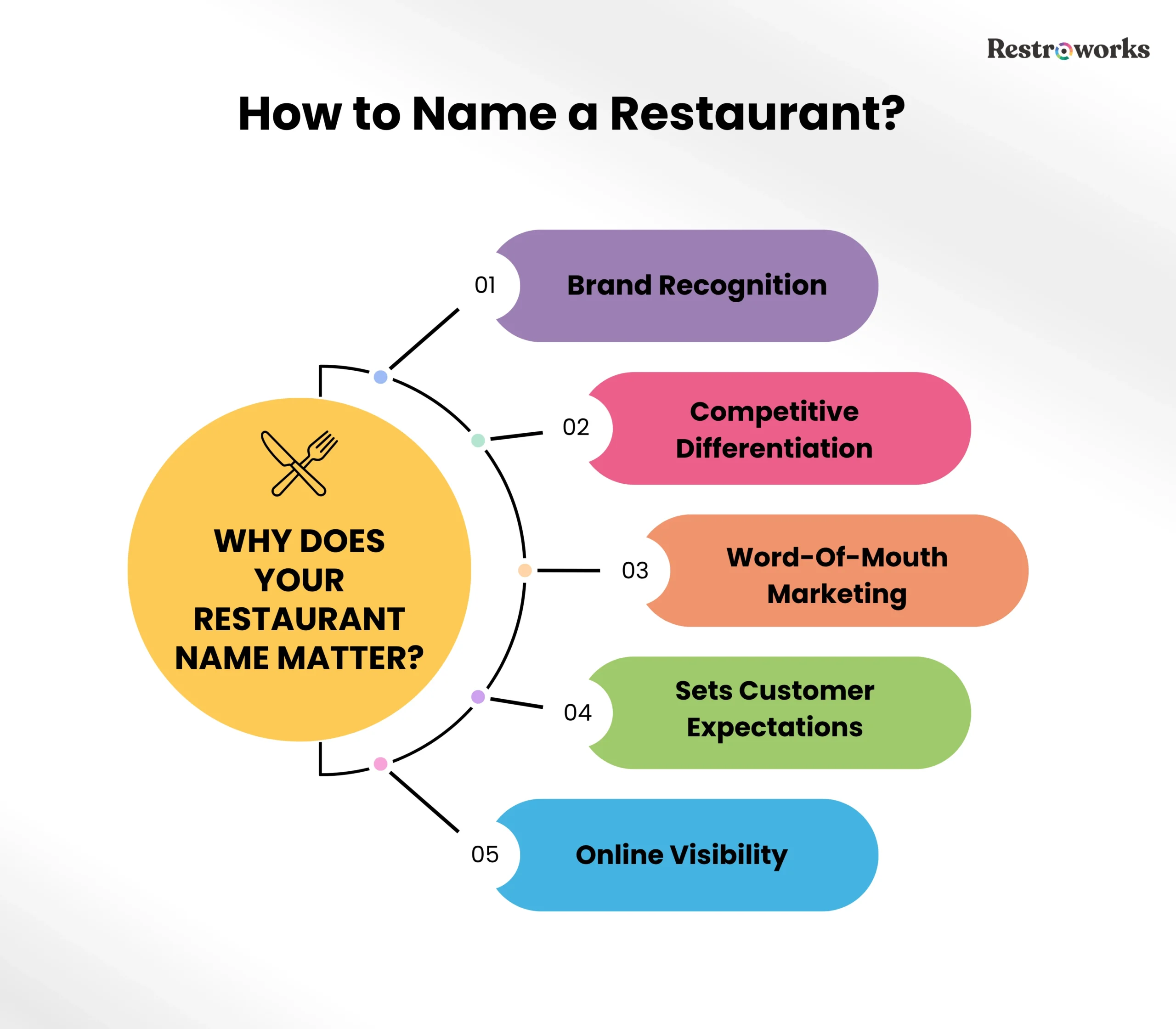
Before diving into restaurant name ideas and naming techniques, let’s understand the importance of your restaurant’s name. Picking the right name is a strategic business decision with long-term consequences. It affects your brand recognition, marketing reach, and even your legal and digital presence.
At the same time, a strong restaurant name does the following for your food business-
- Sets customer expectations and helps them form an emotional connection
- Aligns with your restaurant’s core values, food, and ambiance
- Enhances brand recall, storytelling, and word of mouth marketing
- Makes restaurant marketing, SEO, and social sharing easier
In a crowded restaurant community, the right name gives your restaurant the edge to stand out over the competition. Plus, having a unique name will help shape customers’ perceptions and their decision to visit the establishment.
The Golden Rule of Choosing a Restaurant Name
Experimenting with cool restaurant names? Remember the golden rule: Simple, clear, and relevant.
Basically, your name should reflect your restaurant’s soul while being easy to pronounce and remember. Moreover, think in terms of your long-term vision and brand scalability; will this name still make sense if you expand? If yes, you’ve got a winner.
Finally, say the name out loud or gather feedback. If it sounds awkward or confuses people, you may need to rethink.
INDUSTRY INSIGHT
Top 6 Things to Consider When Naming a New Restaurant Business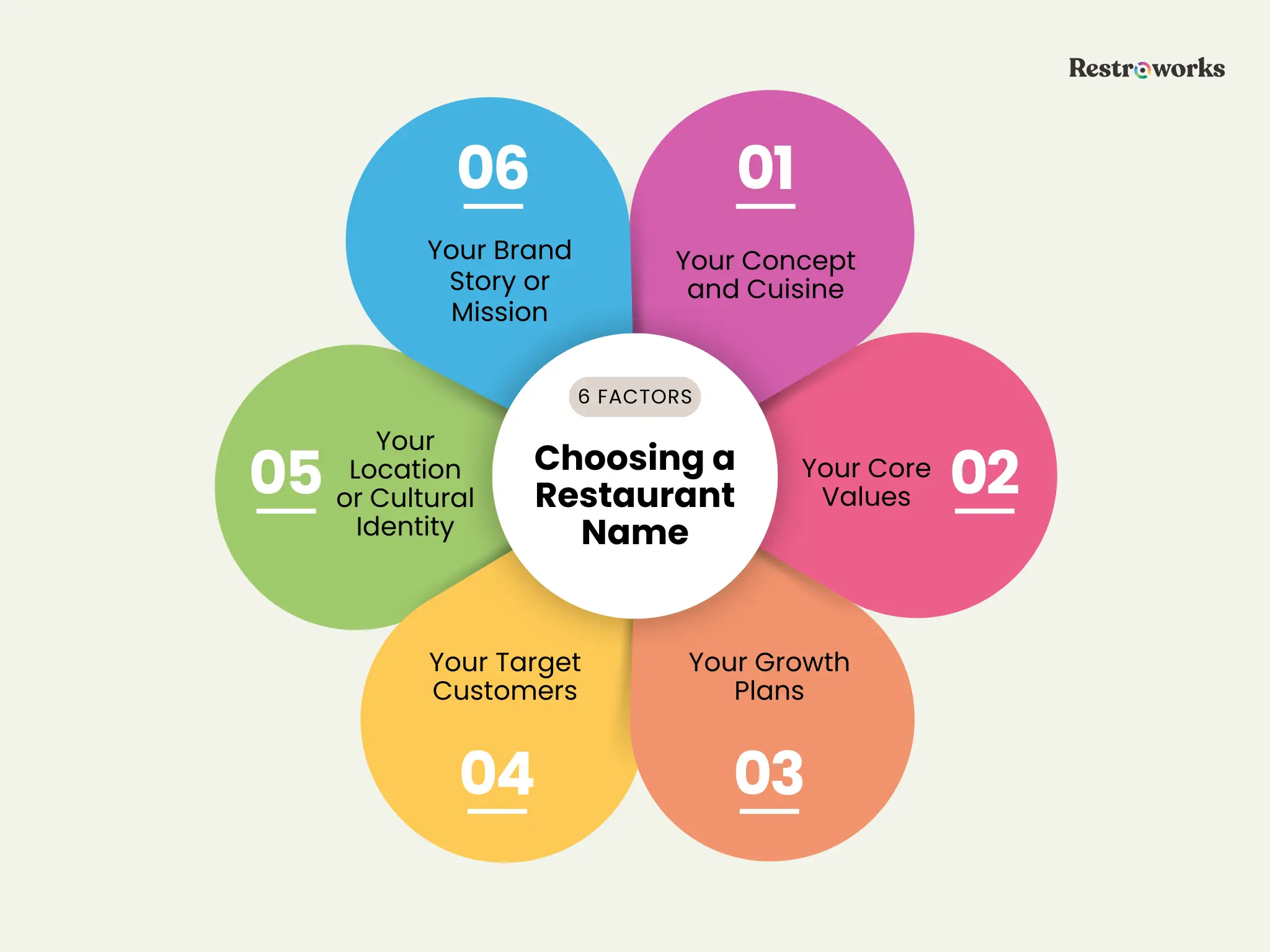
While it helps to be creative when naming your restaurant, you still need to make sure it’s relevant to the place you’re building and the people you want walking in. Here are some factors to consider when looking for a good name-
1. Your Concept and Cuisine
The name should suggest what you serve and the atmosphere you create. Are you fine dining or fast-casual? Vegan or Pan-Asian fusion? A food-inspired name that hints at your core concept or cuisine tells customers instantly what to expect.
For example, a name like Noodle Republic is a great fit for an Asian restaurant. Or if you’re looking for a comforting and homey vibe for your coffee house, Corner Brew House would work well.
2. Your Core Values
The name for your restaurant should reflect what your brand stands for. Maybe your focus is sustainability and local sourcing, or authenticity and innovation. The name has to convey your philosophy, either directly or subtly, to build trust and appeal among customers.
For instance, a zero-waste restaurant specializing in local ingredients and sustainable practices could use a name like Green Harvest to signal its sustainability focus.
3. Your Future Vision
Choose a name that can grow with your business and align with the restaurant’s future vision. If you plan to expand locations, add new cuisines, or launch sub-brands later, avoid names that are location-specific or restrict your positioning in any way.
4. Your Target Audience
Think about your ideal customer. Are they health-conscious professionals, young foodies, or families with kids? For instance, a family dining restaurant called The Garden Feast may appeal to guests with its diverse menu and kid-friendly vibe.
5. Your Location or Cultural Identity

Where your restaurant comes from or where it operates can be a strong source of naming inspiration. A name using a city, a local landmark, a regional ingredient, or a cultural influence gives people an immediate sense of context. It helps guests understand what to expect before they even look at the menu.
For example, Delhi Tandoor instantly communicates both cuisine and location, building credibility and local connection.
That said, make sure the local or cultural references are natural and commonly understood. Because if your audience doesn’t click with the restaurant name immediately, it won’t be adding any value to your brand.
6. Your Restaurant’s Mission Statement
Sometimes the strongest names come from the reason the restaurant exists in the first place. Maybe it was a family idea, a passion, or inspired by your favorite recipes. When a name connects back to that story, it tends to feel more genuine and becomes easier to remember.
Niño Gordo, an Asian-style steakhouse in Buenos Aires, is an excellent example of including your story in a restaurant’s name. According to Germán Sitz, chef and co-owner, the name came from his business partner’s, Pedro, trip to Asia.
“When he came back, he was really inspired by everything he had seen and tasted, and we started working on an idea that fused Asian cuisine with Argentine meat.” It was inspired by Chinese propaganda images from a book, featuring pictures of chubby, happy kids who symbolized abundance.
“That’s when the phrase ‘Niño Gordo’ came up [which means ‘fat child’], and it just felt perfect: bold, fun, and visually powerful. The reactions were great: people connected with it right away.”
How To Choose a Great Restaurant Name?
Once you’ve got the basics clear, it’s time to put your creativity to work. This is where you can start testing different directions, playing with language, and narrowing down options.
Here are some creative naming tips for your restaurant business to generate great ideas-
1. Use Sensory Words
You want people to think of your restaurant when they think of food. So why engage their senses the same way that food does? Having words like “zesty,” “crispy,” “buttery,” or “fiery” for your pizza restaurant name can instantly make people think about the taste, aroma, texture, or freshness of pizzas, making it memorable.
Research from the International Journal of Hospitality Management finds that menu items or brand elements with sensory or nostalgic wording create warmer impressions of the service and experience with the customers, so much so that they may even be willing to pay more for those expectations.
2. Play with Puns and Wordplay

A clever pun or twist of words can make your name catchy and shareable. For instance, Wok This Way is a quirky and memorable name for an Asian-fusion eatery.
But the important thing here is to find a balance. The name should feel smart without becoming confusing or overly gimmicky. If people need to explain the joke, it will lose impact. The best wordplay is effortless and clear.
3. Tap into Emotions
Customers often choose products or businesses based on how they make them feel. Think about it. What mood or experience do you want guests to associate with your restaurant? Warmth? Nostalgia? Celebration? Luxury?
Pick the emotion and start listing words that come to your mind. For instance, words like “soul,” “crave,” or “gather” can evoke togetherness or familiarity and connect with customers on an emotional level, creating a stronger brand bond.
Using this idea, a restaurant named Soul Spoon can make customers think of warmth, comfort, and home-cooked meals.
4. Visualize It
Apart from being creative and easy to remember, your restaurant name should create a picture in someone’s mind the moment they read it. If people can instantly visualize a place, a vibe, or a feeling, they are far more likely to remember it. Using visual or poetic words like “moonlit,” “copper,” or “harvest” is an excellent way to do that.
At the same time, imagine how it will look on your signboard, menus, or social media. Simpler names with strong imagery work better because they are easier for customers to recall, share, and recognize later.
5. Explore Cultural Words or Pop Culture References
Have you tried looking beyond English for inspiration? A non-English word or phrase can lend character, especially if it reflects a new cuisine or your brand story. You can also use pop culture references for funny restaurant names, but make sure it’s culturally accurate and respectful.
For instance, Sabor (meaning “flavor” in Spanish) is elegant and descriptive for a Mexican restaurant. That said, don’t forget to double-check that the meaning is right and that people can actually pronounce it without hesitation.

6. Use Rhyming Names
Rhyming names are naturally catchy and easy to remember. They create a rhythm that sticks in people’s minds, which can help with word-of-mouth marketing and brand recall.
Instead of forcing rhyme just for catchiness, focus on pairing words that reflect your cuisine, service style, or dining experience. For instance, a name like Grill and Chill works for a casual dining establishment or bar to highlight both food and vibe.
How to Name Your Restaurant: A Step-by-Step Approach
If you’re feeling overwhelmed, follow this structured process to develop and finalize your restaurant name:
Step 1: Brainstorm Word Lists
Think of your restaurant. The concept, the cuisine, the vibe, the story, the experiences. Quickly start listing about 100 words that you can come up with, without overthinking it. This word association technique is a good way to get your mind working.
Step 2: Mix and Match
Experiment with combinations of your favorite words or themes. Play with rhymes, alliterations, or compound names. Use sticky notes or a whiteboard for flexibility.
Step 3: Shortlist Top Words
Eventually, when you go through your listed words, a few are bound to jump out. Put your shortlisted 5-10 words in an online restaurant name generator to find synonyms and related words. From these, focus on words that align best with your brand vision and restaurant concept.
Step 4: Check if the Name is Available
You finally have the perfect restaurant name, but a quick Google search may reveal that it’s already taken. To avoid copying businesses with similar or the same names, make sure to do research.
Start with a simple online search or go to USPTO.gov to check for any trademarks for your chosen name and avoid infringing on existing restaurant brands. While at it, also make sure that the names are available as domains via Namecheap or GoDaddy, and as social handles on different platforms.
Step 5: Get Feedback
Once you have the list of available names, don’t just pick the one you like most right away. Share it with people you trust or even a few potential customers and see how they react.
Ask simple questions: What kind of first restaurant do they imagine? What feeling does the name give them? Is the name easy to remember and pronounce? This step is surprisingly useful because fresh eyes catch things you might overlook.
Online Tools to Generate Good Restaurant Name Ideas

Need help with brainstorming? Here are some online tools that can help you generate ideas or refine your top picks-
- Shopify Business Name Generator: A name generator is a good starting point to spark unique ideas. You can simply enter a keyword or choose from existing categories and get a wide mix of name ideas for your restaurant business.
- Namelix: It is an AI-powered tool for generating brand-focused business names. In fact, you can choose from numerous name styles, say whether you want brand-ready names or non-English names, set creativity, and personalize results by adding brand information. The tool also generates unique logo designs with the restaurant names to inspire your branding.
- Panabee: Panabee is another useful AI tool that lets you go beyond basic name ideas and check how viable they are in the real world. It helps you explore variations, related name options, and domain availability at the same time.
- Thesaurus.com: This tool is perfect for finding powerful synonyms and exploring different tones for your chosen name to pick one that suits your restaurant the best.
- Portmanteau Generator: It is a unique tool that combines two or more words or ideas to create new name options, which can help you get creative results you might not arrive at manually.
Common Restaurant Naming Mistakes and How to Avoid Them
What sounds creative to you at first may be too difficult to pronounce or a copy of another brand. So before you finalize anything, here are some mistakes to steer clear of-
1. Don’t Overcomplicate It
Names that are too long, hard to pronounce, or difficult to spell can be easily forgotten or mispronounced. Keep it simple and straightforward.
2. Don’t Copy Popular Brands
While it might feel smart to pick a variation of a successful business name, it may lead to confusion or even legal troubles. This can make it difficult for you to establish your unique brand identity. In the long run, originality will win.
3. Don’t Follow Trends Blindly
Trendy names might be fun now, but can become outdated quickly. Choose a timeless name that will only grow better with your business.
4. Don’t Ignore Online Availability
If the domain name or social media handles aren’t available, it could severely impact your digital presence. So make sure the name is unique, but also a quick Google search away from potential customers.
Take it from Mubarak Jaffar, the Co-Founder and CEO of KLC Virtual Restaurants. KLC is a Kuwait-based company that builds delivery-only food brands. In a conversation on Restrocast, he elaborates-

Check out the full conversation here-