

Types of Restaurant Services
Restaurants operate within a wide range of dining formats. Understanding the key characteristics of each category helps operators design a concept that meets market demand while optimizing efficiency and profitability.
1. Fine Dining Service
Fine dining represents the highest level of service sophistication, where every detail, from the atmosphere to meal presentation, is carefully curated. These establishments typically feature an upscale ambiance, multi-course menus, and highly trained staff capable of delivering precise, attentive service.
Customer expectations in fine dining revolve around personalization and elevated experiences, such as tableside preparation, expert wine pairings, and staff who can guide them through the menu.
From an operational standpoint, this requires intensive staff training and coordination, which supports premium pricing and higher margins.
2. Casual Dining Service
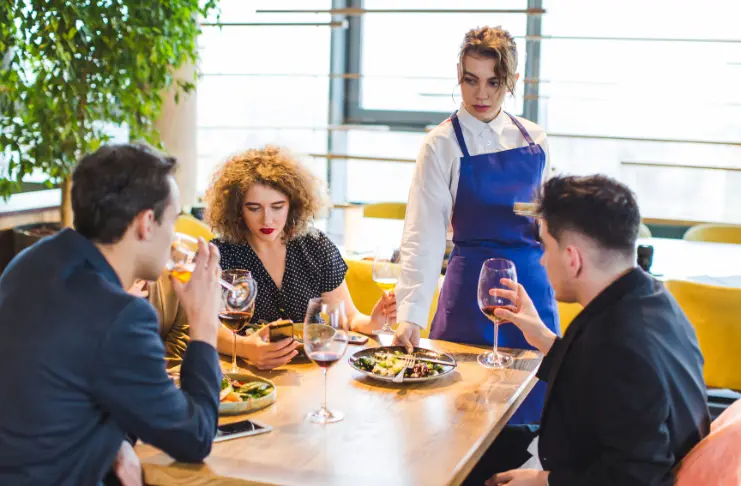
Casual dining restaurants provide sit-down service with moderate pricing, creating a balance between comfort and quality. Unlike fine dining, the environment is relaxed and approachable, making it accessible to a broader range of customers while still offering table service and attentive staff.
Menus are designed to appeal to diverse tastes, with familiar dishes that encourage repeat visits.
This segment is particularly popular among families, groups, and everyday diners seeking consistency without the formality of high-end establishments. Casual dining relies on smooth front- and back-of-house coordination to maintain a pleasant dining pace without compromising service quality.
3. Fast Casual Service
A fast casual restaurant sits between casual dining and quick service, where guests expect higher-quality ingredients and fresh preparation but with minimal waiting time. As a result, ordering often happens at the counter or via self-service kiosks, and limited table service reduces labor demands while keeping the dining experience more personal than a typical fast-food outlet.
Urban markets have driven much of fast casual’s growth, where convenience and menu customization matter. Operators need kitchens and workflows that support fast turnaround without compromising quality, and menu design emphasizes flexibility and freshness to meet customer expectations.
4. Quick Service Restaurants
Quick service restaurants are built around speed, consistency, and high-volume operations, where predictability is often more important than the dining experience itself.
Customers expect fast, accurate service through drive-thru lanes, counters, or delivery apps, and menus are deliberately standardized to support this model.
In the QSR model, operational efficiency is essential for profitability, and staff are trained to maintain accuracy and pace while working within tightly defined workflows. Technology, including kitchen displays and digital ordering systems, further streamlines operations, ensuring that orders move quickly from placement to fulfillment.

5. Cafes and Coffee Shops
Cafés and coffee shops typically operate with a counter service model, where customers place their orders at the counter and either wait for their items or pick them up when ready. This setup fosters a casual, self-service environment that encourages patrons to linger and enjoy their beverages at their own pace.
The ambiance is often designed to be cozy and inviting, making it a popular spot for individuals seeking a comfortable place to relax or work.
Interestingly, what has boosted the café industry is the rise of social media and mobile ordering. A notable example is Starbucks, where mobile orders via its app now account for 31% of all transactions in the U.S. stores.
6. Buffet Service
Buffet-style dining offers customers the freedom to serve themselves from a variety of dishes laid out on a spread. This self-service model is particularly popular in settings like hotels and large group events, where guests can choose from a wide array of options in the buffet line to suit their preferences. Not to mention, its self-service nature allows for efficient service, accommodating high volumes of guests simultaneously.
However, maintaining food quality and safety becomes crucial for a buffet service as self-service buffets can pose food contamination hazards due to shared utensils and the potential for improper food handling.
Therefore, implementing strict hygiene protocols and regular monitoring is essential to ensure a safe dining experience.
7. Food Trucks and Street Food Stalls
Food trucks and street food vendors offer quick, on-the-go service with minimal seating, catering to customers seeking fast and flavorful meals. The service model emphasizes speed, with a limited menu that can be prepared and served rapidly, and often capitalizes on unique flavors and the experience of enjoying food in a casual, often outdoor setting.
As a result, food trucks must be equipped to handle high volumes efficiently. This includes having streamlined workflows, adequate staffing, and the ability to adapt to varying customer demands.
The mobility of food trucks also allows for flexibility in location, enabling operators to reach different customer segments.
8. Cloud Kitchens and Delivery-Only Service
Ghost kitchens, also known as dark or cloud kitchens, operate without a physical dining area, focusing exclusively on fulfilling orders placed through delivery apps.
This model allows restaurants to minimize overhead costs associated with traditional dine-in spaces, such as rent and front-of-house staff. The service is entirely digital, with customers placing orders via the restaurant’s own app or third-party delivery aggregators.
Customers increasingly favor this format for convenience, speed, and the ability to access diverse cuisines from home or work. In 2025, the U.S. ghost kitchen market is projected to reach $98.28 billion, with a compound annual growth rate (CAGR) of 62.3% through 2032.
The growing adoption of online ordering has driven significant market expansion.
Types of Table Service Styles

A. American Service
American service is the most common dining style in U.S. restaurants, where pre-plated meals are delivered directly to guests. Diners expect reliable service, consistent portions, and timely delivery of their orders. The experience emphasizes efficiency, predictability, and straightforward hospitality rather than elaborate presentation.
How it works: Kitchen staff prepare and plate dishes in advance. Servers then deliver meals to the table, coordinating timing so multiple tables can be served efficiently.
Suitable formats: This service style suits casual dining, mid-range sit-down restaurants, and fast casual concepts. It works best where standardization and operational efficiency are key.
B. French Service
French service is a formal, high-end style where dishes are often prepared or finished tableside. It features an elegant, personalized experience, with attention to presentation, timing, and interactive elements such as tableside carving or flambéing.
How it works: In French service, chefs or trained waitstaff may finish sauces, carve meats, or assemble dishes in front of diners. Each course is coordinated carefully to ensure perfect timing, and service is highly choreographed to maintain flow and presentation.
Suitable format: French service is most appropriate for fine dining restaurants, luxury hotels, and formal events where the objective is to provide a premium, memorable dining experience.
C. Russian Service
Russian service focuses a lot on presentation, with the food being served on elaborately arranged platters to guests. The style conveys elegance and formality without the labor intensity of French service.
The service is highly polished and organized, with uniform portions and smooth timing, creating a refined dining experience suitable for events or formal meals.
How it works: Waitstaff brings large platters to the table, serving guests in a coordinated sequence. The system allows multiple diners to be served simultaneously while maintaining presentation and portion consistency.
Suitable format: Russian service works well in banquets, corporate events, and formal group dining, particularly when multiple courses are served.

D. Gueridon / Tableside Service
Gueridon service involves a portable trolley used by waitstaff to prepare, finish, or flambé dishes in front of guests. This approach adds theatrical flair and a personalized touch to the dining experience. Customers expect both culinary skill and entertainment, enjoying the visual preparation as part of the meal.
How it works: Dishes are partially prepared in the kitchen, then brought to the table on a gueridon trolley. Waitstaff complete final steps such as carving, tossing salads, or flambéing desserts directly in front of diners.
Suitable format: Gueridon service is typically found in fine dining establishments and upscale restaurants. It is ideal for high-end experiences where presentation, guest interaction, and a dining spectacle justify higher pricing.
E. Buffet Table Service
The buffet table service hybrid combines self-service with partial waiter assistance. Guests serve themselves from a buffet for most dishes while staff handle beverages, desserts, or specialty items. This format allows diners flexibility in choosing portions and combinations, creating a casual yet structured experience.
How it works: Restaurants set up designated buffet areas with chafing dishes, heat lamps, or cold stations. Guests move along the line, selecting items at their own pace, while staff monitor replenishment and attend to specific table services like drinks or plated desserts.
Suitable format: This hybrid model is common in hotels, resorts, and event spaces where efficiency, variety, and guest autonomy are priorities.

F. Takeaway Service
Takeaway service focuses on meals prepared for off-premises consumption, prioritizing convenience, speed, and order accuracy. Customers expect well-packaged food that maintains temperature, presentation, and flavor during transport.
How it works: Kitchen staff prepare and portion meals with packaging designed for transport. Orders are either picked up at the counter or handed over through a dedicated takeaway window.
Suitable format: Takeaway service is common in fast casual restaurants, QSRs, and ghost kitchens.
Conclusion
Restaurant service shapes the entire experience, sets expectations, and communicates a brand’s identity. Each style, whether a quick-service counter, a casual café, or an immersive fine dining setup, brings its own rhythm, challenges, and opportunities for connection with guests.
By experimenting thoughtfully and adjusting formats to fit both concept and customer needs, businesses can create memorable and distinct experiences. In this sense, service is both a tool and a differentiator, a way to define a restaurant’s identity in every meal it serves.