

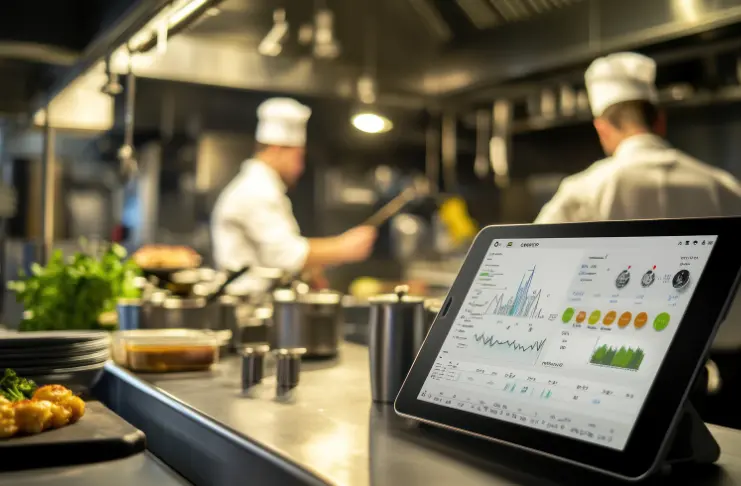
Restaurant technology has moved way past just credit card terminals for payments. Today, it’s at the heart of how restaurants run, helping teams take orders faster, manage inventory better, cut wait times, and keep customers happy.
From self-ordering kiosks and QR code menus to real-time analytics, restaurants are investing in digital tools more than ever before—and the numbers prove it.
Reports suggest that the global restaurant tech market hit $59.3 billion in 2024 and is projected to reach $314.85 billion by 2033, with a 16.39% CAGR from 2023 to 2033.
But what’s actually being adopted? Where are the market innovations headed? And where is the industry headed? This blog will break down restaurant technology industry statistics, current trends, digital solutions, and tech innovations that are changing the way restaurants operate.
The Current State of Restaurant Technology
Restaurant technology includes any digital tool, software, or equipment that helps run a restaurant more efficiently. This can be as simple as a customer order display system for real-time order updates or as advanced as an inventory management platform that lets you track ingredient quantities and food costs.
It covers every part of the operation—front of house, back of house, and everything in between. So, anything that helps a restaurant serve customers faster, reduce errors, cut costs, or make better business decisions.
Restaurant tech is growing fast, and it’s not just enterprise chains jumping in. Local restaurants are also embracing technology and adopting digital tools at a rapid pace, especially after the shift in customer behavior post-pandemic.
Here’s a quick overview of where things stand today, as per a report by the National Restaurant Association, 2024:
- 76% of operators accept that using technology in their restaurant operations gives them a competitive advantage.
- However, only 13% of these operators are happy with their existing tech stack.
- 51% of operators invested in technology in 2023 to make their service more efficient, while 55% plan on investing in 2024
- Due to technological investment, 73% of restaurant operators have achieved higher operational productivity and efficiency than what it was before the pandemic.
- 52% of operators plan on using technology for their back office operations, such as finance, compliance, tax, and payroll.
Why Do You Need to Keep Up with Restaurant Technology Industry Statistics and Trends?

Because falling behind can cost you, not just in terms of revenue but also in customer loyalty, competitive standing, and operational efficiency.
Think about it: customer expectations are changing fast. They want faster service, ease of ordering and payments, and personalized experiences. But at the same time, your restaurant is dealing with rising food costs, labor shortages, and tighter margins.
The answer to all these expectations and challenges? Technology.
Here’s why it matters to stay on top of key restaurant technology statistics and trends:
- Tech boosts efficiency: Automation can reduce manual tasks like punching orders, inventory counting, and staff scheduling, saving time and reducing mistakes.
- Tech improves guest experience: Technology like mobile ordering, self-service kiosks, and loyalty apps creates smoother interactions and keeps guests coming back.
- Tech helps you stay competitive: When other players in the industry are using data to optimize menus or upsell better, sticking to pen-and-paper systems can easily leave you behind.
- Technology can drive revenue: Restaurants using modern tech platforms, such as for online ordering or restaurant management, often see higher check sizes and better conversion rates.
Challenges to Restaurant Technology Adoption
Changing customer expectations have prompted the adoption of restaurant technology at scale, but it is not without its challenges.
So, when evaluating the key restaurant technology industry statistics to guide your technology implementation, it is equally important to consider them. Some of these include-
- Budget Constraints: For many restaurants, high upfront costs are a major barrier. Cloud-based restaurant management or analytics platforms may offer long-term ROI, but the initial investment can be difficult to manage. This often results in a tech divide, where large chains can innovate faster while smaller players struggle to keep up.
- Staff training: Introducing new tech means changing how the team works, and that’s often met with resistance. Front-of-house and kitchen staff may feel overwhelmed by unfamiliar interfaces or new workflows. Without proper onboarding and training, even the most advanced systems may be underutilized.
- Integration: Many restaurants still rely on outdated tech stacks or disconnected tools to manage their operations. Integrating modern platforms into legacy infrastructure can cause compatibility issues and operational downtime.
- Data privacy and security: As restaurants collect more customer data through apps, QR menus, loyalty programs, and online orders, they also face greater responsibility to keep it secure. A single data breach can damage trust and lead to legal consequences.
Key Adoption Trends in Restaurant Technology

With so many tools available, not every technology is adopted at the same pace. Operators are prioritizing solutions that deliver the most value.
Perhaps they want to offer smoother ordering, access real-time customer data, or streamline payments. Here’s a look at the top tech categories restaurants are investing in and what the data says.
1. Point-of-Sale (POS) Systems
Modern POS systems have evolved into comprehensive platforms that streamline operations and enhance customer experiences.
Restaurants can implement holistic platforms that integrate POS, ordering, inventory, kitchen management, and more in one place, automating routine tasks and gaining real-time insights. In fact, 40% of independent restaurants have already adopted a digital POS system, indicating a good first step towards efficient processes.
Given its position at the core of a restaurant’s operations, it is unsurprising that the global POS market is projected to reach $110.12 billion by 2032, at a CAGR of 16.1%.
2. Online Ordering and Delivery
The rise of digital ordering has also changed the way customers interact with restaurants – what was earlier just convenience is now how people live. Currently, 75% of restaurant traffic involves takeout, including drive-thru and pickup.
And not just that. A significant 95% of consumers emphasize speed as a critical factor in their takeout experience. For restaurants, this means implementing seamless online ordering systems to stay ahead of the competition.
3. Loyalty and CRM Systems
Personalized loyalty programs and CRM platforms help restaurant owners build customer relationships and drive repeat business. According to CNBC, loyalty programs encourage customers to return more frequently. And on average, these returning customers spend more than non-loyalty customers, further boosting your revenue.
Take Starbucks, for example. Starbucks has a loyalty program that allows its customers to earn stars on every purchase they make and redeem them for exciting rewards. The result? The reward program has 34.3 million users in the US and now helps boost revenue, contributing to 41% of US sales.
4. Contactless Payments
When it comes to making dining more convenient for customer, contactless payments are becoming a key tech integration for restaurants. Approximately 68% of millennials prefer digital payments over cash, reflecting a generational shift towards contactless transactions.
Many cloud-based POS systems support various payment options, including mobile wallets and QR codes, making transactions faster and more convenient.
5. Self-Ordering Kiosks
For quick-service and fast-casual restaurants, self-service technologies are a simple addition to enhance efficiency and boost sales.
How? Ordering via kiosks often results in higher spending. On average, the spending is 8% more at quick-service and 15% more at fast-casual establishments.
This is because Kiosks provide a more efficient and customizable ordering experience. While a cashier may not be able to upsell during rush hours, kiosks never miss an opportunity to do so.
6. Inventory Management Systems
More restaurants are abandoning manual inventory tracking and embracing smart systems that help them monitor stock levels, reduce waste, and control food costs.
The global restaurant inventory management software market is expected to grow from $3.95 billion in 2024 to $9.17 billion by 2030, with a CAGR of nearly 15%. That growth shows just how much demand there is for better control over back-of-house operations.
7. Table Reservation
Online reservation tools have become a key part of front-of-house tech. They don’t just help with booking tables. They manage waitlists, reduce no-shows, and create a smoother experience for both staff and guests.
Research suggests that over 60% of diners prefer to book tables online, often through the restaurant’s website or app. This trend is pushing restaurants to adopt integrated booking tools that meet guest expectations.
Restaurant Technology Trends: Guest Behavior and Preferences
As technology continues to reshape the dining landscape, understanding customer preferences is crucial for restaurants aiming to enhance guest experiences.
Recent data highlights a growing inclination among diners toward tech-enabled solutions that offer convenience, personalization, and efficiency.
- Approximately 70% of consumers, including 88% of Gen Zs and 84% of Millennials, are interested in technology that allows them to place their order while making a reservation to receive prompt service upon arrival.
- 63% of full-service customers would be comfortable using an app to place their order, and 55% to pay.
- 58% of customers would prefer order pickup over dine-in if they have the digital facility available.
- 45% of customers have left a restaurant website because of a poor experience.
- 67% of restaurant guests are more likely to order from a place that offers digital loyalty programs
- 55% of customers are ready to pay more for a smooth and reliable digital experience.
In fact, younger demographics show a higher acceptance of automation and technology in dining experiences. For instance, 45% of Millennials and 41% of Gen Zers are comfortable with food prepared by artificial intelligence and automated systems, while 58% of Millennials and 43% of Gen Zers are good with food delivery by robots.
These evolving guest preferences clearly show that convenience, personalization, and transparency are now core to the dining experience.
Diners expect tech to enhance human hospitality. For restaurants, this means investing in tools that streamline service and offer tailored experiences, which will be key to staying relevant and competitive.
Emerging Innovations in Restaurant Technology

1. AI and Machine Learning
AI in restaurant technology has evolved far beyond chatbots and personalized menus. It’s now powering intelligent systems that help owners and managers make smarter, data-driven decisions with the right technology and less guesswork.
Predictive analytics lets restaurants forecast demand and inventory needs. For example, AI platforms can analyze historical sales, local events, and foot traffic data to recommend staffing schedules and prep quantities, and 81% of kitchen management systems are already using AI for this purpose.
2. Augmented Reality (AR) for Enhanced Dining Experience
While still in their early stages compared to other tech trends, augmented reality (AR) and virtual reality (VR) are starting to carve out a space in the restaurant industry to improve both the guest experience and staff training.
AR can be used to turn static menus into interactive experiences. Guests can scan the menu to see 3D visualizations of dishes, offering a more immersive way to choose their meal. This helps set expectations, increases trust in quality, and often drives higher-value purchases.
3. Internet of Things (IoT) in Kitchens
For your back-of-house operations, IoT technology in kitchen equipment like smart fridges and ovens that come with sensors to track temperature, humidity, and energy usage in real time. The result is an 18% decrease in spoilage and restaurants that can maintain food safety compliance without requiring constant manual checks.
4. Voice Ordering and Virtual Assistants
For drive-thru restaurants, voice tech will become a frictionless, hands-free way to improve ordering speed and reduce the burden on staff, like Wendy’s uses a system, “FreshAI”, to take drive-thru orders in over 100 stores.
These systems use natural language processing (NLP) to take complex orders with high accuracy, freeing up staff to focus on fulfilling orders.
Further, restaurants dealing with high call volumes can use AI-powered voice bots to handle reservations, answer FAQs, and reroute calls during peak times for a better customer experience without increasing overhead.
5. Robotics and Automation
In an industry where labor shortage is a major concern, along with strict food quality and safety requirements, robotics is an emerging solution being adopted by restaurants globally.
Case in point: Miso Robotics’ next-gen Flippy Fry Station robot that can automate the preparation of French fries, chicken tacos, onion rings, and other fried items with unmatched accuracy and consistency. Another example is autonomous food delivery robots launched by Avride in downtown Dallas to serve meals from local restaurants through the Uber Eats app.