

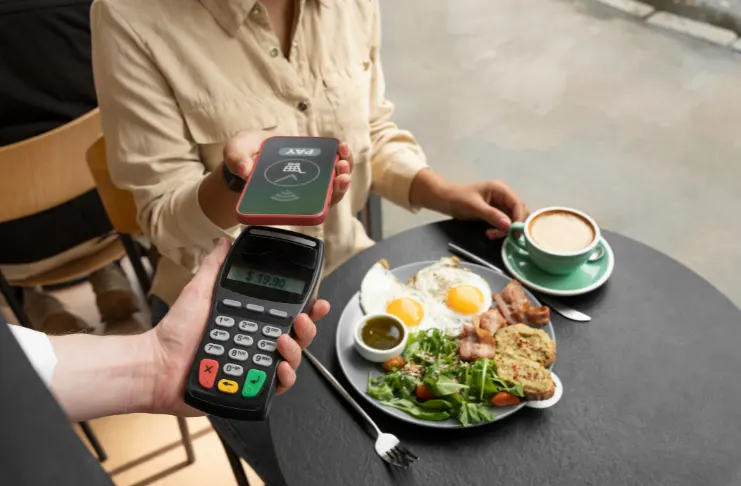
These days, making a payment at restaurants has become way easier than deciding what to order. Instead of traditional cards or cash, customers are increasingly opting for digital wallets, QR codes, and in-app transactions to complete payments within seconds.
What used to be a simple checkout step has become a critical touchpoint that can shape customer satisfaction, influence order value, and even determine whether a guest returns.
However, restaurant payment behavior in 2025 is increasingly fragmented. Some customers prefer tap-to-pay for its speed, while others use stored cards in payment apps. Younger diners, meanwhile, are experimenting with in-app or loyalty-based payments. Keeping up with these shifts is important for restaurant owners to boost conversion and stay competitive.
This blog explores the latest restaurant payment method statistics, focusing on consumer preferences, transaction trends, and adoption patterns across formats.
The Changing Face of Restaurant Payments
In 2025, most diners no longer wait for the check or the card machine. Instead, they reach for their phones. Over the last few years, there’s been a steady decline in cash payments across restaurants, matched by a sharp rise in contactless and mobile payments.
According to the U.S. Federal Reserve’s Diary of Consumer Payment Choice, cash accounted for just 16% of all in-person transactions in the U.S. in 2023, down from 31% in 2017. By contrast, credit card payments increased to 32%, thanks to their convenience and the ability to be stored in mobile wallets and used via tap-to-pay or app-based platforms.
But that’s not all. The post-pandemic era is also big on more digital and more seamless payment models, such as scan-to-pay, QR codes, pay-at-table options, and in-app transactions. In fact, 63% of Americans currently use contactless payments, while 44% do so regularly.
As a result, these methods are being directly built into the flow of service, reducing friction for the guest and dependency on front-of-house staff.
Restaurant Payment Market Overview

The broader U.S. online payment market reached $12.38 trillion in 2023 and is projected to grow at a CAGR of 16.2% through 2032, reaching nearly $41.17 trillion, fueled by mobile wallets, BNPL, and real-time payment tools.
When it comes to the restaurant industry, cashless payments are now dominating the market, making up about 62% of all restaurant transactions in 2024. Consumers are actively shifting to these methods to meet their need for more convenient and seamless transactions.
This means restaurants consistently need to support these transactions to meet expectations, streamline operations, and capture a growing share of the digital payment ecosystem.
Types of Restaurant Payment Methods in 2025
With convenience, security, and speed at the centre of customer payment expectations, restaurants will focus more on digital payment methods that deliver on these aspects.
Here are the key types of restaurant payment methods and their impact on the industry-
1. Contactless Payments
Contactless methods, such as tap-to-pay cards, have become the backbone of fast and convenient service in restaurants. Today, 51% of Americans prefer using contactless or mobile payment methods as they are faster and more secure.
No wonder, then, over 60% of in‑person transactions globally now rely on contactless tech, especially in mature markets like the UK and US. Contactless payments work with NFC (Near Field Communication) and RFID (Radio Frequency Identification) technologies that let devices “talk” to each other over a distance.
With contactless payment options, diners don’t need to remember any PINs or spend their time in the queue looking for cash. Transactions become simpler, while restaurants benefit from faster checkouts and quicker table turnovers.
2. Mobile Apps and Wallets
Digital wallets, such as Apple Pay, Google Pay, and Samsung Pay, are increasingly becoming the standard in dining environments. They enable guests to pay using their smartphones or wearable devices, resulting in hassle-free checkouts.
According to recent statistics, 79% of consumers prefer contactless or mobile payments, with 73% specifically using digital wallets in restaurants. Restaurants are also responding accordingly, with 76% adding mobile payments, 44% offering QR codes, and 66% tap-to-pay.
3. QR Code Payments
QR codes, with their scannable format, have become quite mainstream for restaurant ordering and payments. Customers love it — 58% would like the ability to pay at restaurants and grocery stores via QR codes, while 49% prefer accessing the menu via it.
Furthermore, 54.8% of U.S. restaurants utilize multiple QR code implementations beyond menus, extending to payments and loyalty integrations. QR code payment is not only convenient for customers, but it also enables restaurants to manage checkouts more efficiently during peak hours.

4. Integrated Payments
Payment embedded directly in restaurant-owned systems, such as POS systems, apps, kiosks, or smart tables, drives operational efficiency and guest loyalty. With these systems, guests can pay directly (typically using their smartphones), without the need to interact with staff or swipe cards.
At the same time, it allows restaurants to personalize customer experiences. When you link your payment processes to kiosk or POS systems, it unlocks a range of insights such as customer data, past orders, and preferences, allowing you to customize offers and upsell smartly.
5. Omnichannel Payments
Guests are interacting across multiple channels, including delivery apps, dine-in, and online ordering. So, why not offer them a unified payment experience throughout? This involves offering in-app payment options and integrating dine-in and delivery payments to easily track transactions and loyalty across payment methods.
This allows restaurants to offer an enhanced customer experience, driven by consistent payment methods for different formats.
6. Loyalty Programs
As of 2025, 68% of full-service and 71% of quick-service restaurants have loyalty programs, with projections rising toward 80% by year-end.
Restaurants offering loyalty program benefits to their customers can enhance the experience by connecting loyalty with payments. By integrating loyalty rewards with in-app payments or mobile wallets, guests can easily join the program, earn points, and redeem them, all through the payment system.
Plus, it gets easy to manage payment and loyalty in one step, which streamlines the dining experience for customers and encourages participation. It pays off: loyalty members visit 20% more often and spend more annually, while also driving higher retention.
EXPERT OPINION
Restaurant Payment Method Statistics: What Do Consumers Prefer?
Restaurants need to understand how different guest groups prefer to pay, whether they dine in, take out, or order delivery. Here are the latest statistics that highlight customer payment choices when they interact with a restaurant-
- 4.4 billion mobile transactions occurred in the U.S. in 2022, projected to reach 8.3 billion by 2027.
- 79% of consumers prefer contactless or mobile payments, with 66% of Gen Z using digital wallets.
- In 2022, credit card payments accounted for $29.8 billion in restaurant sales, as compared to debit card payments of $25.3 billion.
- According to a customer survey, 37% of consumers paid at a restaurant using a debit card, and 33% did so with a credit card.
- Restaurant QR code scans fell by 27% from 2022 to 2023, indicating shifts in customer behavior and preferences for QR codes.
- However, 46% of sit-down diners still prefer QR code payments, highlighting its growth and convenience.
- A report by the NRA reveals that 77% of Gen Z and 86% of Millennials would use the restaurant’s app to pay.
- Among full-service customers, 62% would pay the check using mobile or contactless payment options, while 57% would prefer digital wallets to pay.
- A significant 79% of Millennials and 67% of Gen Z adults would pay the check using a tablet at the table, if given the option.
- 81% of Millennials would pay at a limited-service restaurant using a self-service kiosk.
- 80% of delivery customers would order using a smartphone app, and 70% would prefer contactless or mobile payment.

Digital Payment Adoption Trends in Restaurants
As customers shift toward speed, convenience, and digital-first experiences, restaurants are responding with tangible changes in how they handle payments. The following stats highlight where that adoption is happening fastest, and what it signals for the future of restaurant operations.
1. 40% of Independent Restaurants Use Real-Time Payments Like Instant Bank Transfer or PayPal
The rise of real-time payments is reshaping how small restaurants manage cash flow and streamline transactions. As of 2024, 40% of independent restaurants in the U.S. have adopted instant payment methods such as PayPal, Venmo, or direct bank transfers. These systems bypass traditional settlement delays, so funds can land in a restaurant’s account within seconds.
For independent operators, this speed reduces reliance on credit lines or delayed invoice cycles and empowers owners to make faster purchasing and staffing decisions.
2. Digital Wallet Usage in Restaurants Grew by 45% Year-Over-Year
Digital wallet use in restaurants is growing 45% year-over-year, reflecting a growing trust in mobile-first transactions. Digital wallets like Google Pay, Samsung Pay, and Apple Pay offer secure, tap-and-go convenience for a quicker payment process and checkout.
For restaurants, this opens opportunities to streamline front-of-house operations. When guests pay faster, peak-hour congestion eases, and staff can focus more on service than processing payments. It also reduces the risk of cash handling and card fraud.
3. 38% of Restaurants Have Already Implemented QR Code Payments As of 2024
With 38% of restaurants now offering QR code payments, scan-to-pay is clearly a standard customer expectation, primarily in casual and fast-casual settings.
The appeal lies in the seamlessness: guests scan a code, split the bill if needed, and pay directly from their phones. For restaurant operators, QR codes reduce staff dependency, simplify checkout, and integrate easily into existing technology stacks.

4. 32% of Digital Orders (App or Kiosk-Based) Are Paid In-App
The fact that nearly a third of digital orders are paid within the same app or kiosk where they’re placed reflects how restaurants are combining the ordering and payment journey. This shift reduces checkout friction for guests and restaurant teams managing multiple ordering channels.
Unlike traditional card terminals or handheld payment devices, in-app and kiosk payments allow restaurants to automate checkout, apply personalized promotions, and eliminate back-and-forth between guests and staff.
The result is an enhanced transaction experience that supports upselling, faster order confirmation, and seamless handoff for both dine-in and pickup.
5. Restaurants Using QR-Enabled POS Systems Saw Up to a 30% Reduction in Order Processing Time
When guests place and pay for their order directly via a QR-linked POS system, the traditional delays associated with flagging down servers, waiting for checks, and handing off cards are eliminated. This not only reduces order processing time by 30% but also eliminates errors from manual entry and improves labor efficiency.
For quick-service and fast-casual formats, this level of automation enhances throughput, while for full-service venues, it ensures smoother table management and improved guest flow during peak hours.
Conclusion
The way people pay at restaurants is changing fast. From mobile wallets to QR codes and in-app payments, guests are opting for faster, easier, and more digital ways to pay across dine-in, takeout, and delivery services.
Restaurants that treat payments as part of a seamless, branded experience will have a clear edge. With each transaction, they can gather better insights, build stronger loyalty, and eliminate friction from the checkout process, regardless of where the guest orders.