

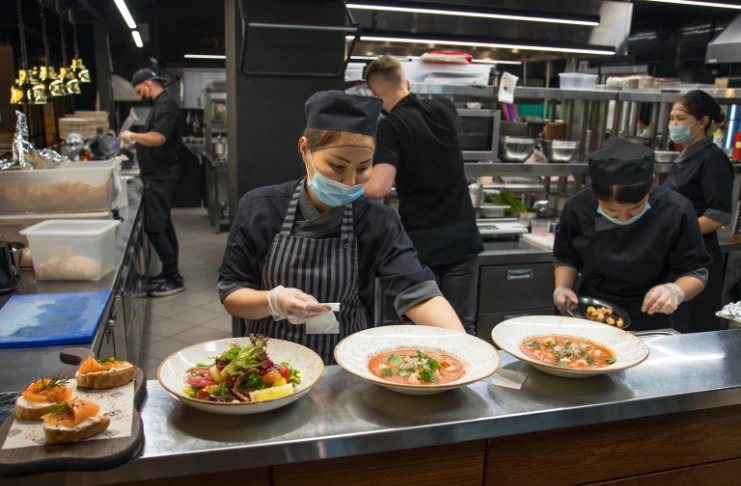
The back of the house plays a defining role in restaurant performance. Yet it’s also where most inefficiencies arise, and often go unnoticed. Prep delays, poor station flow, mismanaged inventory, and staffing gaps all begin behind the scenes, but their impact reaches the guest, the brand, and the bottom line.
With rising labor costs, margin pressure, and demand for faster service, restaurant owners are under pressure to optimize systems, people, and tools that power kitchen operations. But doing so requires visibility. The ability to measure what’s happening in the kitchen and act on it is quickly becoming a competitive advantage.
So, to help restaurant owners understand BOH efficiency, this blog covers the major restaurant back of house efficiency statistics and the latest trends that are impacting restaurant operations.
How Much of a Restaurant’s Efficiency Depends on BOH?
The Back of House (BOH) covers everything that happens behind the scenes in a restaurant. It includes food prep, cooking, plating, inventory handling, equipment use, cleaning routines, and how kitchen staff work together. While the front of house focuses on guest interactions, BOH ensures that the food meets the expectations and service runs on schedule.
What happens in the kitchen has a direct impact on food quality, timing, cost, and consistency. If prep is delayed, if inventory is low, or if workflows are disorganized, it shows up in slower service, higher waste, and reduced profits.
On the other hand, when BOH operations are well-managed, the entire restaurant runs more smoothly, from cost control to guest satisfaction. Here’s how efficient back-of-house operations impact a restaurant-
1. Better Cost Control
Labor and food are the two major costs in restaurants, and BOH contributes heavily to both. These are your prime costs that typically range from 55% to 65% of total sales in full-service restaurants, depending on segment and complexity.
In fact, the average labor cost alone in the restaurant industry is about 31% of sales, with a majority going towards BOH staffing and execution. When the core BOH operations are tightly managed, food and labor costs stay aligned with demand, and profitability increases.
2. Maintains Consistency and Food Quality
BOH operations rely on standardized recipes, precise portioning, and well-structured prep routines to ensure consistent quality. However, in the absence of these processes, restaurants not only see increased wastage but also risk not meeting guest expectations and brand standards.
Industry research indicates that restaurants waste 4-10% of all food they purchase due to spoilage, overproduction, and portioning errors, all before the dish reaches a diner.
By tightening portion control, perhaps using scales, measuring tools, or strict recipe management, restaurants can minimize a meaningful share of that potential loss.
3. Enhanced Guest Experience
When kitchen stations run efficiently, orders move quickly, meals reach tables on time, and service flow stays steady, ensuring better coordination between BOH and FOH. Disruptions behind the scenes, however, can seriously slow down execution and impact revenue.
According to industry standards, entrée ticket times of under 20 minutes and below 10 minutes for appetizers and sides are ideal to maintain pace during busy service periods.
As a result, efficient BOH setups help optimize ticket times, minimize communication errors by using technology to route orders, and support consistent throughput so FOH can operate efficiently.

4. Reduces Waste and Losses
Restaurants in the U.S. generate between 22 and 33 billion pounds of food waste annually, representing roughly $25 billion in cost. Most of that loss, whether from spoilage, overproduction, misportioning, or expired ingredients, originates in the BOH.
BOH controls like FIFO rotation, daily inventory audits, and portion tracking help minimize this wastage and help restaurants recoup the associated losses.
5. Ensures Scalability
When recipes, prep protocols, staffing roles, and inventory cycles are standardized, each new location can onboard faster and perform more predictably. Restaurants with disciplined BOH frameworks expand more reliably, reducing training time and variation in output.
EXPERT OPINION
Major BOH Performance and Productivity Metrics to Track
Efficient BOH operations depend on more than staff productivity and prep speed. Achieving efficiency requires consistent, real-time performance tracking. For this, restaurant owners must monitor the right metrics to identify bottlenecks, reduce waste, and improve output without overloading teams.
Below are the core BOH metrics every restaurant kitchen should track to measure efficiency-
A. Ticket Time / Order Completion Time
This tracks how long it takes from when a diner places an order to when it’s ready for service. Kitchens that monitor ticket times in real-time using restaurant management systems can identify slowdowns at specific stations or during peak periods.
Higher ticket times often signal issues like prep delays, poor station layout, or understaffing. By benchmarking average ticket durations by daypart or meal type, managers can optimize workflows and staff allocation.
B. Prep Time Accuracy
How long does it take for you to prepare ingredients or complete recurring tasks like dough proofing or sauce batches? Tracking prep time against expected benchmarks helps identify inefficiencies or training gaps.
If certain tasks are consistently taking more time than necessary, it may indicate inaccurate SOPs, inadequate tools, or under-skilled labor, all of which affect kitchen throughput.
C. Waste and Spoilage Ratios
Monitoring yield (output generated from ingredients) versus waste is critical for controlling the food cost percentage. This includes tracking trimmings, spoiled inventory, overproduction, and returned plates.
High waste often results from portioning errors or inconsistent prep, both of which can be corrected with better analytics and staff training.
D. Inventory Turnover Ratio and Usage Rates
Closely linked to waste, inventory metrics reveal how quickly ingredients move through the kitchen. Slow turnover may indicate overordering or poor menu planning. Fast turnover with unexpected shortages may suggest poor forecasting or stock mismanagement.
Tracking these metrics helps understand cooking and prep efficiency in your kitchen, ensuring key items are always available and reducing spoilage risk.

E. Order Accuracy Rate
This measures the percentage of orders correctly prepared and fulfilled against the total number of orders. High accuracy rates mean streamlined prep lines, clear communication, and consistent station performance.
High order accuracy rates are crucial to ensure customer loyalty and operational efficiency.
F. Staff Productivity Metrics
Integrated restaurant management and analytics tools can help track the output (e.g., meals plated, tasks completed) generated by each team member per shift. This data helps in scheduling, cross-training, and identifying underperformance patterns tied to specific days or roles.
Restaurant Back of House Efficiency Statistics: Labor and Staffing Trends
1. 77% of restaurant operators report recruitment and retention as major challenges
A QSR Magazine survey found that 77% of operators cite staffing as a core concern, while 32% confirm a labor shortage against demand. Within the industry, full-service kitchens are struggling with serious BOH staffing issues: 78% struggle specifically to hire experienced chefs and cooks, and 61% struggle with kitchen support roles.
2. BOH has an employee turnover rate of 43% annually
Back-of-house employee turnover remains stubbornly high, with rates averaging 43% each year. This constant churn results in time lost on hiring and retraining, and affects kitchen workflows, particularly during busy periods.
3. The average cost to replace an hourly restaurant worker is nearly $5,860
According to Cornell, replacing a single hourly restaurant employee costs approximately $5,864 when you factor in the cost of recruitment, onboarding, and lost productivity. For restaurants facing high turnover, these costs quickly eat into the profits and disrupt production rhythm as new hires need time to learn station flows and protocols.
4. 60% of operators say they have open roles
More than 60% of restaurant operators acknowledge that they have job openings that are difficult to fill, resulting in understaffing in key shifts or roles. An understaffed kitchen forces existing cooks into overtime, increases burnout, and strains kitchen efficiency to breaking point.

5. Up to 75% of restaurant staff quit within 90 days, especially in QSRs
Quick-service roles face high attrition rates, as 54% of workers quit before 90 days, and overall turnover is around 70-80% across the industry. What’s more, 50% of food and hospitality employees leave due to increased burnout.
6. 65% of restaurants plan to raise wages within 12 months
A report notes 65% of restaurants are planning wage increases to tackle staffing shortages, while 83% say offering benefits improves retention. Clearly, competitive compensation is becoming an essential tool for attracting and retaining BOH talent and maintaining staffing continuity.
Kitchen Workflow and Time Efficiency Statistics
1. 60% of new restaurants install kitchen display systems (KDS) in their first year
According to a report, roughly six in ten new restaurants and 75% of fast food venues in North America installed a kitchen display system in the first year of their operation in 2022. This offers various benefits to kitchens such as streamlined order routing, reduced errors, and accurate service, even during peak hours.
2. Reconfigured kitchen layouts can improve throughput by 30%
A Foodservice Equipment Report shows that strategically redesigning prep and cookline layouts improved kitchen throughput by 30%, boosting efficiency by reducing unnecessary movement and streamlining station hand-offs.
3. Average order preparation time benchmarks range between 20 and 30 minutes
For delivery and virtual kitchens, average order preparation time typically falls between 20 and 30 minutes, with top performers delivering in under 15 minutes. Kitchens tracking and targeting these ranges can reduce bottlenecks and increase customer satisfaction.

4. KDS reduces order inaccuracies by up to 35%
Replacing handwritten tickets with KDS systems can reduce prep errors by up to 35%. Digital display systems streamline order communication between front and back of house, minimizing miscommunication, lost tickets, and manual mistakes.
Fewer errors lead to faster ticket times, reduced food waste, and more consistent dish quality during peak service.
5. AI-Driven Inventory Management Cuts Food Waste by 30%
Adopting AI-based inventory management systems can reduce food waste by as much as 30% by predicting demand more accurately and avoiding over-ordering or spoilage. Data-driven, efficient inventory management means less spoilage, fresh stock, and more efficient food preparation, which can help enhance BOH output and consistency.
Inventory Management and Waste Reduction Statistics
Inventory and waste management sit at the core of back-of-house efficiency. Poor oversight in this area can lead to over-ordering, stockouts, spoilage, and significant food waste, which can add to operational strain and impact profit margins.
Here are various inventory and waste management statistics to understand their impact on BOH efficiency-
- An estimated 75% of all food waste generated by restaurants is avoidable with better planning and portion control.
- Nearly 17% of all restaurant meals are left uneaten by customers, and more than half of this plate waste is discarded onsite, contributing significantly to overall food waste.
- Kitchens that adopt AI-powered inventory management systems have reported a 15% to 30% reduction in kitchen waste through improved purchasing and stock rotation.
- Restaurants using waste analytics software save between €20,000 and €60,000 annually by identifying waste hotspots and adjusting purchases accordingly.
- Full-service restaurants in the U.S. generate over 7 million tons of food waste annually, incurring about $16 billion in losses from waste alone.
- Restaurants that perform weekly inventory audits and monitor their prime costs (combined cost of food and labor) improve margins by 2% to 5%.

Technological and Automation Adoption in the Back of House
A. Kitchen Management Systems
Comprehensive restaurant management platforms streamline back-of-house operations by integrating inventory planning, use, food safety, and kitchen workflows. They can automate inventory tracking, generate detailed reports, and integrate with your POS and KDS to help simplify order flow from the counter to the kitchen.
A survey reveals that 60% of restaurant operators have witnessed higher efficiency by at least 15% after implementing integrated software solutions.
B. Inventory Automation and AI Forecasting
Smart inventory systems now power nearly 50% of restaurant kitchens, allowing operators to track stock automatically, get real-time reorder alerts, and use AI-driven demand forecasting.
These tools help eliminate guesswork, reduce manual audits, and prevent over-ordering. Restaurants using such systems have reported up to 30% reduction in food waste, directly boosting BOH efficiency.
C. Kitchen Automation Tools
As of 2025, 95% of restaurant operators report using some form of AI or automation, ranging from smart ovens to kitchen production systems. These tools are credited with improved consistency, reduced errors, and faster turnaround in BOH.

D. Smart Cooking Equipment
Smart cooking appliances, such as programmed ovens, robotic fryers, and precision dispensers, automate cooking and prep tasks with exact timing and portioning. Kitchens deploying such automated equipment report up to 30% reduction in operational costs, along with reduced error rates and less training overhead. These tools help staff maintain throughput while improving quality.
E. Robotic Food Preparation
Robots like Flippy (fryer automation), Chippy (chip-making), and Avocado Peelers can handle repetitive tasks. For example, Flippy has delivered a 30% increase in fry production in quick-service pilot locations, while Chipotle’s “Autocado” peeler processes each avocado in just 26 seconds. These tools help BOH teams save time on routine prep, minimize waste, and keep pace during peak meal periods.
Together, all these technological investments help streamline operations by minimizing manual workflows, reducing prep errors, keeping inventory in check, and aligning staff workloads, thus contributing to better BOH throughput and quality services.
Conclusion
A well-run back of house shapes more than what happens in the kitchen; it directly impacts guest satisfaction, staff productivity, and the restaurant’s bottom line. As costs rise, paying attention to how kitchens operate, where time is lost, and which processes can be improved is crucial for long-term operational success.