

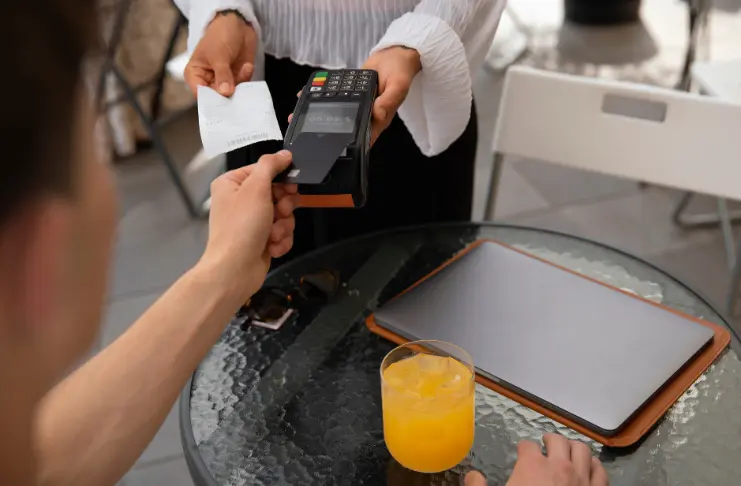
EMV technology, which is the chip-based standard for processing credit and debit card payments, has become a must-have for restaurants in the U.S. Since the liability shift in 2015, any business that doesn’t use EMV-compliant terminals is responsible for certain types of card fraud. That alone has pushed many restaurants to upgrade their payment systems.
However, while some restaurants moved quickly to comply, others have lagged behind due to cost concerns, outdated equipment, or a lack of clear guidance. Now, with growing demand for contactless payments and stricter fraud controls, EMV is central to how restaurants protect revenue and customer trust.
This blog will look at the rate of EMV adoption in restaurant statistics to determine how widely EMV has been adopted in the industry, what’s driving the shift, where gaps still exist, and what operators need to know about security, customer behavior, and future trends.
EMV in the Restaurant Industry: Background and Timeline
EMV, short for Europay, Mastercard, and Visa, is the global standard for chip-based card transactions. Unlike traditional magnetic stripe cards, EMV uses embedded microprocessor chips to authenticate payments, significantly reducing the risk of counterfeit fraud at the point of sale.
In the U.S., a major milestone in EMV adoption came on October 1, 2015, when the liability shift took effect. From that point on, any business that processes card payments without EMV-capable terminals would be liable for any resulting fraudulent charges, including chargebacks tied to stolen or cloned cards. This created a strong financial incentive for restaurants and retailers to adopt EMV-compliant terminals.
Between 2021 and 2024, EMV adoption gained real traction across industries. EMVCo reports that in 2023, 88% of card-present transactions in the U.S. were processed via EMV chips, a clear sign of mainstream deployment. Meanwhile, global EMV issuance exceeded 10.8 billion cards by 2024.
Beyond fraud mitigation, EMV adoption has broader implications for restaurants. It supports growing consumer demand for secure and seamless payment experiences, aligns restaurants with evolving banking and card issuer standards, and serves as a foundational step toward enabling mobile wallets and contactless payments.
Current EMV Adoption Rates in the U.S. Restaurants

According to EMVCo, about 96% of all global card-present transactions use EMV chip technology, with the U.S. closely aligned at roughly 93% by the end of 2024. In practical terms, almost all in-store credit and debit purchases across sectors, including restaurants, now rely on chip-authenticated payments.
At the same time, roughly 70% of issued payment cards globally, and approximately 68% of cards in the U.S., are EMV-enabled, reflecting that the majority of active cards today support chip-based transactions.
Contactless EMV in Restaurants
By 2023, over 85% of U.S. merchants were equipped to accept contactless EMV payments (tap-to-pay cards or mobile wallets). Simultaneously, 25% of all U.S. card transactions were contactless, driven by pandemic-inspired behavior shifts and growing consumer preference for NFC payments.
In restaurant environments, contactless EMV has gained traction quickly. While the retail sector shows roughly 38% contactless share, restaurants and quick-service operators follow closely with 36% of transactions being contactless, thanks to fast throughput needs and seamless checkout flow.
Major Factors Driving EMV Adoption in Restaurants
A. COVID‑19 Accelerated Demand for Contactless and EMV Payments
The pandemic dramatically reshaped payment behaviors. As dining rooms reopened, consumers continued preferring low-touch options, and as a result, EMV contactless payment technology became the norm. Consequently, restaurant operators rapidly adopted tap-to-pay and mobile wallet options to support contactless flow.
In the U.S., contactless transactions surged from 4.7 billion in 2019 to 8.1 billion in 2020, and climbed further to 11.1 billion in 2021, reaching 17.9 billion in 2023, demonstrating the rapid scale-up of low-touch payment behavior.
Now this also presented restaurants with a number of benefits: reduced touchpoints meant faster checkouts, safer service, and realigned consumer expectations, cementing contactless as one of the default options.
B. Upgrades to Digital POS, Mobile, and Self-Service Platforms
Modern POS systems now serve as integrated hubs handling ordering, loyalty, EMV chip cards, contactless payments, and analytics. And as restaurants upgrade their tech infrastructure to support operational efficiency and customer experience, EMV technology also becomes imperative.
In fact, by 2024, 42% of limited-service restaurant operators had invested in contactless and mobile-friendly payment technology, a dramatic shift from years prior. Additionally, the increasing adoption of self-order kiosks for digital ordering has further pushed EMV adoption.
These devices not only reduce order errors and labor costs but also enable EMV-compliant tap, chip, and NFC payments for a seamless customer experience.
C. Consumer Expectation for Speed and Convenience
The growing EMV adoption in U.S. restaurants is being directly accelerated by evolving consumer preferences for faster, frictionless, and mobile-first transactions. EMV-enabled contactless payments allow consumers to make payments quickly, often without interacting with the staff through QR codes or self-service kiosks.
In restaurant formats where speed of service is critical, adopting EMV payments improves transaction times by nearly 53% as compared to traditional chip-insert card transactions, allowing restaurants to serve guests with fewer delays.

D. Rise of Multi-Channel Fulfillment
The explosion of omnichannel ordering: restaurant apps, curbside pickup, and drive-thru models has redefined how restaurants handle payments. Even when orders originate online, the final payment interaction, particularly for curbside or drive-thru, may happen on-site.
This has led to an increase in the adoption of portable EMV-compliant terminals and mobile POS devices that support tap-to-pay, chip insertion, and digital wallet transactions.
These portable EMV readers offer a consistent and secure payment experience regardless of where the handoff occurs. Full-service chains and hybrid service models are increasingly adopting integrated EMV devices not just for convenience, but to safeguard sensitive payment data at every touchpoint.
E. Data Security Concerns
Data privacy has become a mainstream concern for diners. Payment security breaches and a growing awareness of payment fraud have made security a key part of the guest experience. According to Experian’s 2024 U.S. Identity & Fraud Report, 57% of consumers expressed concerns about conducting transactions online or at digital interfaces, highlighting a general skepticism about payment security.
As a result, EMV-enabled terminals, which encrypt and tokenize card data, have become important for restaurants to win customer trust and establish strong brand perception.
EXPERT OPINION
EMV Adoption in Restaurants: Benefits and Impact
As payment technology evolves, so do customer expectations, as well as security requirements. Adopting EMV chip and tap payment systems is a smart move for operators to protect revenue, streamline service, and build guest trust.
Here are some statistics highlighting how EMV adoption is directly impacting restaurant operations, from fraud prevention and chargeback reduction to faster transactions.
1. Since 2015, Counterfeit Fraud Declined by Approximately 87%
The counterfeit card fraud has dropped by 87%, thanks to the widespread EMV chip adoption after the 2015 liability shift. Before EMV, cloned magnetic stripe cards were a major threat in high-volume food service establishments. EMV makes it nearly impossible to replicate card data for in-person fraud, which means fewer chargebacks, minimal losses, and a stronger legal position when disputes arise.
2. The Restaurant Industry’s Average Chargeback Rate is 0.12%
The restaurant industry has an average chargeback rate of 0.12%, significantly lower than industries such as travel, which features a high rate of 0.89%. However, since the restaurant industry operates on limited margins, even a low rate can impact profitability.
EMV plays a critical role here. Unlike magstripe payments, chip transactions provide encrypted data, making them harder to dispute and easier to win in the chargeback process.
3. 78% of Restaurants Adopted Contactless Payments During Pandemic
Driven by necessity, 78% of restaurants adopted contactless payment options after the pandemic, which allowed them to cater to changing consumer behavior in the long run. EMV contactless (tap-to-pay) technology supports faster service, especially at high-traffic venues like food trucks, cafés, and quick-serve counters.
4. EMV‑Enabled Restaurants Saw 75% Decline in Payment Frauds
Restaurants that adopted EMV saw a 75% reduction in payment fraud, according to Visa. This data makes a strong case against the common misconception that fraud mostly affects e-commerce. In fact, small and independent restaurants are often prime targets for fraud precisely because of their outdated POS systems. By investing in EMV terminals, operators proactively protect themselves while indicating to customers their payments are safe, thereby earning their trust.
5. 68% of U.S. SMEs Adopted EMV Terminals by 2023
By the end of 2023, 68% of U.S. small and medium-sized enterprises, including many restaurants, had transitioned to EMV-enabled payment systems, indicating that chip-based payments are now the default for most customer-facing operations.

Rate of EMV Adoption in Restaurants Statistics: Consumer Behavior and Trends
Consumer willingness to use EMV-enabled, contactless payment methods in restaurants is driving technology investment and shaping service expectations. Let’s see how-
- In 2023, 63% of U.S. consumers had used contactless payments, and 44% reported using them regularly, highlighting growing comfort with EMV tap and mobile wallet options.
- Nearly 89% of diners prefer using cards or contactless payments over cash when visiting restaurants or bars.
- 65% of full-service diners would pay with a tablet at the table, while 62% would use contactless/mobile payment, and 57% prefer mobile wallets.
- Among limited-service restaurant customers, 68% say they prefer contactless payment options, with Millennials and Gen Z leading adoption.
- 51% of take‑out customers and 20% of sit‑down diners expressed preference for self-order kiosks, which often integrate EMV/NFC payment terminals.
- Gen Z and Millennials engage digitally with restaurants nearly daily, averaging 20.1 and 18.5 days per month, respectively, putting digital and payment convenience at the center of their experience.
- Globally, 90% of Millennials and Gen Z in the U.S. had used contactless at least once in the past month by 2024.
Barriers and Challenges to EMV Adoption
While EMV adoption across the U.S. has grown significantly, many restaurants still face practical challenges in fully transitioning. Even among those that have started the process, gaps in implementation, integration, and usage remain.
These barriers reflect deeper operational concerns that affect day-to-day service, staff workflows, and customer experience.
1. High Upfront Hardware and Integration Costs
EMV-capable terminals often require new hardware that may not be compatible with legacy POS systems. For many restaurants, especially smaller ones, the capital expenditure of replacing or upgrading POS infrastructure, retraining staff, and updating supporting systems can feel out of reach.
2. Compatibility with Existing POS Systems
Restaurants using customized or legacy point-of-sale systems may not have the support for EMV integration. This lack of plug-and-play compatibility creates both logistical and technical friction. Operators often worry about potential downtime, re-training staff, or losing access to existing features when switching systems, all of which directly impact operations.

3. Misconceptions About Fraud Risk
Some restaurant owners assume fraud is unlikely in in-person dining settings, especially at venues where cards are handed to staff. This misconception makes the upgrade to EMV seem less important and urgent. However, without EMV, even dine-in venues remain exposed to liability from counterfeit or stolen cards, especially under the liability shift rules enforced by card networks.
4. Operational Disruptions During Transition
Integrating EMV systems into an active restaurant environment can cause short-term disruptions. Menu syncing, tip handling, staff training, and device testing all need coordination. For busy operators already stretched thin, even temporary confusion at checkout can impact customer satisfaction and staff morale, making implementation feel more risky than rewarding.
5. No Clarity on Return on Investment (ROI)
While EMV reduces fraud liability, the ROI can feel intangible, mainly for restaurants that haven’t experienced a major fraud incident. Unlike investments that boost visible metrics like order volume or table turnover, EMV’s value lies in risk mitigation and backend security, which makes it harder to quantify and justify without a direct incident or financial loss.
Future Outlook and Forecasts in the EMV Payments Industry
1. Global EMV Cards Market to Reach $6.3 Billion by 2030
The global EMV cards market, valued at around $4.0 billion in 2023, is projected to expand to $6.3 billion by 2030, driven by security concerns, regulatory mandates, and rising consumer demand for safer payments. Contactless EMV cards, in particular, are growing rapidly.
2. Restaurant POS Terminal Market to Grow from $22B to $38B
The global restaurant POS terminal market is forecasted to increase from $22.26 billion in 2023 to $38.16 billion in 2030, at an estimated CAGR of 8%. Clearly, dining venues will continue replacing legacy systems with modern EMV-capable hardware, such as mobile and self-service kiosk terminals that are essential for secure, contactless, and chip-enabled payments.
3. Contactless EMV Cards Market to Reach $28.4 Billion by 2032
Contactless EMV cards, such as the “tap-to-pay” category, were valued at $12 billion in 2023 and are forecasted to reach $28.4 billion by 2032, growing at a 9.7% CAGR. Since tap payments are increasingly preferred by diners for their speed and hygiene, restaurants that invest in contactless-ready systems stand to achieve better efficiency and increased customer satisfaction.
Conclusion
EMV adoption in restaurants is a marker of how prepared a business is for what’s next in customer behavior. As card payments, digital wallets, and contactless payments become second nature, EMV compliance forms the foundation that enables all of it to work securely.
As the industry continues to modernize, the businesses that move early on these foundational upgrades will stand to gain more. For them, EMV systems will open the door to smarter data use, seamless integrations, and future-ready service models.