

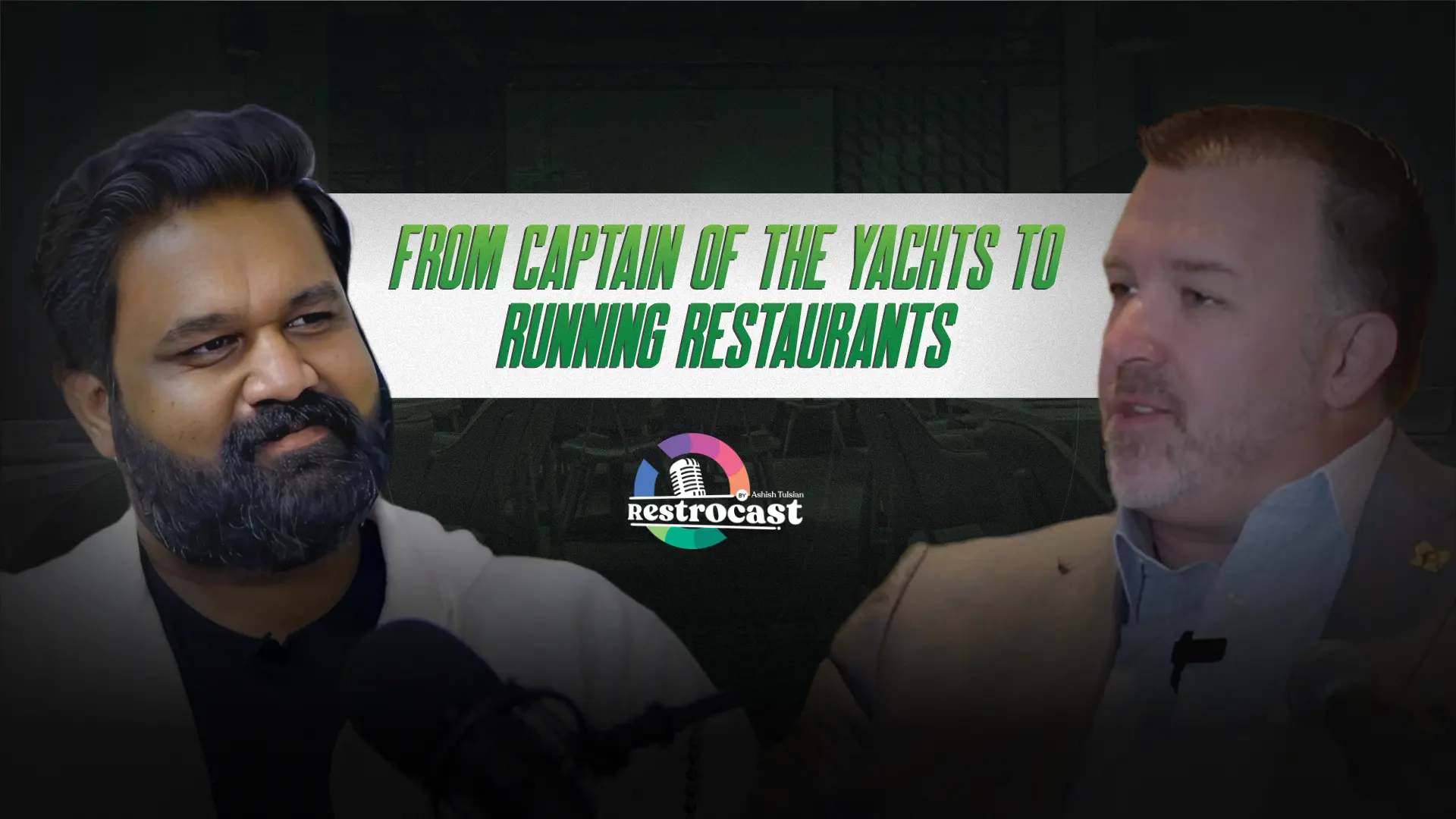
In this episode of Restrocast, listen to Troy Hooper, the CEO of Hot Palette America, the U.S. parent company of Pepper Lunch, a fast-casual Japanese-born, DIY Teppan Hot Plate concept. Troy shares his adventurous journey from culinary school to captaining yachts and turning around food businesses. Hooper’s narrative unfolds as a chart of rich hospitality experience, with each destination contributing to his evolution as a leader in the hospitality industry. Today, Troy is helming Pepper Lunch’s expansion in North America, a Japanese Teppan restaurant with over 500 stores in 15 countries around the world. Let’s delve into the key moments and insights from this podcast conversation.
Can you take us back to the beginning of your journey in the hospitality industry? What were the early years like, and when did you find yourself landing in the restaurant space?
Troy Hooper: Thank you for having me, Ashish. I was born into the cult of hospitality, with my father deeply involved in the construction of restaurants, bars, and nightclubs. Growing up in Miami in the ’70s and ’80s, I was exposed to the industry early on. My interest started with architecture, but due to unforeseen circumstances like Hurricane Andrew, my path shifted. I ended up enrolling in culinary school at 17 and later maritime school to become a boat captain. The yachting experience was foundational. It instilled discipline, time management, and the importance of understanding individuals within a team. The lessons I learned about balance—meeting the needs of employees, guests, and the business—became a guiding principle. This period laid the groundwork for my future in hospitality and leadership.
You mentioned being passionate about turning around troubled businesses. Can you share a specific anecdote or experience where you successfully transformed a group of toxic employees or a struggling business into a thriving one?
Troy Hooper: Toxicity often arises in an environment of neglect or mismanagement. By shining a light on the path and clearly defining goals, I’ve seen transformative changes. It’s about showing the team the benefits of aligning with a common goal and allowing those who don’t align to naturally transition out. Patience and clear communication are key.
You mentioned Stephen Covey’s Seven Habits of Highly Effective People as a pivotal influence. How did you incorporate the principles from this book into your leadership style, and what impact did it have on your career?
Troy Hooper: The Seven Habits became a blueprint for my professional development. I used it as a tool to teach and guide my teams. Focusing on self-awareness, understanding individual team members, and balancing priorities were crucial elements. It provided a framework for leadership and decision-making that extended beyond the professional realm.
Looking ahead, you mentioned a longstanding goal of owning a restaurant. How do you envision bringing together all your experiences and lessons learned to achieve this entrepreneurial dream?
Troy Hooper: The experiences throughout my career, from culinary school to managing yachts and turning around troubled businesses, have all been building blocks. My goal of owning a restaurant is about applying the leadership, team-building, and business acumen I’ve cultivated over the years. It’s the culmination of a journey designed to make me the owner and operator I aspire to be.
Could you elaborate on what turnaround management entails and how it became a significant part of your consulting practice?
Troy Hooper: Turnaround management involves stepping into distressed businesses, identifying issues, and implementing solutions to set them on the right path. With Kiwi Hospitality Partners, I would assess, evaluate, and provide recommendations for struggling businesses, often leading to short-term projects to correct and improve their operations. This approach eventually shaped the foundation of the company and became a key focus of my consulting practice.
Your approach seems to involve a deep understanding of the business and its various components. How do you navigate the balance between customer satisfaction, employee input, and overall business strategy?
Troy Hooper: Achieving balance is crucial. It’s about considering inputs from both customers and employees, understanding financial data, and evaluating the resources available for necessary changes. The key is finding the right equilibrium to address the needs of all stakeholders, ensuring that decisions align with the broader goals of the business.
You mentioned a quote that’s important to you. Can you share it with us, and how does it influence your leadership style?
Troy Hooper: The quote is, “Seek first to understand, then be understood.” It’s a Stephen Covey quote from his book “Seven Habits.” I believe in approaching leadership with humility and empathy, actively engaging with employees to understand their perspectives. This quote encapsulates my philosophy of asking questions, seeking input, and making informed decisions, taking responsibility for the outcomes.
In discussing leadership, you touched on the importance of perception and how a leader’s decision can be interpreted differently by various stakeholders. How do you handle this challenge in your leadership role?
Troy Hooper: I emphasize the need to align perceptions by actively engaging with employees and understanding their perspectives. It’s about empowering them to contribute to decision-making and taking responsibility for the outcomes. This approach helps bridge the gap between different viewpoints and ensures that decisions are contextualized to fit the unique needs of the situation.
Could you share more about your favorite aspects of your work, particularly in creating new concepts and building prototypes?
Troy Hooper: I find joy in the process of creating and building, whether it’s developing new concepts, redesigning menus, or negotiating supply chains. I draw inspiration from my father’s ability to visualize spaces, and this passion translates into my work. The ability to imagine and implement changes, especially in distressed businesses, is incredibly fulfilling for me.
What was the primary success metric for you in your consulting venture, and how did you measure it?
Troy Hooper: The success metric for me was employee retention. I wanted to build something sustainable beyond myself. The highest standard was going back in 3 to 5 years and seeing many of the employees I hired still there, taking on leadership roles or acquiring new skills.
Could you elaborate on the shift from fee-for-service to fee plus equity model and the impact it had on your approach and long-term relationships with clients?
Troy Hooper: Moving to a fee plus equity model allowed us to have a long-term relationship with clients by taking a small position in some of our clients. This way, we are invested in the success of the brand beyond just providing services. It aligns our interests and ensures we are there for the long term.
You recently took on the role of North American CEO for Pepper Lunch. What led to this opportunity, and how has your experience been in this new role?
Troy Hooper: I received a request from a gentleman in Japan to help build the US infrastructure for Pepper Lunch. They realized the vast opportunity in North America and the need for expertise in the market. I was later asked to join the executive committee and became the North American CEO. It’s been an exciting journey, building the infrastructure, marketing, and offering franchises.
Given your exposure to the Japanese way of doing business, have you identified any practices or principles that you believe could be beneficial when applied more broadly, beyond just the Japanese market?
Troy Hooper: Absolutely. One key takeaway is the emphasis on compatibility and mutual respect. In Japan, the decision to work with someone goes beyond just skills—it’s about building a relationship and ensuring compatibility. This loyalty, once established, becomes a driving force, and I think fostering strong relationships is universally applicable. One significant lesson is the importance of courtesy. The Japanese place a great deal of emphasis on human interaction, with specific cultural processes during meetings that involve greetings, exchange of gifts, and a clear transition between casual chatter and the start of business discussions. This courtesy and focus on relationships have been valuable lessons that I’m incorporating into my professional interactions.
Troy Hooper’s tale through the realms of hospitality, leadership, and entrepreneurship serves as a lighthouse for emerging leaders in the industry. His ideas on transformative leadership, balanced decision-making, and the pursuit of sustainable success echoes in every wave of his narrative. As he navigates the seas of North American leadership with Pepper Lunch, Hooper’s insights resonate as guiding stars in the ever-evolving landscape of the hospitality industry.