

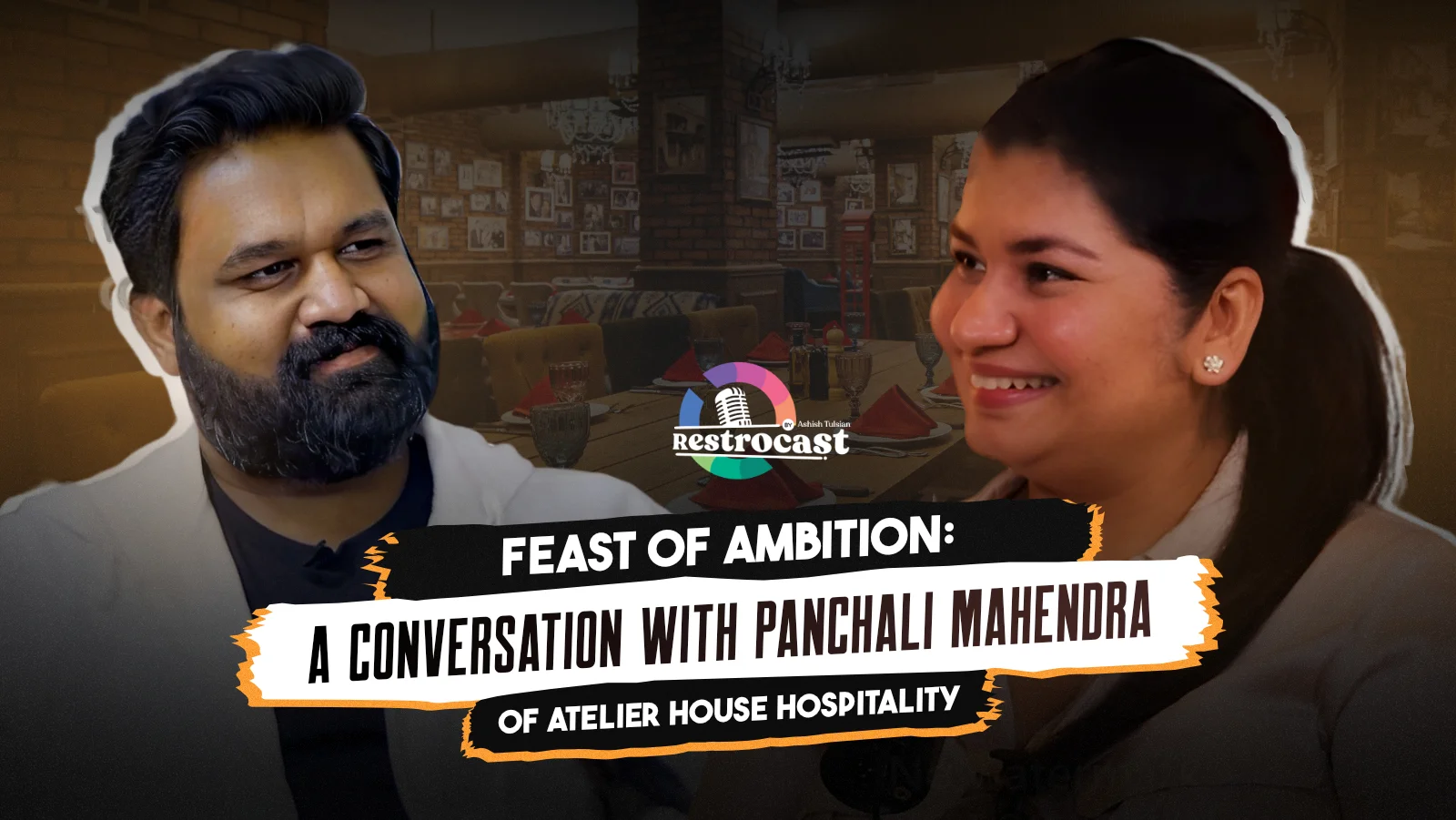
In the vibrant tapestry of the hospitality industry, certain individuals stand out as pioneers, trailblazing a path that defies convention. Panchali Mahendra, the President of Atelier House Hospitality, is undeniably one such luminary. In this exclusive interview, we embark on a journey through the chapters of her life, from the basketball courts of India to the Michelin-starred restaurants of Dubai.
With almost two decades of industry expertise, Mahendra oversees a diverse portfolio, including acclaimed brands like Marea, 11 Woodfire, Mohalla, RSVP, Tides Bar, and The Host in the UAE, as well as ventures in Riyadh. Notably, her brainchild, 11 Woodfire, earned a prestigious Michelin star. Mahendra, a golden visa recipient from the UAE government, has garnered accolades in publications across the Middle East and India. Having opened 67 restaurants globally and ventured into the wellness sector with Solace, Mahendra continues her dynamic journey, recently inaugurating her first restaurant in India, INJA, in February 2023. Unveiling new dimensions in hospitality, Mahendra’s trajectory exemplifies innovation and unrelenting dedication.
Panchali’s tale is a testament to resilience, adaptability, and an unwavering commitment to excellence. Join us as we delve into the remarkable story of a woman who transitioned from shooting hoops to crafting culinary masterpieces.
Can you take us back to the beginning of your journey? Did you stumble into the restaurant industry by chance or was it a planned career move?
Absolutely. I think I was literally pushed into it. It all started in 2003 after my graduation. I used to play basketball for India, dreaming of playing for the WNBA. But the harsh reality hit me when I was told that women’s basketball in India had limited prospects. I started representing India in basketball after my class 12. I played at various levels, from Youth Nationals to state and national teams. However, the dream of playing internationally faced a reality check. Despite the passion and dedication, the support and resources for women’s basketball were limited in India. So, through post-graduation, I found myself exploring new paths.
As you reflect on your journey, how has your hands-on experience in operations influenced your approach to your current role?
My time in operations was transformative. It instilled in me a deep understanding of the industry’s intricacies. Though I’ve moved on from operations to a more strategic role, that hands-on experience remains a crucial part of my perspective. It taught me the importance of humility, hard work, and the true essence of service.
What are your thoughts on the dynamics of the Indian F&B industry and the challenges it presents?
The Indian F&B industry poses unique challenges, including the prevalence of public criticism and the impact it can have on establishments. Managing a restaurant involves not just providing great food but also navigating the intricacies of customer expectations, public reviews, and the ever-changing landscape. The dining landscape has indeed evolved, with a surge in experimental and high-quality offerings. The last couple of years have witnessed a rise in people going out to eat, embracing experiential dining, and expressing a desire to explore different culinary experiences. The internet has played a significant role in shaping the preferences of the younger generation. People are growing up on the internet, influencing their choices and expectations. The impact is not limited to metropolitan areas but has reached tier two, three, and four cities, where a demand for unique dining experiences has emerged.
How did working in the QSR sector differ from your previous experiences, and what did you learn from this transition?
Shifting to QSR was a new frontier for me. Coming from the Oberois and Taj, and having worked in high-end dining, this was a different ballgame. I missed the luxury market but saw this as an opportunity to understand the nitty-gritty of restaurant operations. It was a learning curve, and I grasped the financial aspects, from budgets to cost per square foot, honing my theoretical and technical knowledge.
What was the most significant take away from your five years in Dubai, working in various segments of the F&B industry?
These five years in Dubai were like culinary schooling for me. I absorbed knowledge from every facet of the industry, from luxury dining to QSR. I grasped the nuances of international franchises, lease negotiations, and operational intricacies. It was a period of relentless learning, grabbing knowledge from every possible avenue, and refining my skills for the journey ahead.
Can you tell us about the pivotal moment in your career that led to your role as the Managing Director of Altamarea in Dubai?
The turning point came when I was approached by Mr. Ahmass Fakahany, the founder of Altamarea, a renowned restaurant company. He wanted to expand Altamarea to the Middle East and was searching for someone to lead the venture. Despite my initial disbelief, I took the opportunity and flew to New York for an intense eight-hour interview. Surprisingly, I got selected and became the Managing Director. This marked the beginning of my journey in opening and managing internationally acclaimed restaurants.
What challenges did you face in starting a Michelin-starred restaurant company in Dubai at such a young age?
At 32, the idea of opening an international Michelin-starred restaurant in Dubai seemed surreal. The challenge was not just about the culinary aspect but also about starting a company from scratch. Despite the doubts, my strong technical knowledge and a straightforward approach during the interviews played a crucial role in my selection. It was a leap of faith, and six years later, the company has grown significantly.
What inspired your return to India and your recent venture, Inja?
Returning to India and launching Inja, the world’s first Indian-Japanese concept, was a bold move. Despite facing initial skepticism and even comedic commentary, the restaurant gained recognition and popularity. The journey was challenging, with the contrast between Dubai’s controlled environment and India’s free speech culture. Taking over a location that was once home to an iconic restaurant like Indian Accent posed its challenges. However, in the last seven months, Inja has successfully carved out its own identity. While benefiting from the legacy of its predecessor, Inja has emerged as a distinct culinary destination in Delhi.
How do you perceive the role of women in the hospitality industry, especially in leadership positions?
Women have made significant strides in the hospitality sector. However, operational roles, especially in the kitchen, are still predominantly male-dominated. The physical and mental demands of the kitchen environment can be challenging for many women. Nevertheless, the industry is evolving, and more women are stepping up, pushing boundaries, and challenging stereotypes. As a leader, I’ve always focused on qualifications rather than gender, fostering a gender-neutral work environment.
As we bring our conversation with Panchali Mahendra to a close, it’s evident that her narrative transcends the conventional boundaries of both sport and gastronomy. From the dusty basketball courts of India to the opulent dining halls of Dubai, Panchali’s journey is a mosaic of diverse experiences that have sculpted her into a visionary leader. Her foray into the hospitality industry, marked by challenges and triumphs, reflects not only personal tenacity but also a commitment to elevating the culinary landscape.
The future beckons with promises of innovative ventures for Atelier House Hospitality under Panchali’s astute leadership. As she prepares to launch a groundbreaking modern Emirati and Arab concept and expands the footprint of her restaurants to international hubs, the narrative of Panchali Mahendra continues to unfold, captivating the imagination of the gastronomic world. In her pursuit of excellence, Panchali exemplifies the essence of a true trailblazer, leaving an indelible mark on the Feast of Ambition that is her life and career.