
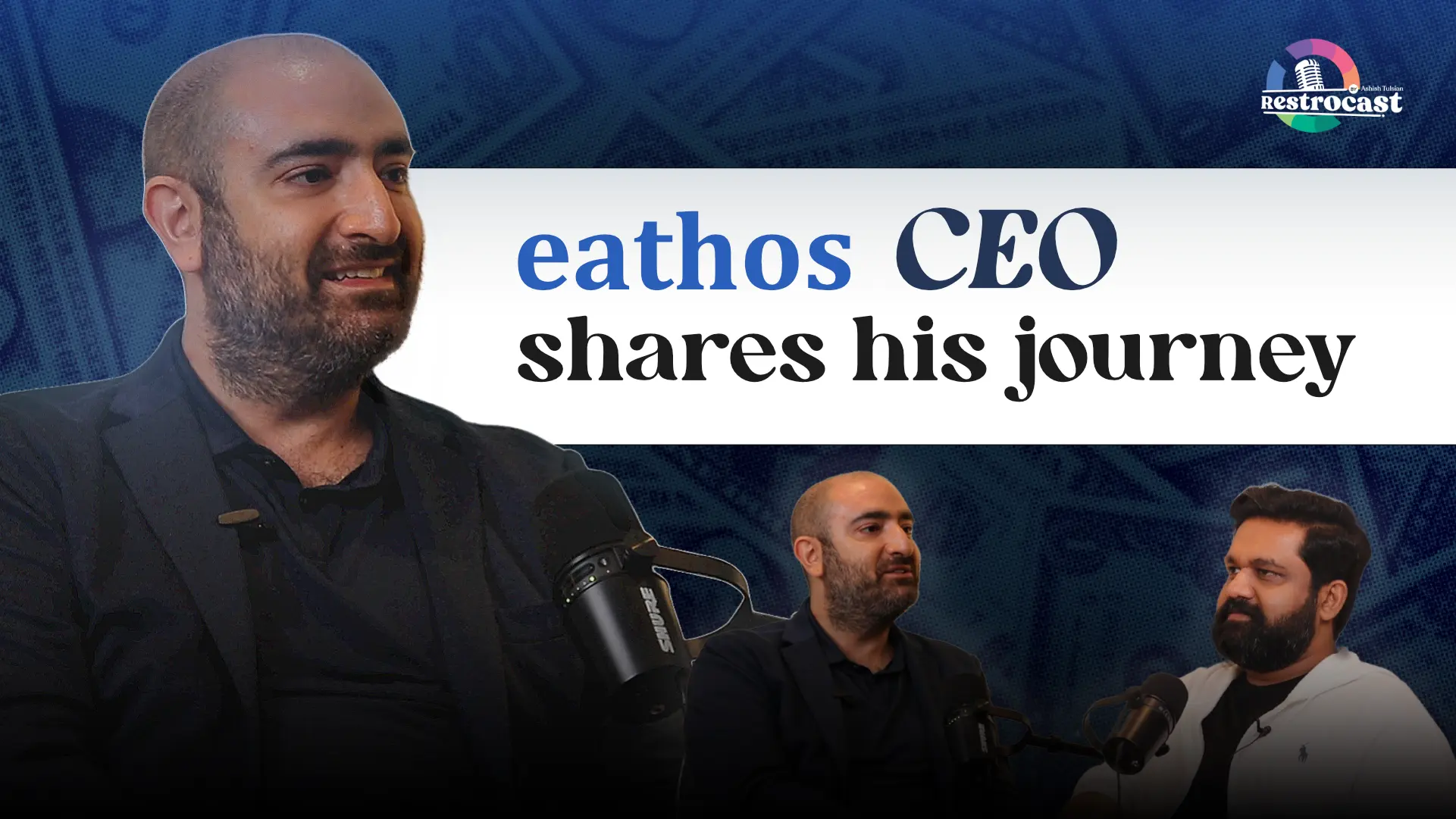
In a riveting exploration into the dynamic world of culinary entrepreneurship, Ashish Tulsian delves deep into the experiences and insights of Nadim Majdalani. Majdalani, whose journey took an unexpected turn from engineering to the restaurant industry, unfolds a narrative enriched by challenges, learnings, and a profound passion for innovation. From the boardrooms of YoSushi in the UK to the creation and renaissance of eathos in the Middle East, Majdalani shares the pivotal moments that shaped his career. This interview encapsulates not only the strategic choices that define the success of modern restaurant ventures but also the personal and professional growth that accompanies such a transformative career.
How did you first venture into the restaurant industry, given your background in engineering and investment?
Nadim Majdalani: My journey started on my first day as a professional. After studying engineering and pursuing a master’s in construction management in the U.S., I moved from engineering to the investment world. My first job in private equity led me to work on a project involving a French chain called Pomme de Pain. Initially, I saw the restaurant industry as an opportunity to explore different sectors through private equity. Many people view it as a glamorous industry, not fully understanding the complications. However, as I delved deeper into investments and operational challenges, I started appreciating the complexities and the tangible impact one could have.
During your time on the board at Quilvest, what specific aspects of the restaurant industry appealed to you and influenced your decision to delve deeper into it?
Nadim Majdalani: Being on the board allowed me a 360-degree view of the business. The ability to analyze P&Ls, understand team dynamics, and witness the immediate impact of changes on sales and customer loyalty intrigued me. It provided a unique vantage point to decide where to dig in deeper. Having a 360-degree view as a board member or shareholder provided the privilege of a zoomed-out perspective. This approach allowed us to add value without meddling in day-to-day operations. The hands-on approach, coupled with a broader view, made the restaurant industry increasingly appealing to me.
Can you elaborate on eathos’ inception and its early goals, including fundraising and operations?
Nadim Majdalani: eathos was conceived as a separate entity from Quilvest, aiming to raise capital for restaurant operations across the MENA region. In 2014, we raised around $150 million, exceeding our initial expectations. We focused on franchise rights, M&A, and creating our own concepts, adapting to the dynamic Middle East market.
Reflecting on your decision to leave eathos for Majid Al Futtaim, what were the factors influencing this move in 2020 and how did it contribute to your professional growth and learning about large corporate structures?
Nadim Majdalani: In 2020, faced with the challenges of the pandemic, I felt the need for a new challenge. I was approached by Majid Al Futtaim for the role of VP of Corporate Development for MAF retail, overseeing new business creation, B2B initiatives, and managing relationships with delivery aggregators. Joining a large corporate entity like MAF was a significant shift for me. I learned about structured processes, performance management, and leadership within a vast organization. The power of a strong vision and values at MAF, emphasizing boldness, passion, and togetherness, left a lasting impact on my professional perspective.
What led to your decision to return to eathos in 2022, leaving a major conglomerate like MAF?
Nadim Majdalani: Despite the valuable experiences at MAF, eathos remained my baby. I stayed connected with eathos and found that my heart belonged to eathos. The opportunity to return presented itself, and I couldn’t resist the call to lead eathos once again. Returning to eathos felt like a natural fit. I had never lost connection with the business and the people behind it. The familiarity and the sense of belonging were strong motivators. Despite challenges faced during my time away, I knew what needed to happen for eathos to progress. The decision to come back was one of the easiest I’ve had to make.
You highlighted strategic choices made, such as emphasizing dark kitchens and virtual brand creation. What led to the decision to shift focus away from these areas upon your return?
Nadim Majdalani: The decision to move away from an exclusive focus on dark kitchens and virtual brands stemmed from challenges faced during their implementation. Issues like underutilized hotel kitchens, unforeseen costs, and the changing landscape post-COVID prompted a reevaluation. Instead, we adopted a strategy of using dark kitchens strategically, maintaining a strong brand presence, and testing new trade areas before potential brick-and-mortar expansions. The notion that virtual brands can be easily created is a fallacy. Building strong brands takes time, and virtual brands, often seen as simple menus with generic packaging, require substantial effort for success. We focused on specific cuisines, consistency, quality, and invested in top-notch packaging to provide a real brand experience. Virtual brands that were successful were those that maintained brand identity beyond just a virtual presence. Dark kitchens serve as an enabler and complement to brick-and-mortar strategies. We’ve successfully used them for specific purposes, such as extending our reach to new areas and testing trade areas with low investment. The key is strict criteria and a purpose-driven approach. Dark kitchens can be profitable when used strategically, leading to a graduation from virtual to brick-and-mortar establishments.
You mentioned reaching a COGS below 25% for profitability. What are the key components of cost, and how do you manage them effectively?
Nadim Majdalani: To operate profitably, it’s crucial to keep the cost of goods sold (COGS) below 25%. While food costs remain relatively constant, packaging costs can vary between 2% to 5%, depending on the investment in AOV. Achieving this requires volume, particularly in the packaging aspect, where economies of scale come into play.
Aggregators play a significant role in the dark kitchen model. How do you navigate the challenges of marketing and discounting to attract customers through these platforms?
Nadim Majdalani: The challenge lies in marketing and discounting, as aggregators are crucial for reaching customers. Marketing costs, often ranging from 10% to 15% of sales, coupled with substantial discounts, can impact profitability. It’s a delicate balance, especially for brands that lack strong recognition, requiring strategic investment in marketing to gain visibility.
You emphasized the importance of a strong brand in the dark kitchen model. How do you measure brand equity and customer loyalty across different channels?
Nadim Majdalani: Brand equity is measured through various key performance indicators (KPIs), including the percentage of repeat orders, click-through rates, customer ratings, and the ability to command premium prices. Additionally, being a price leader while maintaining high volumes reflects a brand’s strength. We track these metrics religiously in regular meetings with aggregators to assess our brand’s performance.
In the competitive aggregator landscape, exclusivity seems to be a strategy. How does a brand’s strength influence negotiations and relationships with aggregators?
Nadim Majdalani: Aggregators understand the power of strong brands and exclusivity. Brands with weight can negotiate better terms, and the race for exclusivity has been aggressive, particularly between major players like Deliveroo and Uber Eats. A brand’s strength and customer pull can dictate the bargaining power in negotiations.
Ashish: Reflecting on your leadership journey, how have you evolved as a leader?
Nadim Majdalani: I’ve evolved as an empathetic team builder. Having experienced both internal and external perspectives during my career, I focus on gathering a team of strong individuals and ensuring they work cohesively towards our vision. Empathy, trust, and the ability to put myself in others’ shoes have become integral to my leadership style. Additionally, clear communication, especially during crises, is crucial for maintaining trust and achieving positive outcomes.
How do you nurture yourself? What’s your approach to keeping yourself fresh, nurtured, challenged, and growing?
Nadim Majdalani: After being diagnosed with non-Hodgkin’s lymphoma at 22, health became a priority. I’ve taken up touch tennis, a variant similar to pickleball, for both physical activity and enjoyment. I also enjoy exploring new restaurants as I’m a foodie. It’s a way to nurture my soul, although it sometimes gets on my wife’s nerves when trips revolve around restaurant visits.
Any particular podcasts or audiobooks you’ve enjoyed for mental stimulation?
Nadim Majdalani: I’m not a big reader, so I’ve turned to audiobooks. Recently, I listened to “Setting the Table” by Danny Meyer, finding the character and insights fascinating. I attend conferences, connect with industry professionals, and take walks on Kite Beach while listening to podcasts late at night. It’s a way to stay inspired and implement new ideas into my life and business.
Nadim Majdalani’s journey from engineering to the forefront of the restaurant industry unfolds as a captivating tale of passion, resilience, and strategic vision. The podcast not only provides a behind-the-scenes look into the intricacies of restaurant operations but also offers valuable insights for aspiring entrepreneurs and industry enthusiasts. Majdalani’s commitment to innovation, both in business strategies and personal well-being, serves as an inspiring testament to the evolving landscape of the culinary world.