

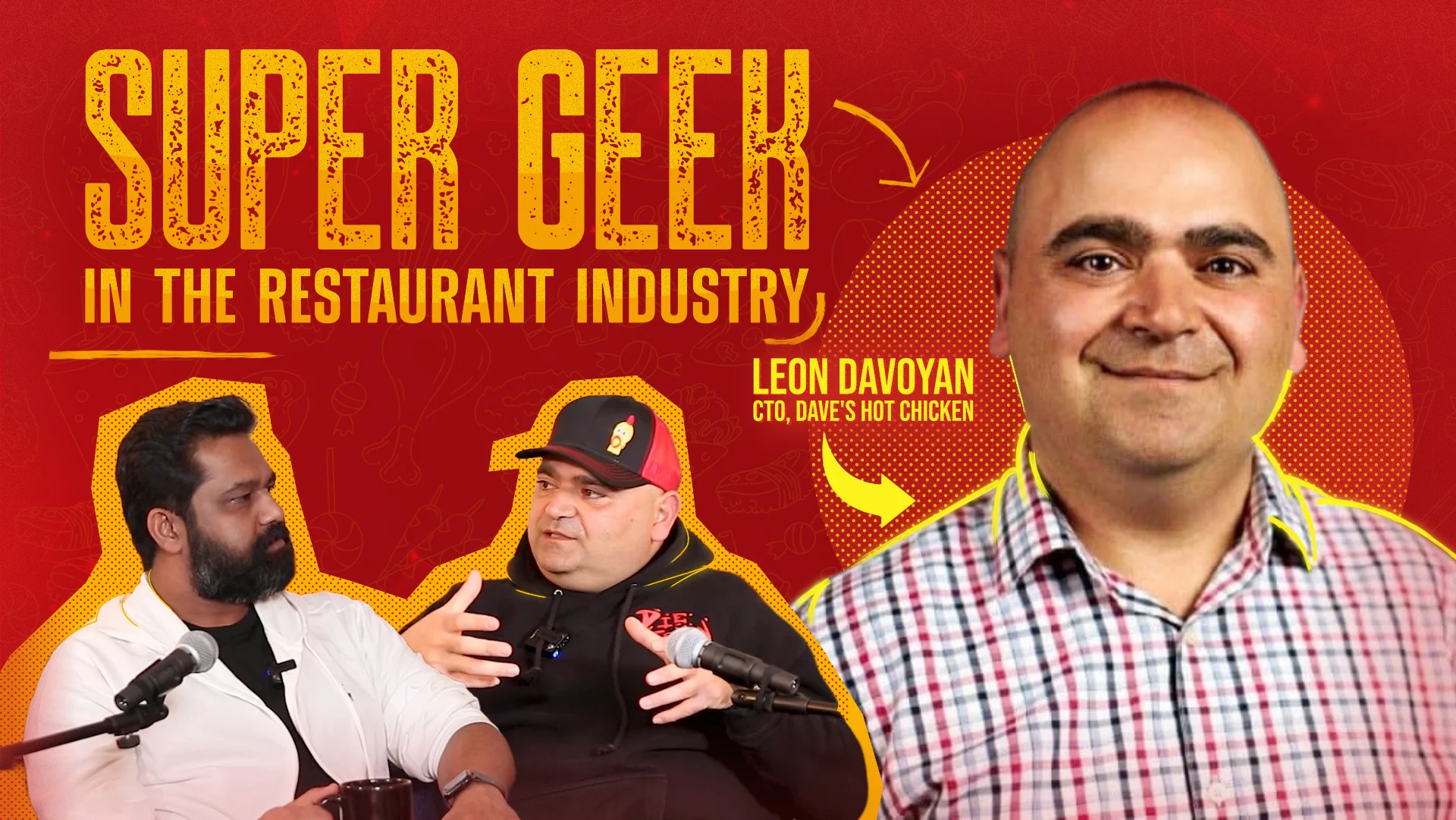
In the world of restaurant technology, few have had a career as dynamic and influential as Leon Davoyan. From his teenage years tinkering with early computers to leading tech innovation at major hospitality brands, Davoyan’s story is one of passion, adaptability, and leadership. In a recent podcast, Davoyan shared insights into his journey, the challenges he faced, and his vision for the future of restaurant technology.
How did your journey into restaurant technology begin in the early ’90s?
Leon Davoyan: It all started during my teenage years. I convinced my dad to buy me a computer, a Packard Bell Pac-Mate 3, back in 1990. I learned a lot about DOS, writing batch files, and working the system. My first job was as a cashier at Universal Studios, where I got interested in POS systems. When those systems went down, I naturally transitioned to the POS help desk because I found fixing them intuitive.
So, Universal Studios was your part-time job during college. How did it influence your career?
Leon Davoyan: Universal was a great learning ground. I was majoring in marketing, but working on POS systems felt natural. After graduating, I realized I was earning more in tech than I would in an entry-level marketing job. So, I decided to pursue tech further, and one job led to another across the hospitality industry.
Your journey took you from Universal Studios to Baja Fresh, Santa Anita Racetrack, and even the nightclub circuit. What were some key challenges and accomplishments during these roles?
Leon Davoyan: Each role had its unique challenges. At Santa Anita, I was responsible for ensuring the POS systems didn’t fail on big race days. It was a high-stakes environment. Moving to the Sahara Hotel and later SLS was significant because I had to learn about the unique requirements of casino hotels. One of my biggest accomplishments was creating the initial plans for the SLS Hotel, which were partially implemented even after I left due to the ’08 financial crisis.
Your stint at Pinkberry was notable for its global expansion. What was your role in this?
Leon Davoyan: At Pinkberry, my challenge was to scale the brand globally. We expanded from Southern California and New York to the Middle East and India. It involved creating a model for international growth, ensuring consistent quality, and dealing with different POS systems across countries.
You went back to Lebanon for your MBA. Why did you choose to study there, and how did it impact your career?
Leon Davoyan: I wanted an MBA that set me apart, so I chose the American University of Beirut. The program’s structure allowed me to interact with executives from the Gulf region. It made me realize that no one has all the answers and gave me the confidence to engage with CEOs and other top executives.
After your MBA, you returned to Universal and then joined Blaze Pizza. How did these experiences shape your leadership style?
Leon Davoyan: At Universal, I managed a team overseeing food, retail, and ticketing software. It taught me the importance of situational leadership—understanding people’s willingness and ability to perform tasks. Blaze Pizza was in its high-growth phase, and the experience of scaling rapidly with a collaborative team was invaluable.
Now at Dave’s Hot Chicken, what’s keeping you excited, and what are the current challenges?
Leon Davoyan: Dave’s has an amazing culture and a collaborative team. The biggest challenge is maintaining the high growth trajectory while ensuring operational efficiency. The team is more mature, and we avoid past mistakes, making the process smoother.
How would you describe your leadership style, and how has it evolved?
Leon Davoyan: My leadership style is collaborative. I encourage my team to contribute ideas and challenge my directions. Over time, I’ve become less dictatorial and more open to input. Situational leadership has been key—adjusting my approach based on my team’s capabilities and willingness.
What do you do to keep yourself mentally and physically nurtured?
Leon Davoyan: To clear my mind, I drive my highly modified Fiat down canyons at high speeds. It’s therapeutic and keeps me focused. For knowledge, I read extensively about various industries, as good ideas often come from outside hospitality.
You mentioned that good ideas in hospitality often come from other industries. Can you give an example?
Leon Davoyan: Customer Data Platforms (CDPs) are a recent innovation in hospitality, but retail has been using them effectively for years. These platforms provide deeper insights into customer behavior, helping us make more informed business decisions.
What are your thoughts on dynamic pricing in the restaurant industry?
Leon Davoyan: I believe dynamic pricing works well for industries with finite supply, like airlines and hotels. In restaurants, without a clear supply shortage, it might not be as effective. Incremental price changes, like a predictable increase on busy nights, could work better.
Leon Davoyan’s journey through the restaurant technology landscape showcases his adaptability, strategic thinking, and commitment to innovation. From his early days at Universal Studios to his current role at Dave’s Hot Chicken, Davoyan has consistently pushed the boundaries of what’s possible in the industry. His story is an inspiring example of how passion, continuous learning, and collaborative leadership can drive success in any field.