
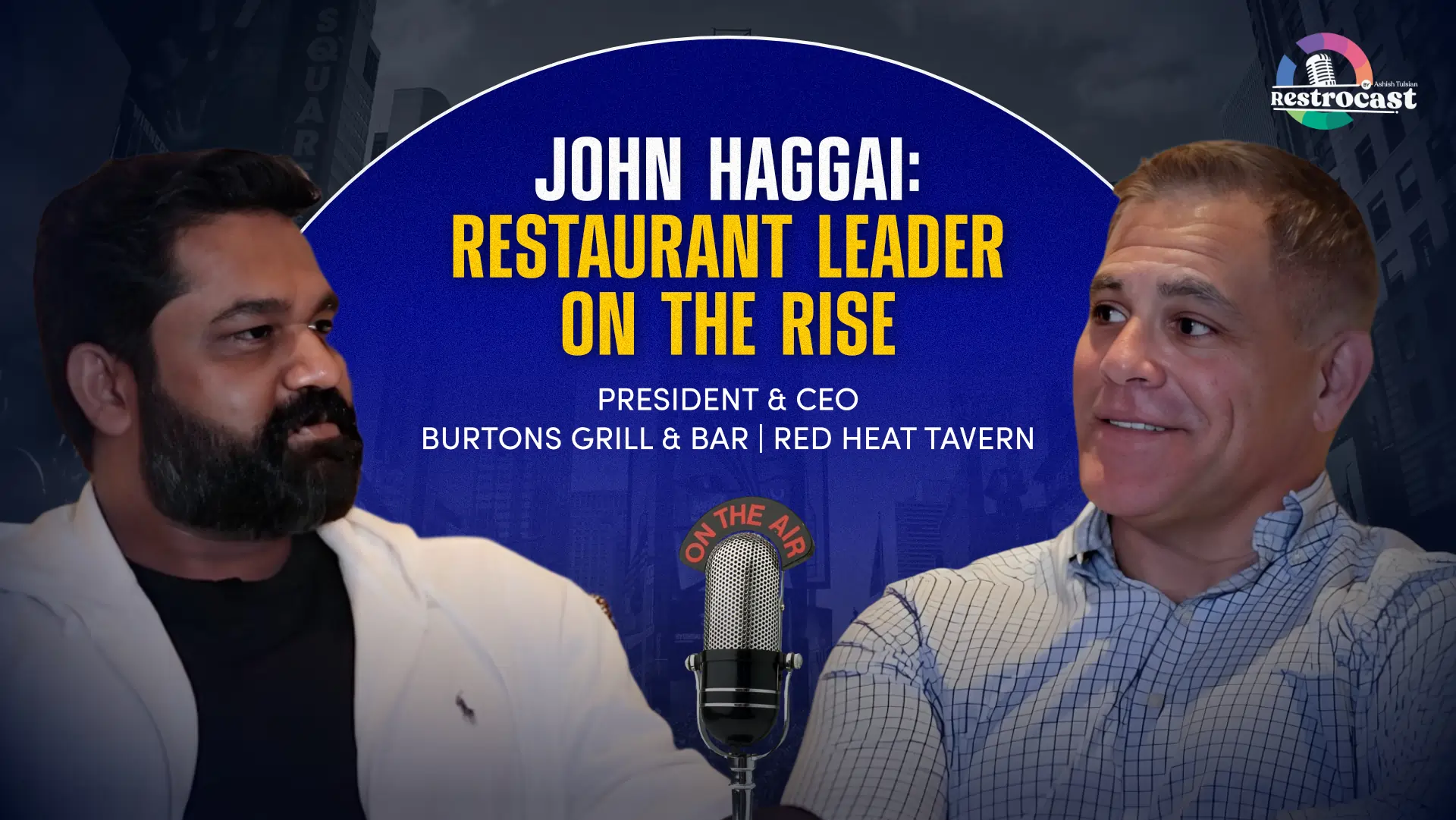
John Haggai’s remarkable journey from a high school busboy to the CEO of Burtons Grill is a testament to the power of curiosity, resilience, and strategic thinking. Over the course of a 30-year career, he has navigated the complexities of the hospitality industry, transitioning from a part-time job to becoming a managing partner at Outback Steakhouse, and, later, an entrepreneur and leader at Burtons Grill. In this exclusive podcast, Haggai shares insights into his career, entrepreneurship challenges, and leadership’s importance in a rapidly evolving industry.
Your journey from a busboy to the CEO of Burtons Grill is nothing short of inspiring. But many people who start in restaurants don’t end up making a career out of it. How did your part-time job as a busboy turn into a 30-year career in the industry?
John Haggai: It really started by accident. I was in high school, playing football, and just wanted a flexible job to make some extra money. I started as a busboy at a local restaurant, and it was supposed to be just that—a part-time gig. But I found myself fascinated by the different roles in the restaurant, especially the kitchen. I was curious and wanted to learn everything I could. That curiosity led me to move from bussing tables to working in the kitchen, and eventually, I became more involved in the operations.
You eventually became a managing partner at Outback Steakhouse. Can you tell us more about what that role entailed and how it differed from being a franchisee?
John Haggai: As a managing partner, I had a significant stake in the restaurant’s success. I signed a five-year contract, invested financially, and owned part of the cash flow. Unlike a franchisee, I was still part of a corporate restaurant, but I was locked into managing a single location. This setup was great for retention because it gave managers like me a real sense of ownership. It also taught me a lot about running a business, from setting up vendors to managing staff and operations.
Confidence and ownership seem to be recurring themes in your approach. How do you see these traits in the context of the hospitality industry, especially given its complexity?
John Haggai: The hospitality business is incredibly dynamic, and you’re right, ownership isn’t optional. There are so many moving parts and so many things that can go wrong. I believe everyone should work in the service industry at some point because it teaches you essential skills like problem-solving, communication, and self-confidence. In this industry, it’s not about doing something complicated—it’s about doing the simple things consistently and with discipline. That’s where the challenge lies.
With the rise of technology in the industry, how do you balance its implementation with maintaining a high-quality customer experience?
John Haggai: Technology can help with efficiency, but it should never replace the human touch. We’ve implemented a lot of technology, but we’re careful to preserve the customer experience. For example, handheld devices can speed up service, but our staff still needs to maintain eye contact and engage with customers. The key is to use technology to enhance, not replace, the human elements that make the dining experience special.
Given your extensive experience, what advice would you give to the next generation of leaders in the hospitality industry?
John Haggai: My advice would be to focus on the basics: take care of your people, communicate effectively, and stick to your core values. The industry is challenging, but it’s also incredibly rewarding. If you provide a supportive environment, pay your people well, and offer them opportunities to grow, you’ll set yourself up for success. And most importantly, never lose sight of the human aspect of this business—it’s what keeps customers coming back.
What was your first entrepreneurial venture? How was the transition to being an entrepreneur? How did it feel emotionally?
John Haggai:
It started with a coffee shop concept called Cafe Couture, which eventually evolved into Taza Kitchen. My business partner, Jeff Cran, and I, along with an angel investor, took a break to travel and rethink the brand. We were inspired by the best of Baja, California, and Campania, Italy, and molded those ideas into Taza Kitchen—a concept that blended tacos and pizza with wood-fired ovens and seasonal ingredients.
The transition was terrifying. I had a lot of comfort and security at Outback, where I made good money and had a stable life. Transitioning to the uncertainty of entrepreneurship, where you’re in an “eat what you kill” environment, was a huge emotional shift. I underestimated how difficult it would be to go from being the Outback Steakhouse guy to a nobody trying to bootstrap a cafe.
What were some of the challenges you faced when starting Taza Kitchen?
John Haggai:
One of the biggest challenges was the lack of resources. At Outback, I could pick up the phone and get anything done, but in entrepreneurship, every mistake could be devastating. We had to raise money, manage investors, and handle every aspect of the business ourselves. It was intense and extremely terrifying at times, but it taught me invaluable lessons that I apply even today in running larger companies.
Was there any unlearning you had to do when transitioning from an entrepreneurial role to leading a larger company?
John Haggai: Absolutely. The mindset shift was significant. As an entrepreneur, you’re used to making quick decisions, changing things on a whim, like a menu item, without much hesitation. But in a larger corporate environment, especially in a $150 million company with multiple states involved, you can’t disrupt things immediately. It’s about playing the long game, prioritizing, and focusing on what’s really important. I had to learn to be strategic and patient, knowing that while I might see things I want to change, it’s essential to respect the existing processes and systems.
You mentioned disliking the term “chain restaurant.” Why is that?
John Haggai: Chain restaurants often get a bad rap. People associate them with mediocrity, lack of passion, and being overly commercialized. In Richmond, where we opened a new Burtons Grill and Bar, we encountered this resistance. But I push back against that notion. Every successful business, even those huge, multi-billion dollar chains, started small and scaled. The challenge is embracing the scale while maintaining the passion and quality that got you there.
How did your experience with Taza influence your approach at Burtons?
John Haggai: My time with Taza taught me a lot, especially about what we could have done differently. At Taza, we held on too tightly to certain ideas, striving for perfection, which sometimes hindered our growth. We didn’t leverage technology enough, and we didn’t tell our story as effectively as we could have. Moving to Burtons, I brought those lessons with me. I came in as an outsider, which allowed me to see things clearly and push for evolution rather than disruption. It’s about making subtle tweaks that can drive the brand forward without alienating existing customers.
What does it mean for you to bring value to your executive team?
John Haggai: My role as a leader is to provide support and value to my executive team. This includes offering honest feedback, helping with strategic planning, and ensuring they have the tools and resources needed for success. It’s about fostering a partnership rather than a hierarchy. I want to make sure everyone knows where they stand and feels empowered to focus on their roles without unnecessary obstacles.
What’s ahead for you? What keeps you excited?
John Haggai: I’m excited about entering new markets and continuing to develop relationships. For me, leadership is about inspiring and developing others. I still love being on the restaurant floor, interacting with customers, and working alongside my team. It keeps me grounded and connected to the business. We also have another concept, Red Heat American Tavern, which has a lot of potential. It’s in its early stages, so figuring out its brand identity and strategy is a thrilling challenge.
Mentoring seems to be a big part of your growth strategy. How does it enrich you personally?
John Haggai: Mentoring helps me stay disciplined and prevents me from getting too caught up in my own ideas. It’s gratifying to see others grow, but it’s also a reminder for me to stay humble and grounded. My mentees often serve as a mirror, reflecting back areas where I need to improve or stay vigilant. They help me avoid mistakes and keep my ego in check, ensuring that I don’t get complacent or arrogant.
John Haggai’s career trajectory is not only inspiring but also filled with valuable lessons for aspiring leaders in the hospitality industry. His emphasis on ownership, strategic thinking, and the importance of maintaining a human touch in an increasingly technological world provides a roadmap for success. As Haggai continues to lead and mentor the next generation, his story serves as a powerful reminder that with curiosity, resilience, and a commitment to core values, one can achieve remarkable heights in any industry.