

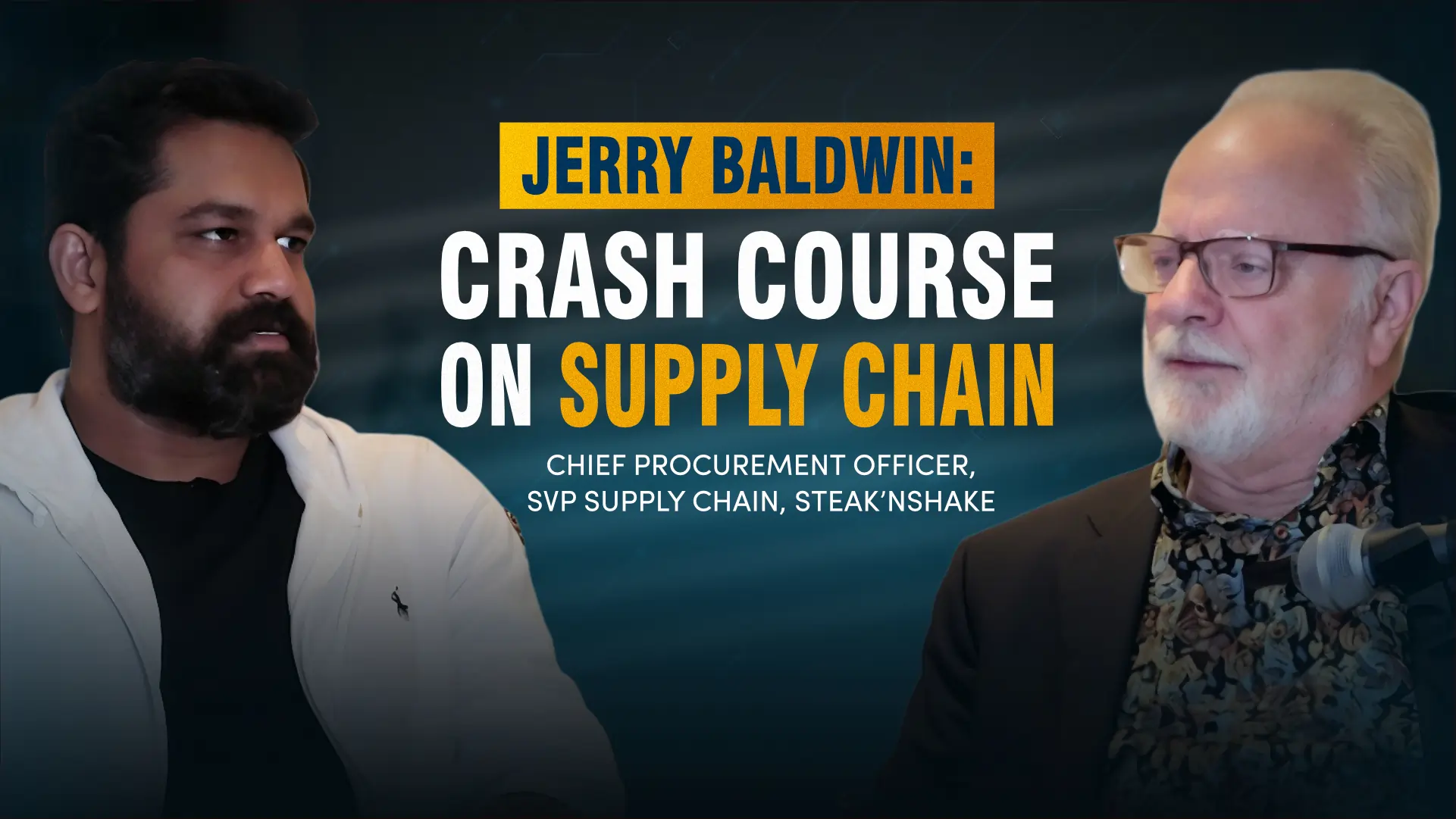
In this episode of Restrocast, Ashish Tulsian sits down with Jerry Baldwin, a seasoned expert whose career in supply chain procurement spans over four decades. From humble beginnings in a hotel restaurant to leading roles in private equity and supply chain management, Baldwin shares his unique journey and insights about the future of the restaurant industry. This conversation covers everything from the impact of COVID-19 on supply chains to the rise of technology and the changing dynamics of vendor relationships.
Jerry, your career spans four decades in supply chain procurement, from sales to distribution to private equity. Could you share where it all began and how it evolved?
Jerry Baldwin:
My journey in the industry started early, around the age of 10. I grew up with a single mother who was an innkeeper at Holiday Inn. After working various roles in the food and beverage sector at Holiday Inn, I realized that the demanding hours wouldn’t be conducive to starting a family. That led me to pivot into food sales. I became a street food salesman for PYA Monarch, a large distributor in the Southeast. This move gave me a better work-life balance and allowed me to start a family. Over time, I specialized in chain account management, working with emerging chain restaurants as they expanded.
You mentioned the camaraderie in the industry. Do you think that’s something that’s missing today?
Jerry Baldwin:
It’s not so much that camaraderie is missing, but those who leave the industry often miss it. The friendships forged in the restaurant industry are unique because of the long hours and the shared challenges. Even when people move on, they often look back fondly on those
Sales played a significant role in your early career. How did that transition into supply chain management?
Jerry Baldwin:
Yes, my early career was heavily focused on sales, particularly in managing chain restaurant accounts. However, it’s impossible to manage sales for chain restaurants without being deeply involved in supply chain. The two are intertwined because the product has to be there, and the chain restaurants don’t care why it isn’t—they just want it on time. Over time, my role naturally evolved into supply chain management. My experience in sales, distribution, and vendor management made me well-suited for these roles.
Your journey is truly inspiring, Jerry. As someone who has seen the industry evolve over the decades, what are the key challenges and opportunities for the restaurant industry moving forward?
Jerry Baldwin:
The restaurant industry faces several challenges, particularly in supply chain management, where the complexity continues to grow. However, there are also significant opportunities, especially with the rise of technology and data analytics, which can optimize operations and improve decision-making. The key will be balancing innovation with the traditional values that make the industry unique, like camaraderie and customer relationships. The future holds exciting possibilities for those who can navigate these changes..
When looking at the supply chain, do you see gaps in understanding when managers lack firsthand experience as a distributor or vendor?
Jerry Baldwin: One of the biggest challenges in my career has been the need to build a well-rounded team that understands every facet of the supply chain. We lost a lot of talent during COVID—many companies cut back, stopped hiring, and laid off staff, which has left us with a significant gap in experience and knowledge. I believe in small, hands-on teams where everyone collaborates and understands the impact of their role on distribution, vendors, and ultimately, our restaurants. It’s crucial to round out that education across the team, so everyone grasps the bigger picture.
How do you manage vendor relationships, especially when financial changes can make a previously reliable vendor less competitive?
Jerry Baldwin: You have to keep a close eye on your vendors. If their financial situation changes—like new ownership or different banking rules—they might no longer be competitive. That’s why you constantly check your vendors. If nothing significant has changed, and the mileage to your distribution center remains advantageous, they should still be the best option. But financial shifts can make a big difference, and that’s when you need to reassess and possibly look for new vendors.
Given the dominance of large suppliers like Cisco and U.S. Foods, how has this affected the role of a supply chain manager?
Jerry Baldwin: It has made the role more complicated, not easier. For example, when we had to reorganize Quiznos’ distribution, we faced huge challenges because of the merger attempts between Cisco and U.S. Foods. Large suppliers now dictate terms that might not be in the best interest of chain restaurants. They are cutting back on distribution miles and asking for more distribution centers, which complicates supply chain management and increases costs. Each distribution center operates independently, so you lose control over your inbound freight, your proprietary items, and even your pricing contracts. It’s a complex landscape to navigate.
How has Steak and Shake adapted to the changing market, especially post-COVID?
Jerry Baldwin: Steak and Shake has gone through an exciting transformation. We realized that our old model—a diner with a drive-thru—wasn’t working anymore. COVID was a big wake-up call, especially when we saw the hidden costs of running dining rooms. We remodeled every restaurant, streamlined our operations, and introduced self-order kiosks. The response from our customers has been overwhelmingly positive. We also adopted a franchise partner program similar to Chick-fil-A’s, where individuals can own and operate their own restaurants. This has not only increased sales but also transformed lives. Our franchise partners have a personal stake in their success, which has led to incredible results.
Given the challenges in the supply chain, how are some fast-casual chains thriving post-COVID?
Jerry Baldwin: Surprisingly, chains like McDonald’s have been thriving, even after COVID. They’ve adapted quickly, figuring out the right strategies to get people through drive-thrus faster, and it’s paying off. Interestingly, despite the challenges, some chains that we thought would disappear after multiple bankruptcies have managed to survive. The supply chain departments seem to be working harder, finding innovative ways to keep up with demand, even though capacity issues prevent them from switching vendors as quickly as they might like.
You’ve spent over a decade in private equity. What lessons from that experience can restaurant chains apply today, especially when struggling with margins?
Jerry Baldwin: One key lesson is the importance of reviewing vendor relationships through a rigorous RFP (Request for Proposal) process. I’ve seen chains that had long-standing relationships with vendors without ever comparing prices. When we RFP’d every item, we saved millions. The key is not to become complacent with vendors. Keeping them honest and competitive is crucial to protect the bottom line.
Doesn’t constantly RFP-ing items increase the risk of compromised quality?
Jerry Baldwin: Not if you have a controlled RFP process. We ensure vendors meet our specifications and conduct blind taste tests to avoid bias. We focus on maintaining the legacy quality of our products, like our steak burgers, while securing the best price. COVID taught us the importance of having backup vendors so we’re not left scrambling when a crisis hits.
What impact have these strategies had on your bottom line, especially in a time when margins are razor-thin?
Jerry Baldwin: It’s challenging to quantify the impact precisely because of the volatile nature of commodity prices. While we’ve implemented strategies to reduce costs, the constant price fluctuation can obscure the results. For instance, even if we’ve saved on food costs, a 6% price increase in menu items can make our margins look better than they are. It’s a constant balancing act, especially with ongoing challenges like the high steak prices due to a prolonged cattle herd rebuild.
With distribution challenges being a hot topic, what changes do you foresee in the distribution model?
Jerry Baldwin: The new distribution model will likely involve fewer key drops due to the difficulties in hiring drivers willing to work third shifts. We’re also seeing an aging workforce, which adds to the challenges. As a result, distribution will become more expensive, and we’ll likely see more two-driver teams to handle the workload. This shift will ultimately raise costs for chains, which will trickle down to customer prices.
Jerry Baldwin’s journey through the restaurant industry offers a wealth of knowledge and inspiration. From humble beginnings in a Holiday Inn kitchen to leading major supply chain transformations, Baldwin’s story is one of perseverance, innovation, and an unwavering commitment to excellence. His insights, particularly on the evolving dynamics of supply chain management and the importance of nurturing vendor relationships, are invaluable lessons for anyone looking to succeed in the ever-changing landscape of the restaurant industry.