
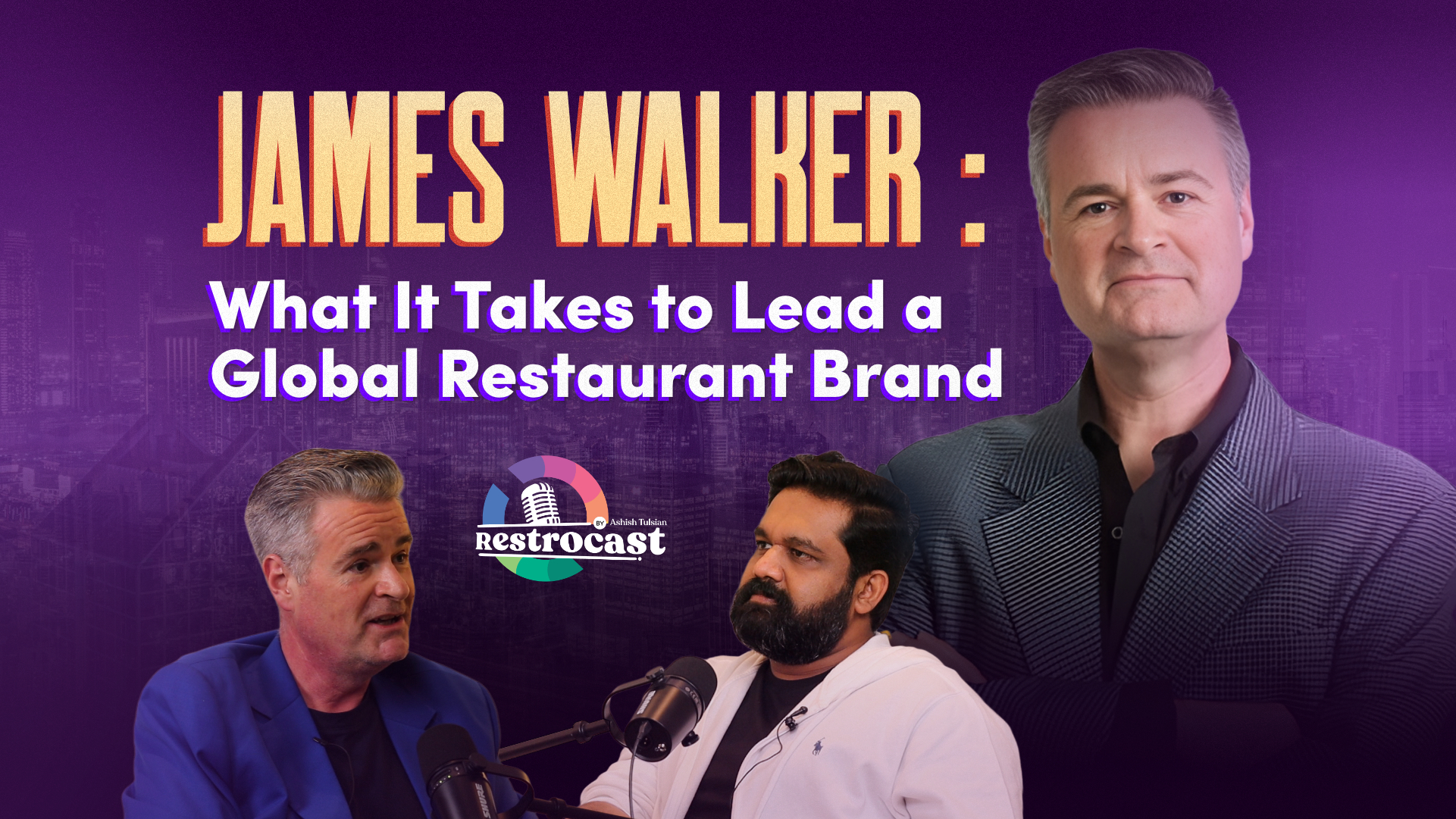
In the ever-evolving world of the restaurant industry, few have a journey as compelling as James Walker. Over three decades, Walker’s experience offers a treasure trove of insights for aspiring restaurateurs and seasoned professionals alike.
In a recent podcast, Walker shared his unconventional entry into the industry, his approach to managing chaos in the kitchen, and the evolution of his career from hands-on operations to corporate leadership. Explore the key points from the candid conversation, sharing valuable lessons and insights gained.
James, you have an incredible journey spanning over three decades in the restaurant industry. Let’s begin at the very start. What led you to the restaurant space?
James Walker: It’s an interesting and somewhat unconventional story. In the mid-90s, I moved to Martha’s Vineyard and stumbled upon an opportunity to manage a restaurant. I had a love for food but no formal background in the industry. I quickly discovered the thrill of shaping customer experiences. For instance, I learned that making scratch muffins improved quality and was more cost-effective than prepackaged ones. That realization drew me deeper into the industry.
James, let’s dive into the heart of restaurant operations. You mentioned chaos in the kitchen as a defining aspect. How do you perceive it?
James Walker: Chaos is the lifeblood of a restaurant. Imagine the POS system crashing during peak hours—the cooks staring at each other, unsure what to do next. But I thrived in that environment. Calling out orders like “two salmon, fire a porterhouse steak medium rare” while coordinating with food runners and the waitstaff was exhilarating. It’s high-energy, and while it’s not for everyone, it felt like home for me. My son, who thrives in social, high-energy situations, would love it, whereas my daughter would prefer the structured environment of managing a virtual customer experience. Working environments are deeply personal.
Speaking of environments, how did your journey evolve after Pizzeria Uno?
James Walker: I moved frequently for career growth, taking roles that challenged me. My first corporate-like role was with Cinnabon under AFC Enterprises. They valued my ability to run businesses in tough markets like New York, Boston, and DC. It taught me to handle complexity and focus on creating environments where franchisees and employees could succeed. Supporting franchisees became a priority because their success directly impacts the end customer.
Franchisees bring unique challenges. How do you balance their needs with corporate objectives?
James Walker: Franchisees are both partners and customers. Their financial sensitivity differs from corporate employees. My role is to ensure that every product, system, or process benefits them, their employees, and ultimately the end customer. Leaders like Aziz Hashim exemplify this approach by balancing franchisee profitability, employee experience, and customer satisfaction. A franchisor’s success hinges on this alignment.
James, you’ve worked with notable leaders like Chris Elliott and shared fascinating stories about your time at Cinnabon. What’s one memory that stands out?
James Walker: One memory that’s vivid for me is when we were opening a prototype restaurant in Alpharetta, Georgia. The idea was to create a more profitable restaurant with a better customer experience. As I walked around two days before opening, I realized there were no soda fountains. Instead, the design team had decided on bottled sodas. For an operator like me, that didn’t make sense—it impacted both profitability and customer satisfaction. When I raised concerns, I got a lot of corporate jargon until Chris Elliott, then the president, walked in and said, “James, the guy who made that decision was a dumbass.” It was refreshingly honest. Sometimes, leadership is about cutting through the noise and addressing the core issue directly.
After Cinnabon, what was your next chapter?
James Walker: After Cinnabon was acquired by Focus Brands, I transitioned to working with a franchisee group in California. It allowed me to stay close to the operational side while pursuing an MBA at Duke. The decision to do an MBA, despite already being in executive roles, was to gain deeper financial and data analysis skills. It helped me understand nuances like revenue recognition and data-driven insights, which were critical for high-level decision-making.
Did the MBA experience make a tangible difference in your career?
James Walker: Absolutely. While leadership and people skills are best learned through experience, the MBA sharpened my understanding of finance, data analysis, and strategic insights. Programs at Duke’s international campuses, from Delhi to Shanghai, gave me a global perspective and a stronger grasp of actionable data.
You’ve had extensive experience with private equity (PE) groups. How do you see their role in transforming restaurant brands?
James Walker: Private equity is complex and diverse. Some groups, like Rourke, Focus Brands, or Capital Springs, excel by supporting management with resources and intelligence rather than just cutting costs. Others may focus solely on short-term profitability, sometimes at the expense of a brand’s soul. Leaders like Aziz Hashim of NRD Capital emphasize holistic growth—considering franchisees, employees, and customers. A great PE group strikes the right balance, ensuring profitability while preserving the essence of the brand.
You’ve spoken about brands like McDonald’s and In-N-Out Burger. What sets them apart?
James Walker: McDonald’s and In-N-Out Burger succeed because they’re masters of consistency and discipline. In-N-Out, for example, thrives on its steadfast refusal to change its core offering. It’s their USP. Even something as small as adding bacon to their menu would be a seismic shift. On the other hand, McDonald’s continuously hones its operations, ensuring it remains competitive for decades. Both are examples of how clarity in vision and execution drives long-term success.
You’ve described yourself as more of a catalyst than an accelerant. Can you elaborate?
James Walker: An accelerant takes a well-functioning organization and fine-tunes it for growth, like Chris at McDonald’s. A catalyst like me thrives in environments that need transformation. Whether it’s turning around struggling brands or building systems for new ones, I enjoy creating strategies that set the course for long-term success. For instance, working with experiential brands alongside Aziz Hashim involves building frameworks that will evolve over decades.
Private equity sometimes gets a bad reputation for prioritizing profits over people. What’s your take?
James Walker: It depends on the PE group’s philosophy. Some prioritize cost-cutting for quick returns, which can strip a brand of its identity. Others, like Branded Hospitality, focus on adding value through intelligence and guidance. The best PE groups ensure sustainable growth by balancing financial goals with the needs of franchisees, employees, and customers.
Beyond your professional achievements, how do you focus on personal growth?
James Walker: I’m fortunate that my job is also my passion. I spend a lot of time visiting new concepts, learning from industry leaders, and staying updated through trade publications. On the personal side, I’m striving to be a better husband and father. For example, after long workdays, I’ll still make time for family activities, like taking my son to a Beach Boys concert. Balancing professional and personal growth is a continuous journey, but it’s one I’m committed to.
In conclusion, James Walker’s journey through the restaurant industry is a testament to the power of passion, adaptability, and leadership. From managing chaos in the kitchen to navigating the complexities of corporate and franchise environments, Walker’s insights provide valuable lessons for anyone looking to succeed in this dynamic field.