

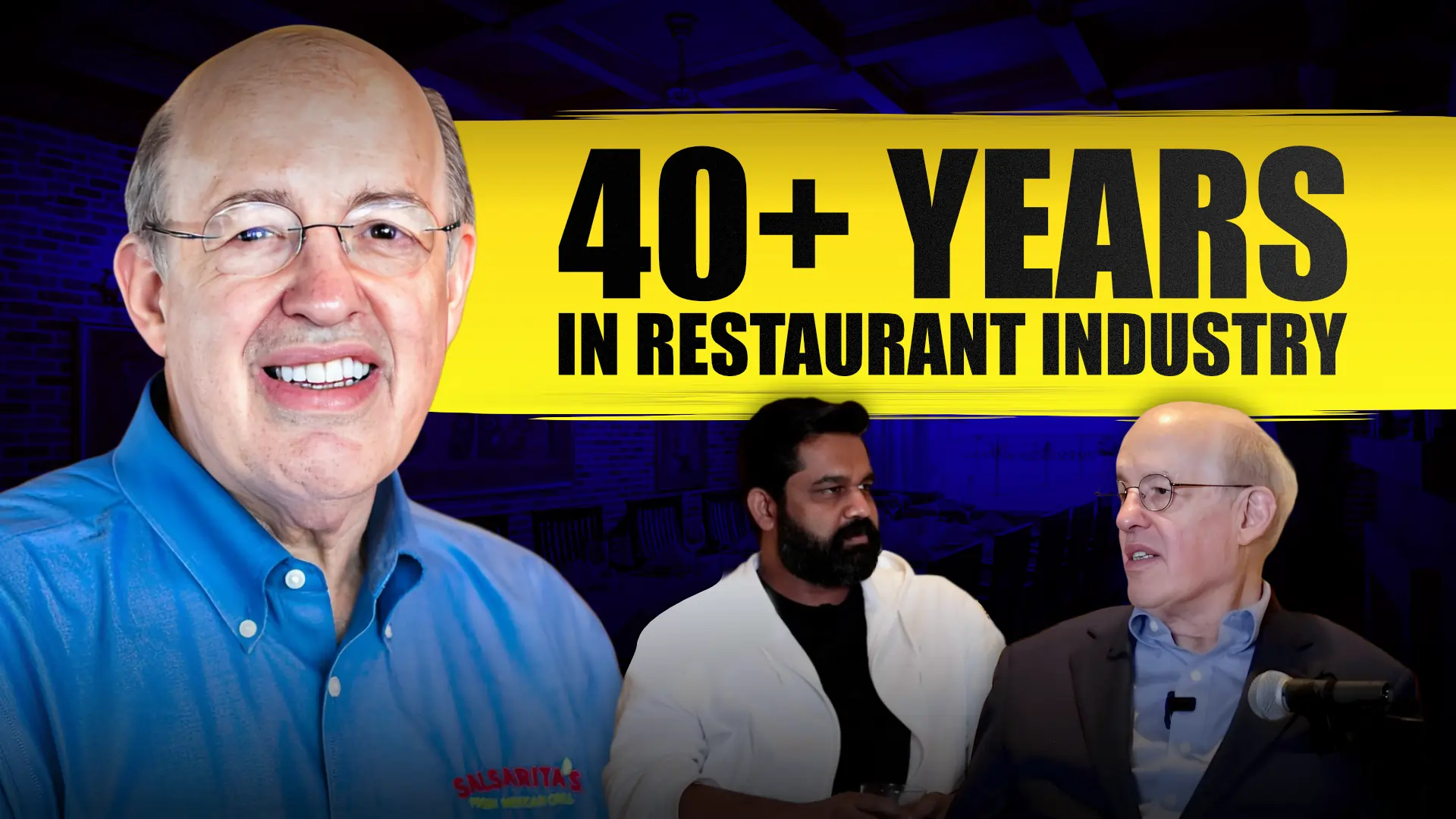
Phil Friedman, a seasoned veteran in the restaurant industry, has witnessed and shaped its evolution over the past four decades. From his early days managing a food distribution network in Vietnam to scaling major brands like Panda Express and McAlister’s Deli, Friedman’s leadership, vision, and adaptability have been instrumental in the growth and success of multiple restaurant chains. In this podcast, Phil shares the milestones of his remarkable career, his approach to challenges, and the lessons he has learned along the way.
Phil, you’ve had an extensive career in the restaurant industry, spanning over four decades. How did you first get involved in food service?
Phil Friedman: It’s interesting because I had food service in my background without realizing it. My first job in high school was as a dishwasher, where many people in this industry started. However, the more significant moment occurred as a quartermaster officer in the U.S. Army during the Vietnam War. At 21, I managed a food distribution business in Vietnam, which, by today’s standards, would be worth $40 to $50 million. That experience opened the door to my food service journey.
After the military, you ventured into manufacturing before transitioning into restaurants. How did that happen?
Phil Friedman: After returning from Vietnam, I worked in manufacturing, but I wanted to deepen my business knowledge, so I went to Wharton for my MBA. A year after graduating, I was recruited by PepsiCo, where I was introduced to the restaurant business through their Pizza Hut acquisition. I worked on financial planning for Pizza Hut International, and that’s when I realized how much I enjoyed working in the restaurant industry.
You’ve worked with some major brands like Chi-Chi’s, Panda Express, and McAlister’s. What was your role in growing these chains?
Phil Friedman: At Pizza Hut, I was involved in the financial side, helping the company manage its distribution network. Later, I joined Chi-Chi’s, where I worked on the East Coast franchise and eventually became vice president of planning. One of my key roles was in Panda Express, where I helped grow the chain from 200 to 300 units. My biggest contribution was shifting Panda from mall-based locations to street stores, which allowed the brand to expand beyond limited high-traffic areas. With McAlister’s, I saw the potential in a Southern-based brand and helped raise the necessary funds to grow the chain into a major player in the quick-casual space.
Phil, your journey has been inspirational. What advice would you give to someone entering the restaurant industry today?
Phil Friedman: Be adaptable and always ready to learn. The restaurant industry is constantly evolving, and what worked yesterday may not work tomorrow. Focus on the fundamentals—quality, customer experience, and operational efficiency. If you can master those, success will follow.
Phil, you took over McAlister’s Deli when it had just 25 locations. What was your approach to scaling the brand, and how did you handle the challenges that came with it?
Phil Friedman: When we acquired McAlister’s in 1999, there were around 25 restaurants. One of the major challenges was the lack of a support structure for the franchisees. Many had signed territory agreements, but there wasn’t much training or operational support in place. Coming from the industry, Mike (my friend) and I knew the first thing we had to focus on was building that support. We created a training team and placed some of our best people from company operations into field support roles. This was crucial in helping franchisees succeed or, in some cases, close if things didn’t work out. Once we established that infrastructure—about 12-18 months later—we were able to focus on selling franchises and growing the business. By 2005, when we sold to Roark Capital, we had grown to 200 restaurants.
The 2009 recession hit many businesses hard, particularly in hospitality. How did you manage to navigate through that time?
Phil Friedman: The recession was brutal, especially for us as a quick-casual brand. Our sales took a hit, and we had to figure out how to give customers a reason to keep returning despite their reduced disposable income. I knew we needed something to appeal to them and improve our margins, so we restructured the menu. We introduced paninis, which cost less because they have less protein, and implemented a “choose two” menu where customers could mix and match half portions. This strategy didn’t necessarily increase sales dramatically, but it improved our margins and helped us survive the recession.
Did the recession affect consumer behavior more regarding frequency or spending?
Phil Friedman: It’s both, but primarily frequency. During tough economic times, people don’t necessarily eat less but choose where to eat more carefully. Gas prices had gone up, and people had less money to spend. They might have loved McAlister’s, but they’d visit less often or opt for cheaper options. Our restructuring gave them reasons to come back and keep up that frequency. Some franchisees even said that without those changes, they wouldn’t have survived.
You mentioned earlier that Roark Capital played a big role in McAlister’s success. What do you think sets Roark apart from other private equity firms?
Phil Friedman: Roark has a great reputation because it supports growth without demanding quick paybacks. They reinvest in the business and back the leadership’s plans. For instance, they supported Arby’s by significantly increasing their ad spend, which was key in turning that brand around. Their willingness to let the business grow at its own pace makes them stand out.
After McAlister’s, you took on another brand, Salsarita’s. Can you tell us about that journey?
Phil Friedman: When I left McAlister’s, I formed Mississippi Holdings, LLC, to find smaller chains with growth potential. Salsarita’s fit that mold. It had grown to 165 restaurants but was struggling after the recession. By the time I bought it, it was down to about 70. Over the years, we’ve closed underperforming locations and opened new ones, so the total number remains around the same, but we’ve more than doubled the average unit volume. We repositioned the brand by focusing on fresh ingredients and a lighter, more modern decor.
How did the pandemic affect your strategy with Salsarita’s?
Phil Friedman: The pandemic was a real test, but luckily we had already been working on updating our technology. We implemented online ordering, worked with DoorDash, and invented curbside pickup. We could pivot quickly because we had just introduced drive-thrus at a few locations, which became a great success during COVID. The challenge was adapting our model for a drive-thru experience since customers can’t customize as much as they do inside the restaurant. We streamlined the menu and achieved ticket times of about 90 seconds, which is fantastic for a burrito concept.
What keeps you excited about running Salsaritas? You’ve been in the industry for so long—does it ever get boring?
Phil Friedman: It never gets boring. The challenges are constantly evolving. For example, after the pandemic, we were in a strong position, and then inflation hit, along with labor market issues and supply chain disruptions. The challenges we face today almost feel worse than during COVID. But I enjoy figuring out how to overcome these obstacles—that excites me. I love business and I love the restaurant industry.
Have you ever considered shifting to private equity after your success with McAlister’s? Why continue building rather than investing in existing brands?
Phil Friedman: I’ve had opportunities, but the reality is, I don’t want to work for anyone else. I prefer taking risks and putting my own money into projects where I’m in control. It’s not that flipping a brand wouldn’t be rewarding, but there’s something about building a company from the ground up. It’s hard, but I’m happy with my choices, even if things haven’t always gone as planned.
For someone running a restaurant business today, what advice would you offer?
Phil Friedman: First, ensure you have a solid organization. You can’t grow without the right people in place. Second, get your technology right. The restaurant industry has lagged behind other sectors in adopting technology, but it’s essential now. If you’re not evolving technologically, you’ll struggle to keep up.
Do you think the restaurant industry needed to be on time to adopt technology compared to other sectors?
Phil Friedman: Absolutely. Retail and hospitality were ahead of restaurants when it came to tech adoption. The restaurant challenge is that we’re still mainly operating as production centers with much manual, piece-by-piece work. This makes integrating technology more difficult, but it’s crucial.
You mentioned being hands-on with vendors and technology partners. Why is that important to you?
Phil Friedman: I like involving vendors and technology partners to express our needs and get the best possible solutions. It creates a good dialogue, and we often come up with solutions that we hadn’t thought of before. This involvement keeps me interested and ensures that we’re constantly improving.
What are your thoughts on retirement?
Phil Friedman: (Laughs) Retirement has never appealed to me. When I was 20, a major in the military tried to convince us to stay in by telling us we could retire in 20 years, and I thought that was the last thing I wanted. Now, in my 70s, I still don’t want to retire. I love learning, helping others, and staying engaged in business.
Phil Friedman’s journey in the restaurant industry is a testament to the power of adaptability, leadership, and innovation. From his beginnings as a dishwasher to leading major chains through turbulent times, Phil’s experience and insights offer invaluable lessons for anyone looking to thrive in this fast-paced industry. His continued passion for building brands and empowering teams shows that even after decades of success, there are always new challenges to tackle and opportunities to explore.