

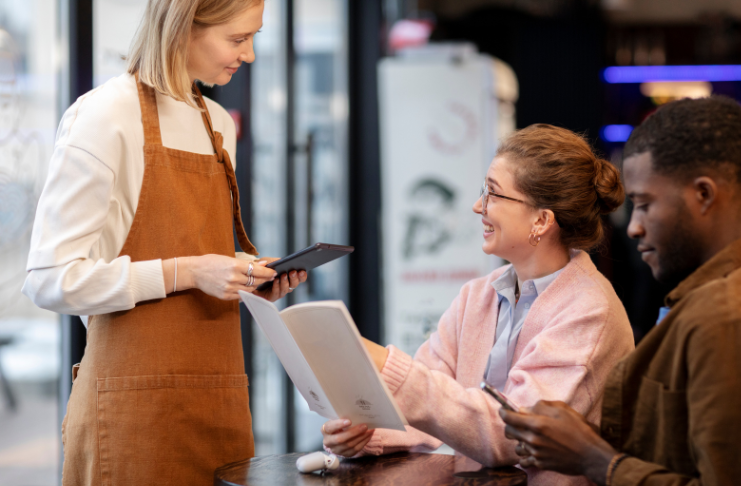
Many servers feel nervous when they hear the word “upsell.” They worry it might make them seem too pushy. But upselling isn’t about forcing sales—it’s about enhancing the guest’s experience while increasing the restaurant’s revenue.
A well-trained server knows how to suggest premium options, add-ons, and pairings in a way that feels natural. Restaurants focusing on upselling can boost revenue by 10-15% per table, and servers can earn higher tips by making thoughtful recommendations. In this guide, we’ll share effective upselling techniques to help you boost sales effortlessly.
Understanding Restaurant Upselling
Restaurant upselling is a strategic approach servers and waitstaff use to enhance the customer’s dining experience while boosting the restaurant’s revenue. It involves suggesting additional or higher-value items that complement the customer’s order.
Definition of Upselling vs. Cross-Selling
- Upselling involves encouraging customers to purchase a more expensive item than they initially considered—for example, suggesting a premium wine instead of the house wine or recommending a deluxe entrée over a standard one.
- Cross-selling involves suggesting additional items that complement the customer’s current order. For instance, recommend a side dish, appetizer, or dessert to accompany their main course.
The Psychology Behind Upselling
Successful upselling taps into customer psychology. This includes:
Influence of Suggestions: Subtle suggestions from servers can significantly influence customer decisions. People are often open to trying new things if presented appealingly and appropriately.
Role of Enthusiasm: A server’s enthusiasm can be contagious. When a server is genuinely excited about a dish or a recommendation, it’s more likely to pique the customer’s interest.
Creating a Memorable Experience: Upselling isn’t just about increasing the bill—it’s about creating memorable dining experiences that make customers want to return. A well-timed suggestion can turn an ordinary meal into a special occasion.
Upselling Techniques Every Server Should Master
Mastering the art of upselling in a restaurant requires a mix of confidence, menu knowledge, and great customer service. Here are some proven techniques every restaurant should consider while upselling:
1. Know the Menu Inside and Out
Why it Works: Guests rely on servers for recommendations, and being knowledgeable makes upselling feel more like expert advice rather than a sales push.
How to Do It:
- Learn the ingredients, preparation methods, and portion sizes of all dishes.
- Understand which drinks, sides, or add-ons pair best with each meal.
- Be aware of high-margin items that the restaurant wants to promote.
Example: A guest asks about the seafood pasta. Instead of confirming it’s available, the server says: “Our seafood pasta is a house favorite, made with fresh shrimp, scallops, and a rich garlic cream sauce. If you enjoy bold flavors, I’d recommend adding grilled salmon on top—it pairs beautifully and makes it a heartier meal.”
2. Use Descriptive Language to Sell the Experience
Why it Works: People eat with their senses. Descriptive words help guests visualize the food, making it more appealing.
How to Do It:
- Instead of just naming a dish, describe flavors, textures, and aromas in a way that excites the guest.
- Highlight what makes the dish special—whether it’s a secret recipe, locally sourced ingredients, or a chef’s specialty.
Example: Instead of saying, “Would you like to try our chocolate cake?” the server says: “Our signature chocolate lava cake is warm, rich, and indulgent, with a gooey molten center that melts in your mouth. It’s topped with creamy vanilla bean ice cream for the perfect balance of flavors. Would you like to end your meal with one?”
3. Offer Pairing Suggestions
Why it Works: Guests may not always think about drink or food pairings. A well-timed suggestion makes their meal feel complete.
How to Do It:
- Suggest a drink or appetizer that complements the main dish.
- Make it feel personal and helpful, not like a forced sale.
Example: A guest orders a steak. Instead of moving on, the server says: “Great choice! Our ribeye pairs well with a bold red wine like our house Cabernet Sauvignon. Would you like me to bring you a glass to enhance the flavors?”
4. Promote Limited-Time Offers and Specials
Why it Works: Creating a sense of urgency encourages guests to try something exclusive.
How to Do It:
- Highlight seasonal specials or limited-time dishes.
- Use phrases like “only available this weekend” or “one of our most popular limited dishes” to add excitement.
Example: “We just introduced a new truffle risotto for the season—it’s only available this month. It’s creamy, aromatic, and topped with shaved black truffles. Would you like to try it before it’s gone?”

5. Suggest Upgrades and Premium Add-Ons
Why it Works: Many guests are open to small upgrades that enhance their meals, especially when the price difference feels reasonable.
How to Do It:
- Offer larger portions or premium versions of items.
- Mention upgrades casually and appealingly.
Example: “You can make your burger even better with caramelized onions and melted gouda for just $2 more. Would you like to add that?”
6. Recommend Side Dishes and Extras
Why it Works: Many guests don’t think about ordering sides until they are suggested.
How to Do It:
- Instead of asking, “Do you want a side?” make a personalized recommendation.
- Frame it as an enhancement to their meal, not just an extra item.
Example: A guest orders a grilled salmon dish. Instead of letting it be, the server suggests: “Our garlic butter asparagus is a perfect side with salmon. It adds a fresh, light crunch that balances the flavors. Would you like to add it to your meal?”
7. Personalize Your Recommendations
Why it Works: People appreciate suggestions tailored to their tastes or dining occasion.
How to Do It:
- Pay attention to guest preferences and adapt your recommendations accordingly.
- If they are celebrating a special occasion, suggest a festive cocktail or dessert.
Example: A couple mentions they are celebrating an anniversary. Instead of treating them like any other guest, the server says: “Happy anniversary! We have a special dessert platter that’s perfect for celebrations—it includes a mix of our best sweets. Would you like to share one to make your night even more special?”
8. Read the Guest’s Cues and Know When to Stop
Why it Works: Not every guest wants to be upsold, and being too pushy can ruin their experience.
How to Do It:
- Observe body language and tone—if a guest seems uninterested, don’t force the upsell.
- If they say no, move on gracefully and focus on great service.
Example: A guest declines a suggested appetizer. Instead of insisting, the server shifts the focus: “No worries! If you change your mind, just let me know. In the meantime, I’ll get your drinks started!”
EXPERT OPINION
Benefits of Upselling in Restaurants
Enhanced Customer Experience: Engaging with guests through personalized suggestions can lead to a more memorable dining experience and satisfied customers, increasing the likelihood of repeat visits.
Increased Revenue: By using customer data and suggesting additional or higher-priced items, servers can increase the average check size, leading to higher overall sales for the restaurant. For instance, restaurants utilizing AI-driven upselling platforms have reported a 19% increase in average basket size.
Efficient Inventory Management: Promoting specific food and beverage items that need to be sold can help manage stock levels and reduce food waste.
Staff Development: Offering incentives for successful upselling can motivate staff to perform better, leading to a more dynamic and motivated team.
Common Mistakes to Avoid When Upselling
- Being Too Pushy: Don’t pressure customers. Make suggestions naturally and let them decide.
- Not Listening: Pay attention to what the customer wants and needs. Upsell items that match their preferences.
- Irrelevant Suggestions: Avoid recommending items that don’t fit with the customer’s order or are too expensive without context.
- Ignoring Non-Verbal Cues: Be mindful of the customer’s body language. If they seem uninterested, don’t push further.
Training and Role-Playing for Better Upselling

- Regular Training Sessions: Ongoing education ensures staff have the latest menu knowledge and upselling techniques.
- Role-Playing Exercises: Simulated scenarios can help servers practice and refine their approach, building confidence.
- Team Collaboration: Encouraging servers to share successful strategies builds a supportive environment focused on continuous improvement.
Tracking and Measuring Upselling Success
- Analyze Sales Data: Use your POS system to track how well upselling efforts work.
- Monitor Performance: Check which servers are most successful at upselling and identify best practices.
- Set Goals and Rewards: Establish clear upselling goals and reward top performers.
Conclusion
Upselling is a great way to enhance the customer experience and boost your restaurant’s revenue. By knowing the menu, using descriptive language, and making personalized recommendations, servers can upsell naturally and effectively. Regular training and teamwork help improve these skills. Remember, the goal is to make suggestions that genuinely enhance the customer’s meal, creating a memorable dining experience.