

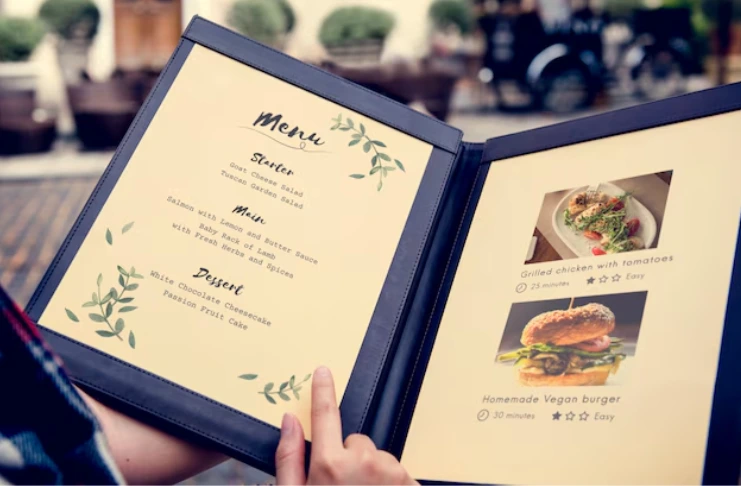
Menu pricing is the art and science of determining how much to charge for each dish on your restaurant’s menu. It’s not just about randomly picking numbers—it’s a strategic process that balances food costs, customer perception, and profit margins. Running a successful business comes down to a simple formula: buying for less, selling for more, and making a profit. The restaurant industry is no different — and accurate menu pricing is essential for long-term success. Starting with the numbers, like your target food cost percentage and ideal gross profit margin, is smart, and true profitability goes beyond the math. If your restaurant delivers an exceptional dining experience, you can charge more than your competitors. After all, when customers feel the value in every bite and interaction, they’re often willing to pay a premium.
In the competitive world of restaurants, where ingredient costs, labor expenses, and overheads are constantly shifting, pricing your menu effectively can make all the difference. A well-thought-out pricing strategy doesn’t just keep your business afloat; it helps you thrive by boosting sales, maximizing margins, and establishing your restaurant as a go-to spot for exceptional food and value.
In this blog, we’ll walk you through essential tips on how to price your restaurant menu the right way. From understanding food costs, analyzing market trends, leveraging pricing psychology, and choosing the right pricing strategies, we cover everything you need to know to make informed, profit-driven decisions.
How To Price A Menu: Essential Strategies
Pricing a restaurant’s menu involves more than assigning arbitrary numbers to dishes. The right pricing strategy helps maximize profits, attract customers, and ensure long-term success. Here are some essential strategies to help you price your restaurant menu effectively:
1. Understand Food Costs And Calculate Food Cost Percentage

The foundation of menu pricing starts with knowing your food costs. Food cost refers to the expense of all ingredients used to prepare a dish. To price your menu items effectively, you must calculate the food cost percentage.
How To Calculate Food Cost Percentage:
Use this simple formula:
For instance, if a dish costs $4 to make and you sell it for $12:
Most restaurants aim for a food cost percentage between 28-35%. If your percentage exceeds this range, you might need to reconsider pricing or find ways to reduce costs without compromising quality.
Tips:
- Monitor ingredient costs regularly as they fluctuate due to market trends.
- Consider bulk purchasing or negotiating with suppliers to reduce costs.
- Account for waste, spoilage, and portion sizes to maintain consistency.
Proper food cost management is crucial for profitability. Many successful restaurants use automated tools to track ingredient costs and calculate menu prices more accurately. Additionally, involving your kitchen staff in cost-saving initiatives can foster a culture of efficiency.
2. Competitor-Based Pricing
Diners often compare restaurants based on menu prices, especially in competitive markets. Competitor-based pricing involves setting prices relative to similar establishments in your area.
Steps To Implement Competitor-Based Pricing:
- Identify your top competitors within a specific geographic radius.
- Analyze their pricing structures for similar items.
- Position your prices based on your unique value proposition (e.g., premium ingredients, ambiance, or service quality).
Example: If local competitors price burgers between $10 and $14, you can set yours at $12 if your burger matches their quality or higher if you offer premium ingredients like Wagyu beef.
Key Insight:
- Avoid setting prices too low to undercut competitors; this can damage profitability.
- Communicate your differentiators through menu descriptions to justify higher prices.
Competitor analysis is not a one-time task. Regularly monitoring competitors helps you stay competitive and adjust prices based on market trends.
3. Perceived Value Pricing
Customers don’t just pay for food; they pay for the experience, presentation, and story behind the dish. Perceived value pricing sets menu prices based on how customers perceive your offerings’ worth.
How To Enhance Perceived Value:
- Use high-quality, descriptive language in your menu. For example, “Handcrafted Truffle Pasta” sounds more luxurious than “Pasta with Truffle Sauce.”
- Highlight the sourcing of premium ingredients (e.g., grass-fed beef, locally-sourced vegetables).
- Train staff to convey the value of signature dishes.
Example: A restaurant in downtown Los Angeles priced its “Signature Dry-Aged Ribeye” at $55, significantly higher than competitors. However, diners were willing to pay the premium by emphasizing the 45-day aging process and premium sourcing.
Perceived value pricing works best when paired with exceptional service and presentation. Online reviews often reflect how customers perceive the value of their dining experience, influencing future patrons.
4. Menu Engineering And Contribution Margin Approach

Menu engineering analyzes sales performance and profitability to adjust pricing and promote high-margin items.
Key Metrics:
- Contribution Margin: Menu Price – Food Cost
- Popularity Index: Number of times an item is sold relative to total sales
Menu Engineering Matrix:
- Stars: High profit & high popularity – promote these items.
- Plowhorses: Low profit & high popularity – consider portion control or price increase.
- Puzzles: High profit & low popularity – experiment with placement or descriptions.
- Dogs: Low profit & low popularity – consider removing or reworking.
Action Steps:
- Analyze sales data monthly using your POS system.
- Use visual cues like borders or placement to redesign your menu to emphasize profitable items.
- Adjust prices based on performance insights.
Successful restaurants often conduct quarterly menu audits to identify trends and adjust pricing accordingly. Training your staff to upsell high-margin items can further optimize profitability.
5. Psychological Pricing Techniques
Psychological pricing uses customer behavior insights to influence purchase decisions. Americans, like many consumers, often respond to specific pricing patterns.
Common Techniques:
- Charm Pricing: Prices ending in 99 (e.g., $9.99) feel significantly cheaper than rounding up to $10.
- Whole Number Pricing: Premium items often benefit from whole numbers (e.g., $40 instead of $39.99) to convey higher quality.
- Menu Design Psychology: Place high-margin items near the top-right corner or use boxes to draw attention.
Understanding customer psychology can significantly impact sales. Use clear, concise descriptions and avoid currency symbols where possible to reduce price resistance.
6. Bundle And Combo Pricing
Bundles and combos encourage customers to spend more by offering perceived value. This strategy is especially popular in the U.S. quick-service restaurant (QSR) sector.
How To Create Effective Bundles:
- Identify popular items and pair them with high-margin side dishes.
- Price the bundle slightly lower than the sum of individual items.
- Use enticing names like “Family Feast” or “Date Night Special” to create emotional appeal.
Example: A fast-food chain sells a burger, fries, and drinks individually for $5, $3, and $2, respectively. Selling the combo for $9 (instead of $10) drives more sales while increasing the average check size.
Bundles appeal to families and groups looking for convenience and savings. Testing different combinations and adjusting based on sales performance can optimize this strategy.
7. Dynamic Pricing Based On Demand
Dynamic pricing adjusts menu prices based on demand, time of day, or seasonality. This approach is common in hotel restaurants and high-traffic urban areas.
Strategies for Dynamic Pricing:
- Offer lunch specials to attract daytime traffic.
- Introduce happy hour discounts during off-peak hours.
- Adjust prices for seasonal items based on ingredient costs.
Modern POS systems offer advanced features that help understand dynamic pricing. With its help, restaurants can adjust menu prices based on factors such as demand, time of day, day of the week, or even real-time market conditions. For instance, during peak lunch hours, you can increase prices slightly to maximize profitability while offering discounts during slower periods to attract more customers. The system can provide data-driven insights into pricing performance, helping restaurant owners refine their strategies for long-term success.
8. Factor In Overheads And Profit Goals
Menu pricing must account for operational expenses and target profit margins. Ignoring overhead costs can erode profitability, even if individual dishes seem profitable.
Key Cost Components:
- Food Costs: Ingredients and packaging
- Labor Costs: Wages, training, and benefits
- Overheads: Rent, utilities, marketing, and insurance
Importance Of Menu Pricing
Menu pricing plays an essential role in the success of any restaurant. It not only determines profitability but also influences customer perceptions, competitive positioning, and long-term growth. Here’s why menu pricing is essential:
1. Profitability And Cost Control
Proper menu pricing ensures that each dish is profitable and covers the costs of ingredients, labor, and overhead. Without accurate pricing, restaurants risk operating at a loss. By calculating food costs and setting appropriate prices, businesses can maintain healthy profit margins and reinvest in growth.
To achieve effective cost control, restaurants must understand the various factors affecting food costs, such as ingredient prices, portion sizes, and supplier agreements. Using a food cost calculator and regularly monitoring costs allows restaurant owners to make data-driven decisions. Moreover, training kitchen staff to reduce waste and follow portion guidelines can significantly improve profitability.
Additionally, restaurants should consider external factors like seasonal ingredient fluctuations and inflation when determining prices.
2. Customer Perception And Value
Pricing directly impacts how customers perceive your restaurant. Well-priced menus reflect quality, value, and experience. For instance, luxury restaurants often use whole-number pricing to convey premium quality, while casual eateries might use charm pricing (e.g., $9.99) to appeal to cost-conscious diners.
To enhance perceived value, focus on storytelling and presentation. Describe dishes with appetizing language that highlights unique ingredients or cooking techniques. For example, “Handcrafted Black Angus Ribeye with a Garlic Herb Butter” sounds more enticing than “Grilled Ribeye.”
Expert Opinion:
Peter Hemsley is the visionary chef behind Aphotic, a seafood-focused tasting menu restaurant in San Francisco. The restaurant proudly holds a Michelin Green Star for its commitment to sustainability. Hemsley believes in providing exceptional customer service and shared his opinions in an article in Eater:
Restaurants can also use strategic menu design techniques, such as anchoring high-priced items near moderately priced ones to make the latter seem more affordable. In addition, gathering feedback through surveys and social media can provide insights into how customers perceive value.
3. Competitive Positioning

In the competitive restaurant industry, pricing helps position your restaurant relative to competitors. By understanding market trends and competitor pricing, restaurants can strategically set prices to attract target customers while maintaining profitability.
Begin with a thorough competitive analysis to identify pricing trends and understand customer expectations. For instance, if most competitors charge between $10 and $15 for a burger, positioning your burger at $13 with unique ingredients or presentation can attract diners seeking both value and quality.
Furthermore, restaurants should consider the target demographic when setting prices. A fast-casual restaurant might benefit from competitive pricing, while a fine-dining establishment may succeed with premium pricing to convey exclusivity.
4. Sales Optimization And Menu Engineering
Menu engineering uses pricing strategies to highlight high-margin items and increase overall sales. Analyzing sales data helps identify popular and profitable dishes, which can then be strategically priced and promoted.
The process begins by categorizing menu items into four groups: Stars (high popularity, high profitability), Plowhorses (high popularity, low profitability), Puzzles (low popularity, high profitability), and Dogs (low popularity, low profitability). Once these categories are defined, restaurants can focus on promoting Stars and reevaluating or reengineering Dogs.
For example, a restaurant may reposition a high-margin item like a gourmet burger by featuring it as a “Chef’s Special” or adding a visually appealing box around it. Additionally, digital menu boards and online ordering platforms offer opportunities to test different prices and observe their impact on sales.
5. Adapting To Market Dynamics

The restaurant industry is dynamic, with fluctuating costs and changing consumer preferences. Flexible pricing strategies, such as dynamic pricing and seasonal adjustments, allow restaurants to adapt to these changes while maintaining profitability.
Market conditions such as supply chain disruptions, seasonal demand variations, and economic shifts can significantly impact food costs and customer behavior. Restaurants should monitor these factors closely and adjust menu prices accordingly. For example, seafood restaurants often modify prices for items like lobster or oysters based on market rates.
Additionally, tracking consumer trends—like increased demand for plant-based options or sustainable sourcing—can guide menu updates that appeal to evolving tastes. Leveraging technology, such as predictive analytics tools, can help restaurants anticipate demand and optimize pricing strategies.
Conclusion
Pricing a restaurant menu is both a science and an art, requiring careful calculation, strategic thinking, and a deep understanding of customer behavior. Achieving a profitable yet competitive menu involves more than just covering costs; it requires a keen focus on value, customer perception, and market positioning. Start by accurately calculating food costs, factoring in overhead expenses, and using smart pricing models like value-based or psychological pricing.
Leverage technology such as POS systems, food cost calculators, and menu engineering software to make data-driven decisions. But remember, menu pricing is not a one-time task—it demands continuous monitoring and optimization. Regularly review your prices, analyze performance data, gather customer feedback, and adapt to market changes. By staying proactive and flexible, you’ll not only maximize profitability but also build long-term customer trust and satisfaction. A well-priced menu, backed by consistent analysis and refinement, is one of the most powerful tools for restaurant success in today’s competitive market.