
What are the Benefits of Starting a Cloud Kitchen in the UK?
The cloud kitchen model continues to attract UK operators because it offers operational flexibility and lower financial exposure compared to traditional restaurant formats.
While licensing and compliance requirements remain strict, the underlying business model provides several structural advantages that make it easier to enter the market and scale efficiently. Below are the major benefits of starting a cloud kitchen business-
- Lower Upfront Investment: Cloud kitchens eliminate the need for dine-in areas, front-of-house staffing, and premium high-street locations. This significantly reduces capital expenditure on interiors, seating, and customer-facing facilities, making market entry more viable, especially in UK cities with high commercial rents.
- Flexible Location and Formats: You can run efficient food delivery services from industrial units, shared kitchen facilities, or licensed commercial kitchens. This reduces dependence on footfall-driven locations and allows you to serve multiple delivery zones without opening multiple physical restaurant sites.
- Faster Go-to-Market: Delivery-only restaurants typically require fewer structural changes than full-service restaurants. Simpler layouts can make it easier to prepare premises for inspections and launch operations sooner, supporting faster concept testing and iteration.
- Aligns with Digital Ordering Behavior: Virtual kitchens are built for online food ordering from the outset, supporting order aggregation, packaging efficiency, and delivery coordination. This makes it easier to track performance data, refine menus, and respond to demand patterns.
- Scalability: Multiple virtual brands or cuisines can operate from a single licensed kitchen, improving equipment utilization and cost efficiency. While this requires clear food-safety controls and hygiene separation, it enables growth without duplicating real estate, staff, or kitchen infrastructure.
What are the Mandatory Registration Requirements for Cloud Kitchens in the UK?

Before you can launch a cloud kitchen business model in the UK, it must be registered as a food business with the relevant local authority. This requirement applies regardless of whether the kitchen serves customers on-site or operates entirely through online delivery services.
What Registration Legally Means in the UK
Registering your cloud kitchen formally notifies the local council that food is being prepared, handled, and sold from a specific premises. Under UK food law, registration is mandatory if your business is involved in cooking, preparing, storing, handling, selling, or distributing food.
For cloud kitchens, this applies even when:
- Orders are placed exclusively online
- The kitchen operates from a shared or rented commercial space
- There is no customer-facing or dine-in element
Registration ensures the local authority can:
- Record and approve the premises as a food operation
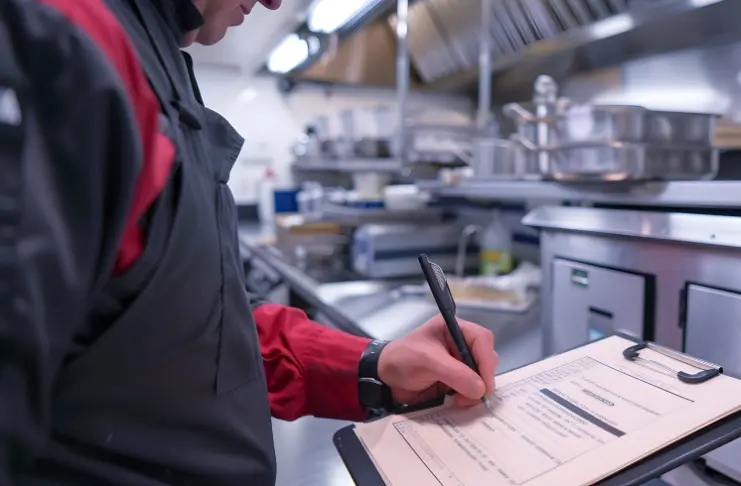
- Schedule hygiene inspections and food safety checks
- Enforce food safety, cleanliness, and operational standards
When Registration Must be Completed
- Registration must be completed at least 28 days before you start trading. You are legally allowed to operate during this waiting period unless the council raises concerns or requires changes following an inspection.
- There is no fee for food business registration. However, failure to register or late registration can lead to enforcement action, including fines or closure notices.
What are the Cloud Kitchen UK License Requirements?

Cloud kitchen operations in the UK carry a number of essential licenses and permits related to food preparation, food handling, employee safety, and premises. Here are the key licensing requirements you need to take care of-
1. Food Hygiene Rating
Once the cloud kitchen is registered as a food business, it falls under the Food Hygiene Rating Scheme (FHRS) in the UK.
- Local environmental health officers inspect the premises for hygiene and food safety compliance
- Ratings are issued on a scale from 0 to 5, based on inspection outcomes
- Inspections assess food handling, cleanliness, layout, safety systems, and management controls
- Ratings may be displayed publicly and can influence customer trust and marketplace visibility
While a rating itself is not a licence, it is a regulatory outcome tied directly to legal compliance.
2. Food Safety and Hygiene Training Certificates
In the UK, food safety compliance for kitchen staff is demonstrated through recognized training rather than a government-issued licence. Anyone involved in preparing, cooking, or handling food must have an appropriate level of food safety knowledge, which is typically evidenced through formal training certifications.
For most cloud kitchens, the Level 2 Award in Food Safety and Hygiene for Catering is the minimum recognized standard for food handlers and typically covers-
- Personal hygiene and illness reporting
- Safe food handling and storage practices
- Cross-contamination prevention
- Allergen awareness and controls
- Temperature management and food safety monitoring
3. Employer’s Liability Insurance and Public Liability Insurance
Although not issued by councils, these insurances are widely treated as operational requirements.
- Employer’s liability insurance is legally required if the cloud kitchen employs staff
Public liability insurance protects against customer claims arising from food safety incidents or accidents - Many landlords, shared kitchen operators, and commercial partners require proof of coverage
- Insurance supports compliance, risk management, and business continuity
4. Fire Safety Certificate
Cloud kitchens must meet fire safety obligations under UK fire safety laws.
- A fire risk assessment is required for commercial kitchen premises
- Kitchens must have appropriate ventilation, emergency exits, alarms, and fire extinguishers
- Compliance requirements vary based on kitchen size, equipment used, and building type
- Fire authorities may inspect or request documentation
Fire safety compliance is assessed separately from food hygiene inspections.

5. Waste Carrier License
Waste handling obligations apply to all food businesses.
- Cloud kitchens must use a licensed commercial waste carrier for food and packaging waste
- If the business transports its own waste, registration as a waste carrier may be required
- Waste storage, separation, and disposal must meet local council standards
- Records of waste contracts may be requested during inspections
This ensures food waste and commercial refuse are handled lawfully.
INDUSTRY INSIGHT
What are the Business Structure, Tax, and Regulatory Formalities?
Beyond food safety and licensing, cloud kitchens must be set up correctly from a business and tax standpoint. Early decisions around legal structure and registrations affect liability exposure, taxation, reporting obligations, and long-term scalability of your virtual restaurant. Getting these fundamentals right helps avoid compliance issues as the business grows.
A. Choosing the Right Business Structure
Cloud kitchen operators in the UK typically operate under one of three structures. Each has different tax and liability implications.
Sole Trader
- Simplest structure with minimal setup requirements
- The owner is personally liable for debts and obligations
- Often suitable for small or test-stage cloud kitchen food concepts
Partnership
- Two or more individuals share ownership and responsibility
- Liability is shared unless structured as a limited partnership
- Requires clear agreements around roles and profit sharing
Limited Company
- A limited company is a separate legal entity from its owners
- Offers greater protection against personal liability
- Commonly preferred for scalable or multi-brand cloud kitchen operations
Many UK cloud kitchen guides recommend choosing a structure early, as changing later can create tax and administrative complexity.
B. HMRC Registration and Tax Compliance
Once the business structure is set, tax registration becomes mandatory.
- Register with HM Revenue & Customs (HMRC) based on your structure
- Sole traders must register for Self Assessment
- Limited companies must register for Corporation Tax
- Register for VAT if turnover exceeds the UK threshold or if required by business model
- Payroll registration is required if you employ staff
Timely registration ensures the business can trade legally and meet reporting obligations.

C. Financial Records and Documentation
Maintaining accurate records is a core compliance responsibility.
- Open a separate business bank account to clearly track income and expenses
- Within this, you need to maintain records of:
- Orders and sales
- Supplier invoices and expenses
- Payroll and tax filings
- Food safety logs and inspection records
- Proper documentation is crucial for successful audits, inspections, and financial reporting
What are the Premises and Kitchen Setup Requirements?
For cloud kitchens in the UK, compliance is determined largely by the physical condition and layout of the kitchen premises. Local authorities assess whether the space is suitable for safe food preparation, storage, and handling.
Setting up the kitchen correctly from the start reduces inspection risk and prevents costly retrofits.
A. Core Physical Requirements for the Premises
Food safety regulations require kitchen spaces to be designed and maintained in a way that supports hygiene and contamination control.
- Cleanable surfaces throughout the kitchen: Floors, walls, ceilings, and work surfaces must be smooth, non-absorbent, and easy to clean to prevent dirt and bacteria build-up.
- Adequate ventilation, lighting, and drainage: Kitchens must have sufficient ventilation to manage heat, smoke, and odours, along with proper lighting for safe food handling and effective drainage to prevent water accumulation.
- Sanitation and hand-washing facilities: Dedicated hand-wash sinks with hot and cold water, soap, and drying facilities are required, separate from food-preparation sinks.
B. Kitchen Layout, Food Flow, and Storage Controls
The internal layout of a cloud kitchen plays a critical role in food safety compliance, particularly in high-volume or multi-brand setups.
- Clear separation of kitchen zones: Food-preparation, cooking, storage, and packaging areas must be adequately segregated to minimise cross-contamination risks.
- Raw and cooked food separation: Raw ingredients must be stored and handled separately from cooked or ready-to-eat foods.
- Appropriate storage facilities: Refrigeration, freezer units, and dry storage areas must support safe temperature control, stock rotation, and allergen segregation.
- Controlled waste handling areas: Waste must be stored away from food-prep zones and removed regularly to avoid hygiene risks.

C. Cleaning, Equipment Hygiene, and Pest Control
Ongoing cleanliness is as important as the initial kitchen setup.
- Facilities for cleaning utensils and equipment: Sinks or dishwashing facilities must be suitable for the volume and type of equipment used.
- Documented cleaning schedules: Kitchens are expected to follow defined cleaning routines that cover surfaces, equipment, storage areas, and waste zones.
- Pest control measures: Preventive controls should be in place to reduce the risk of pests accessing food or storage areas.
Many UK ghost kitchens operate from rented or shared premises, which introduces additional compliance considerations.
- Lease terms permitting food operations: The lease or rental agreement must explicitly allow commercial food preparation and cooking activities.
- Shared kitchen compliance responsibility: Even in co-working or dark kitchen spaces, each operator remains responsible for food safety compliance.
- Clear operational separation in shared spaces: Multi-brand kitchens must maintain segregation of ingredients, equipment, and storage to meet hygiene standards.
What are the Operational and Ongoing Compliance Requirements?

Compliance for a cloud kitchen in the UK does not end once the kitchen is set up and registered. Day-to-day operations are subject to ongoing oversight, and regulators expect food safety, hygiene, and operational controls to be consistently maintained.
Here’s what operational compliance entails-
1. Inspections and Regulatory Oversight
Once a cloud kitchen begins operating, it remains under the supervision of the local authority.
- Routine inspections by environmental health officers: Inspections assess hygiene standards, food safety practices, waste handling, and general compliance with food laws.
- Inspection frequency varies by risk profile: Factors such as food type, production volume, compliance history, and kitchen setup influence how often inspections occur.
- Corrective actions may be required: Inspectors can request improvements, issue notices, or schedule follow-up inspections if standards are not met.
2. Standard Operating Procedures (SOPs) for Food Safety
Cloud kitchens are expected to operate using defined procedures that show how food safety risks are controlled. This involves-
- Documented SOPs for key activities:
- Food handling and preparation
- Cooking and temperature control
- Cleaning and sanitation routines
- Storage and stock rotation
- Waste disposal
- Staff hygiene and illness reporting
- Food Safety Management Systems (FSMS): Regulators recommend an FSA-aligned, HACCP-based approach, such as Safer Food, Better Business, to demonstrate active risk management.
- Staff training and supervision: SOPs should be supported by regular training and oversight to ensure consistent implementation.
3. Record Keeping and Documentation
Maintaining accurate records is a core part of ongoing compliance and inspection readiness.
- Operational records: Commonly expected operational records include-
- Cleaning schedules and completed cleaning logs
- Temperature records for refrigeration, freezing, and hot holding
- Waste disposal arrangements and collection records
- Staff hygiene and food safety training records
- Supplier documentation and ingredient traceability, particularly for allergens
- Need for documentation: Up-to-date documentation supports inspections, demonstrates due diligence, and provides protection in the event of complaints or incidents.
How to Start a Cloud Kitchen in the UK?

Starting a cloud kitchen in the UK involves more than securing a kitchen and listing online. Here is the step-by-step process you can follow to start your restaurant–
- Define your cloud kitchen business model and menu: Decide whether you will operate a single brand, multiple food brands, or a shared-kitchen model. Your menu, cuisine type, and production volume influence kitchen layout, equipment needs, allergen controls, and inspection risk. At the same time, it should take into account the preferences of your target market for high customer satisfaction.
- Choose a compliant kitchen location: Secure a commercial kitchen, industrial unit, or shared dark-kitchen space that is permitted for food use. Confirm that the lease or rental agreement allows commercial food preparation and that the premises can meet hygiene, fire safety, and ventilation requirements.
- Register your food business with the local council: Food business registration is mandatory and must be completed at least 28 days before trading begins. Each kitchen location must be registered separately, even if operating multiple brands from the same site.
- Set up food safety systems and staff training: Implement a Food Safety Management System based on HACCP principles or the FSA’s Safer Food, Better Business framework. Ensure food handlers complete appropriate food safety training and maintain accessible training records.
- Prepare the kitchen for inspection readiness: Finalize kitchen layout, cleaning schedules, temperature controls, waste handling processes, and pest-control measures. Inspections focus on how food safety risks are managed in day-to-day operations.
- Complete business, tax, and insurance registrations: Register the business with HMRC based on your structure (sole trader, partnership, or limited company). Set up a business bank account and obtain required insurance, including employer’s and public liability cover.
- Confirm additional licences if applicable: If you plan to deliver alcohol, operate late at night, or expand into dine-in or customer collection, apply for the relevant premises licences or approvals before launch.
Following these steps in order helps ensure your cloud kitchen is legally compliant, inspection-ready, and able to scale without regulatory setbacks.
Conclusion
Opening a cloud kitchen in the UK requires the same level of regulatory discipline as any established food business. From premises suitability and food safety systems to business registration and operational controls, compliance decisions made early have a direct impact on how smoothly the kitchen launches and scales.
By understanding which approvals are mandatory, which depend on your operating model, and how inspections are applied in practice, you can build a cloud kitchen that is not only efficient but also resilient in the face of regulatory checks.
Getting compliance right from the outset protects your brand, supports long-term growth, and gives you the freedom to focus on execution rather than enforcement issues.