

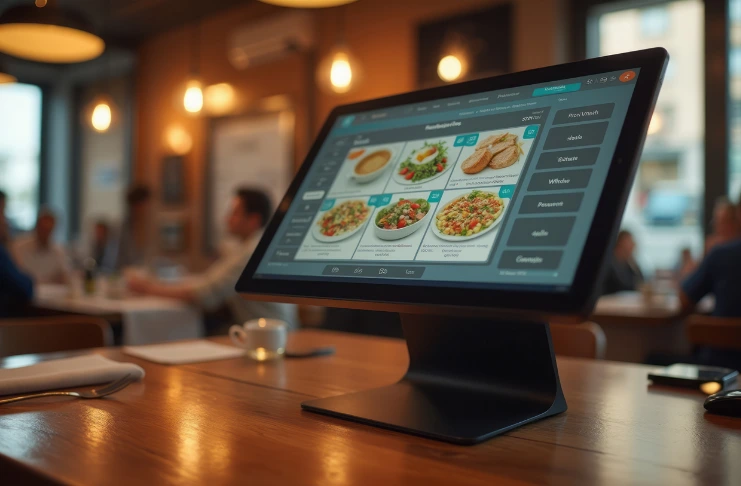
1. Restroworks – The Ultimate Restaurant Management Solution

Restroworks offers a unified platform covering restaurant POS, kitchen display systems, CRM, and delivery integrations. It’s trusted by brands like Taco Bell, Belgian Waffle Co., and Subway. From order-taking to inventory control, it’s built to handle the fast-paced demands of modern food service.
Key Features:
- QR Code Ordering & Kiosk Integration: Enables contactless, self-service ordering for faster turnaround and improved customer satisfaction.
- Real-Time Analytics: Offers deep insights into sales, staff performance, and customer behavior to drive smarter decisions.
- Inventory Management: Tracks stock levels across locations, automates reordering, and reduces waste.
- Multi-Location Scalability: Easily manage multiple outlets from a centralized dashboard.
- POS & Kitchen Display System: Ensures smooth coordination between front-of-house and kitchen staff.
- CRM & Loyalty Programs: Helps build lasting relationships with customers through personalized engagement.
Why It’s the Best Restaurant Software: Restroworks stands out for its versatility and reliability. It simplifies billing, optimizes staff scheduling, and enhances customer engagement all while offering real-time control over operations. Its cloud-based infrastructure ensures that restaurant owners can monitor and manage their business from anywhere. What truly sets Restroworks apart is its ability to scale effortlessly, making it ideal for both independent eateries and large chains. With its robust feature set and proven track record, Restroworks is a strategic partner for growth in India’s competitive food service industry.
G2 Rating: 4.8/5
2. Toast POS
Toast POS is an Android-based restaurant management system designed to streamline operations for both QSRs and full-service dining establishments. Known for its sleek interface and lightning-fast performance, Toast helps restaurants reduce wait times, improve order accuracy, and deliver a better customer experience. Its cloud-based infrastructure ensures reliability and scalability, making it a favorite among busy kitchens and high-volume outlets.
Highlights:
- AI-Driven Menu Optimization: Uses customer data and sales trends to suggest profitable menu adjustments.
- Integrated Billing & CRM: Combines payment processing with customer relationship tools for seamless service.
- Speed & Reliability: Built to handle peak hours without lag, ensuring smooth transactions and kitchen coordination.
- Ideal for QSRs & Full-Service Restaurants: Flexible enough to support fast-paced counters and sit-down dining alike.
Toast’s pos system is built for speed and reliability, enhancing customer experience and reducing wait times.
G2 Rating: 4.2/5
3. Square for Restaurants
Square is a cloud-based POS and management platform tailored for small to mid-sized food businesses. It combines ease of use with powerful tools that help restaurants manage orders, payments, marketing, and inventory—all from a single dashboard. Square’s mobile-friendly design makes it perfect for on-the-go owners and staff, while its affordability makes it accessible to startups and growing eateries.
Core Features:
- Loyalty Program Integration: Build customer retention with customizable rewards and promotions.
- Real-Time Inventory Management: Track stock levels, receive alerts, and reduce waste efficiently.
- Mobile-Friendly Dashboard: Manage operations from any device, anywhere.
- Robust Payment Processing: Accept all major payment types with secure, fast transactions.
Square also includes marketing tools that help restaurants reach new customers and keep existing ones engaged. Its intuitive setup means minimal training is required, and its modular pricing allows restaurants to scale features as they grow.
G2 Rating: 4.3/5
4. Lightspeed
Lightspeed is a cloud-based restaurant POS system designed for restaurants that need flexibility, scalability, and multi-channel support. Whether you’re running a boutique café, a hotel dining outlet, or a multi-location chain, Lightspeed adapts to your unique setup with ease. Its intuitive interface and advanced reporting tools help managers make smarter decisions, while its seamless integrations ensure smooth operations across platforms.
Benefits:
- Floor Plan Customization & Table Management: Tailor your layout to match your space and optimize seating for better turnover.
- Integration with UberEats & ONDC: Manage online orders from multiple delivery platforms in one dashboard.
- Scalable for Multiple Locations: Centralized control makes it easy to manage inventory, staff, and sales across outlets.
- Advanced Reporting: Gain insights into sales trends, staff performance, and customer behavior.
Lightspeed is a top contender for the best restaurant management platform, particularly for hybrid models such as hotel dining and cafés.
G2 Rating: 4.3/5
5. TouchBistro
TouchBistro is an iPad-based restaurant POS software built to enhance front-of-house operations. Designed with servers and managers in mind, it simplifies order-taking, table management, and customer engagement, all from a sleek, mobile interface. It’s ideal for restaurants that prioritize speed, personalization, and a modern dining experience.
Key Features:
- Reservation & Table Management: Easily manage bookings and optimize seating arrangements.
- Offline Mode with Auto-Sync: Keep operations running smoothly even during internet outages.
- CRM & Loyalty Tools: Build customer relationships with personalized offers and rewards.
- Intuitive Ordering Interface: Speed up service and reduce errors with a user-friendly design.
It is perfect for restaurants that want to deliver a seamless customer experience without complex hardware setups. Its offline capabilities ensure reliability, while its CRM features help drive repeat business.
G2 Rating: 4.2/5
6. Clover

Clover POS is a versatile, cloud-based restaurant management software designed to support restaurants of all sizes from small cafés to expanding multi-location chains. Known for its sleek hardware and user-friendly interface, Clover offers a complete suite of tools to manage orders, payments, inventory, and customer engagement. Its modular design allows restaurateurs to choose the features they need and scale as their business grows.
Highlights:
- Customizable POS System: Tailor the interface to match your restaurant’s workflow, whether it’s counter service, table service, or delivery.
- Integrated Billing & Payments: Accept all major payment types with secure, fast processing and built-in billing software.
- Inventory Management: Track ingredients, set reorder alerts, and manage stock across multiple locations.
- Customer Relationship Management (CRM): Build loyalty with personalized promotions, feedback collection, and email marketing tools.
G2 Rating: 3.8/5
7. Revel Systems
Revel Systems is a robust, enterprise-grade POS solution designed for large restaurant chains and franchises. It offers powerful tools for multi-location control, ERP integration, and real-time data management. With Revel, businesses can scale confidently while maintaining consistency and operational precision across outlets.
Features:
- Dynamic Pricing & Demand Forecasting: Adjust pricing based on trends and predict customer demand to optimize inventory.
- Real-Time Inventory Management: Track stock across locations and automate replenishment to avoid shortages.
- Scalable Across Multiple Locations: Centralized control enables seamless and efficient expansion.
- ERP Integration: Sync with enterprise resource planning systems for unified financial and operational oversight.
Revel is ideal for franchises that need granular control over operations while maintaining flexibility. Its advanced forecasting tools help reduce waste and maximize profitability, while its scalability ensures that growth doesn’t compromise performance.
G2 Rating: 4.1/5
8. 7shifts
7shifts is a workforce-centric restaurant management software designed to streamline employee scheduling, payroll, and team communication. It’s especially useful for restaurants that want to reduce labor costs, improve staff satisfaction, and stay compliant with labor laws. Though it’s not a full POS system, 7shifts integrates seamlessly with leading POS platforms to offer a holistic operational view.
Benefits:
- Tip Pooling & Compliance Alerts: Automate tip distribution and receive alerts for labor law violations, ensuring fair and legal practices.
- POS Integration & Mobile Access: Sync with POS systems to track sales vs. labor costs, and manage schedules on-the-go via mobile.
- Staff Retention Analytics: Use data-driven insights to monitor turnover trends and improve employee engagement.
- Shift Feedback & Messaging: Foster team communication and gather feedback after shifts to boost morale and performance.
While not a full restaurant POS, 7shifts complements other restaurant software for holistic management.
G2 Rating: 4.5/5
9. Ordermark
Ordermark is a powerful order aggregation platform that centralizes incoming orders from delivery apps like Swiggy, Zomato, and ONDC into a single dashboard. It’s a game-changer for cloud kitchens and multi-brand restaurants that juggle high volumes of online orders across platforms.
Features:
- Centralized Dashboard: View and manage all third-party delivery orders in one place, reducing tablet clutter and confusion.
- Kitchen Workflow Optimization: Streamline order routing and prep times to improve kitchen efficiency and reduce bottlenecks.
- Real-Time Inventory Management: Track stock levels and sync inventory across platforms to prevent overselling.
- Multi-Location Support: Manage orders across multiple outlets with consistent performance and reporting.
Ordermark improves operational efficiency and reduces order errors across multiple locations.
G2 Rating: 4.5/5
10. FoodTec Solutions
FoodTec Solutions is a comprehensive restaurant management suite tailored for large chains and enterprise-level operations. It combines POS functionality with advanced tools for billing, loyalty programs, delivery logistics, and customer engagement.
Highlights:
- Enterprise Scalability: Designed to support high-volume, multi-location restaurants with robust infrastructure.
- Advanced Reporting & CRM: Gain deep insights into customer behavior, sales trends, and operational performance.
- POS & Mobile App Integration: Seamlessly connect in-store and mobile systems for unified data access.
- Loyalty & Promotions Engine: Build custom rewards programs and targeted promotions to drive repeat business.
FoodTec is ideal for restaurant chains seeking growth and operational control. Its an all-in-one platform that reduces the need for multiple vendors and empowers businesses to scale efficiently while maintaining a consistent customer experience.
G2 Rating: 4.2/5
What Is Restaurant Management Software?
Restaurant management software is a digital tool that helps restaurant owners and managers run their operations more smoothly and efficiently. Instead of handling tasks manually or across multiple systems, this software brings everything together in one place. It’s designed to automate daily activities like billing, inventory tracking, table reservations, staff scheduling, and customer engagement.
Whether you operate a fine-dining restaurant, a quick-service outlet (QSR), or a cloud kitchen, using the right software can save time, reduce errors, and cut down on costs. It helps streamline workflows, improve customer service, and make smarter business decisions based on real-time data.
What Are the Core Modules of Restaurant Software?
- POS (Point of Sale): For processing orders and payments quickly and accurately
- Inventory Management: To monitor stock levels, avoid shortages, and reduce waste
- Billing Software: For smooth and secure transactions
- CRM (Customer Relationship Management): To build loyalty and personalize customer experiences
- Table Management: For handling reservations and optimizing seating
- Mobile App Integration: For online ordering and delivery coordination
- Analytics Dashboards: To track performance, sales trends, and customer behavior
Together, these features make restaurant management software a powerful solution for growing and managing a successful food business in today’s competitive market.
What Key Features Should You Look for in Restaurant Software in 2025?

In 2025, diners expect speed, personalization, and seamless service across every touchpoint. To stay competitive, restaurants must adopt modern management systems that do more than just track orders; they anticipate demand, streamline operations, and seamlessly integrate with digital platforms. Here are the must-have features:
1. AI-Powered Forecasting
AI-powered forecasting is transforming how restaurants plan and operate. By analyzing historical sales data, seasonal trends, and customer behavior, artificial intelligence enables the accurate prediction of future demand. This enables restaurants to optimize their menu offerings, adjust staffing levels, and manage inventory more efficiently, thereby reducing food waste and enhancing profitability.
For example, if a dish is trending during weekends, the system can suggest stocking up on its ingredients in advance. This feature is especially valuable for restaurants with multiple locations, enabling them to make informed decisions across outlets and maintain consistent service quality while enhancing overall operational efficiency.
2. Seamless Integration with Delivery Platforms
In 2025, seamless integration with delivery platforms such as Zomato and Swiggy is crucial for restaurant success. Modern restaurant management systems integrate directly with these platforms, enabling orders to be consolidated into a single dashboard. This eliminates manual entry errors, speeds up kitchen operations, and ensures timely deliveries.
For restaurants operating across multiple locations, centralized order management helps maintain consistency and track performance in real time. Integration also supports dynamic menu updates, inventory sync, and customer feedback collection, making it easier to manage both in-house and online orders while enhancing customer experience and maximizing revenue from digital channels.
3. Menu Engineering
Menu engineering is a data-driven approach to designing and optimizing your restaurant’s menu for profitability and customer appeal. In 2025, advanced restaurant management software enables detailed analysis of each item’s contribution margin, the profit earned per dish, helping you prioritize high-margin offerings.
Tools also support price elasticity tests, showing how changes in pricing affect demand. A/B testing enables restaurants to present different menus across channels (e.g., dine-in vs. delivery) to determine which one performs better. Additionally, real-time 86ing (removing unavailable items) ensures accurate menus and avoids customer frustration. Together, these features help boost revenue, reduce waste, and enhance the overall dining experience.
4. Biometric Attendance & Payroll Sync
Biometric attendance systems use fingerprint or facial recognition to accurately track employee check-ins and check-outs, eliminating buddy punching and time theft. When integrated with payroll software, this feature ensures real-time syncing of attendance data, automating salary calculations and reducing human error. Managers gain better visibility into staff punctuality and shift patterns, while employees benefit from transparent and timely payments.
In multi-location setups, biometric systems centralize workforce data, making HR management more efficient. By enhancing accountability and streamlining payroll, this feature fosters a more disciplined and equitable workplace, essential for restaurants seeking to uphold high standards of service and staff satisfaction.
5. Real-Time Inventory Management

Real-time inventory management allows operators to monitor stock levels instantly across multiple locations, ensuring ingredients are always available when needed. Automated reordering systems trigger purchase orders based on preset thresholds, minimizing human error and avoiding stockouts.
Advanced tracking also helps detect anomalies that may indicate pilferage or misuse, safeguarding profitability. Integration with POS systems ensures that every sale updates inventory automatically. Ultimately, this feature streamlines operations, reduces food costs, and empowers managers to make smarter purchasing decisions with data-driven insights.
6. Customizable CRM & Loyalty Programs
Modern restaurant CRM and loyalty tools go far beyond collecting emails. In 2025, customizable platforms will enable restaurants to create detailed customer profiles based on dining habits, preferences, and feedback. These insights power personalized offers, birthday rewards, and targeted promotions that feel tailor-made, boosting engagement and repeat visits.
Feedback loops, such as post-meal surveys or review prompts, help refine service and menu offerings. Loyalty programs can be gamified with tiers, points, and exclusive perks, all managed seamlessly across dine-in, delivery, and mobile app channels. This feature transforms casual diners into loyal advocates, driving long-term growth through meaningful, data-backed relationships.
7. Offline Mode with Auto-Sync
In 2025, uninterrupted service is non-negotiable, and offline mode with auto-sync ensures restaurants stay operational even during internet outages. This feature allows POS systems, order processing, and billing to function seamlessly without connectivity. Once the connection is restored, all data, such as sales, inventory updates, and customer interactions, automatically syncs with the cloud, ensuring no information is lost.
It’s especially vital for high-volume restaurants or those in areas with unstable networks. Staff can continue serving guests, printing receipts, and updating orders without disruption. This reliability boosts customer satisfaction and operational confidence, making it a critical safeguard in modern restaurant management software.
8. Mobile App Integration
Mobile app integration is a game-changer for customer engagement and operational efficiency. Restaurants can offer branded apps that support ordering, payments, table reservations, and loyalty tracking, all in one place. Customers enjoy a seamless experience, from browsing menus to earning rewards, while restaurants gain valuable insights into preferences and behavior.
Integration with CRM systems enables personalized promotions and push notifications. Real-time updates on order status and wait times enhance transparency and accountability. Whether for dine-in, takeaway, or delivery, mobile apps extend a restaurant’s reach and deepen customer relationships, making them an essential tool for growth and retention.
INDUSTRY INSIGHT
What Trends Are Shaping Restaurant Technology in 2025?

The restaurant industry in India is rapidly evolving, and 2025 marks a turning point where technology is no longer just a support tool—it’s a strategic driver of growth. Here are five key trends reshaping how restaurants operate and engage with customers:
1. Rise of ONDC
India’s Open Network for Digital Commerce (ONDC) is revolutionizing food delivery by allowing restaurants to connect directly with customers, bypassing traditional aggregators. By using ONDC-compatible restaurant management software, eateries gain better control over pricing, branding, and customer data. For example, a local biryani outlet using ONDC can offer lower prices and retain more profit compared to listing on third-party apps.
2. AI-Driven Personalization
Artificial intelligence is enhancing the customer experience through smart recommendations, dynamic pricing, and predictive ordering. A restaurant might use AI to suggest popular combos based on time of day or customer history boosting both satisfaction and sales.
3. Sustainable Operations
Modern restaurant management systems now include carbon tracking, energy usage monitoring, and waste reduction tools. Restaurants can analyze their environmental impact and make data-driven decisions to reduce food waste and packaging use, aligning with eco-conscious consumer values.
4. WhatsApp-Based Ordering
Chat-based ordering is becoming mainstream, especially in urban India. Restaurants are integrating their POS systems with WhatsApp to allow customers to place orders, receive updates, and even make payments all through a familiar interface.
5. Blockchain for Food Traceability
Blockchain technology is being used to track the origin of ingredients, ensuring transparency and safety. For instance, a farm-to-table restaurant can show customers exactly where their produce came from, building trust and catering to health-conscious diners.
How to Choose the Right Software for Your Restaurant?

Selecting the right restaurant management software is a strategic decision that can directly impact your efficiency, profitability, and customer satisfaction. With so many options available in 2025, it’s important to evaluate your needs carefully before investing
1. Assess Your Format
Start by identifying your restaurant type. A cloud kitchen thrives on centralized order management and delivery integrations, while a fine-dining restaurant benefits from features like table management, reservation systems, and customer relationship management. For example, a multi-brand cloud kitchen using Restroworks can manage all incoming orders from Swiggy, Zomato, and others in one dashboard, saving time and reducing errors.
2. Integration Needs
Your software should work seamlessly with existing tools. Look for platforms that integrate with delivery apps, payment gateways, accounting software, and loyalty programs. This ensures smooth operations and reduces manual data entry. For instance, modern POS integrates with payroll and inventory systems, offering a unified experience.
3. Budget vs. ROI
Don’t just focus on the upfront cost. Consider how the software will save money over time through reduced labor costs, minimized food waste, and improved customer retention. A slightly higher investment in a scalable system can yield better returns in the long run..
4. Vendor Support
Reliable support is crucial. Choose vendors that offer thorough onboarding, staff training, and responsive after-sales service. This ensures your team can use the system effectively and troubleshoot issues quickly.
5. Scalability
If you plan to grow, make sure your restaurant POS system supports multiple locations. Features like centralized reporting, inventory sync, and remote access are essential for managing expansion without losing control.
What Are the Best Implementation Tips for Restaurateurs?

The best implementation tips for restaurateurs include thorough staff training, smooth data migration, and others.
1. Staff Onboarding
Your team is the backbone of daily operations, so thorough training is essential. Schedule hands-on sessions and create cheat sheets for quick reference. For example, when The Bombay Canteen adopted a new POS system, they ran mock service days to help staff get comfortable before going live, minimizing errors and boosting confidence.
2. Data Migration
Transferring existing data: menus, customer profiles, inventory is a delicate process. Use migration tools or vendor support to avoid data loss. A Bengaluru-based café migrating to Petpooja ensured their loyalty program data was preserved, allowing regulars to retain their points and perks.
3. Trial Periods
Before committing, test the software using demo versions. This helps you evaluate usability and compatibility with your workflow. For instance, a quick-service chain in Delhi used a 14-day trial of Restroworks to compare its reporting features with their old system, leading to a more informed decision.
4. Monitor KPIs
Once implemented, track key performance indicators to measure impact. Metrics like table turnover, order accuracy, and customer retention reveal whether the software is delivering results. A Jaipur fine-dining restaurant saw a 20% improvement in table turnover after switching to a system with smart table mapping.
5. Mobile App Integration
Branded mobile apps enhance customer engagement. Use them for loyalty programs, online ordering, and feedback collection. For example, Biryani Blues integrated their app with their POS, allowing customers to reorder favorites and earn points, driving repeat business.
Conclusion
India’s restaurant industry is as diverse as its cuisine ranging from bustling street food stalls to high-end fine dining establishments. In such a dynamic landscape, choosing the right restaurant management software is a strategic move that can streamline operations, boost customer satisfaction, and drive profitability.
Top software solutions offer robust features tailored to different formats from cloud kitchens to multi-location chains. Whether you need centralized order management, real-time analytics, inventory control, or mobile app integration, these platforms deliver scalable solutions that grow with your business.
The key is to match the software to your restaurant’s unique needs. A small café may prioritize ease of use and billing, while a large chain might need advanced CRM and multi-outlet reporting. Trial periods, vendor support, and integration capabilities should also weigh heavily in your decision-making.
Ultimately, the best restaurant management software is one that empowers you to focus less on backend chaos and more on what truly matters delivering memorable dining experiences. With the right system in place, restaurateurs can turn operational efficiency into a competitive edge in India’s fast-evolving food scene.