

1. Restroworks

If your fast food operation demands tight control over high-volume orders, live inventory, and multiple sales channels, Restroworks delivers a offers a restaurant management software built to handle that pressure. Used by over 25,000 restaurants across more than 50 countries, it features a cloud-based POS system that’s hardware-agnostic, so you have the flexibility to connect it with tablets, terminals, and printers.
Restroworks is built for restaurants that need to move fast without losing control of accuracy or margins. Instead of juggling separate tools for menu updates, order flow, and inventory, you get one connected system that keeps everything in sync.
Plus, it offers real-time menu/multichannel updates, support for multiple payment methods, and strong analytics. What sets Restroworks apart is its ability to unify Front-of-House and Back-of-House functions, such as menu, inventory, and digital ordering, under one roof and scale seamlessly.
Key Features
- Central Menu Management: You can manage menus for all locations from one place. Changes to images, descriptions, prices, or availability sync instantly, which helps you maintain consistency and avoid confusion across outlets.
- Cockpit App: A mobile app (“Cockpit”) lets you monitor sales, outlet performance, voided orders, and key metrics in real time, even when you’re not on the premises. That helps you spot issues early, like a sudden drop in an item’s sales or too many voids, and respond quickly.
- Front-of-House and Back-of-House Integration: Everything from order entry, table/queue management, kitchen display/ticketing, to inventory, accounting, and staff scheduling is tied together in one ecosystem. This reduces miscommunication between front and kitchen, and enables stronger operational control.
- Digital Ordering: Restroworks enables restaurants to offer seamless ordering experiences via delivery apps, websites, kiosks, and QR codes. Customers can place orders through these channels, and KOTs flow directly into the POS, ensuring speed and accuracy without duplicate entry.
- Inventory Management and Forecasting: Restroworks gives live tracking of stock and ingredient usage, and supports forecasting demand so you’re less likely to run out during rushes or overstock and suffer waste.
Benefits
- Faster decision-making because you have up-to-date metrics and dashboards on sales, orders, and inventory.
- Better customer experience through consistent menus/pricing, fewer order errors, and quicker order flow from front to kitchen.
- Reduced inventory waste and better cost control thanks to real-time tracking and forecasting.
- Easier scaling: when you add more outlets, new payment/delivery channels, or change menus, those can be rolled out centrally, reducing rework.
Pricing
Custom pricing based on the requirements of the business.
Rating
G2- 4.8/5
2. Toast POS
Toast POS is built for restaurants with fast service demands—quick order turnaround, multiple fulfillment channels, and high transaction volume. It runs on proprietary Android hardware, so everything from handheld POS systems to kiosks to kitchen display screens is tightly integrated.
You’ll get advanced features to streamline order flow, enable faster checkout, including through mobile, self-order kiosks, and drive-thru, manage employees, and consolidate third-party delivery. Plus, for businesses scaling beyond one location, its reporting and management tools make oversight more efficient.
Key Features
- Toast Go® Handheld / Flex Terminals: You can take orders or payments directly at the table or in line, using handheld devices. Flex terminals support both employee and customer interactions, which speeds up service and reduces congestion at fixed counters.
- Self-Serve Kiosks and Display-Customer Interactions: Integration with self-ordering kiosks allows customers to place their own orders without waiting for staff. It also includes guest-facing displays or mounted “wedge” displays so customers can see order details, totals, etc., which reduces errors at checkout.
- Integrated Online Ordering: When customers order via the restaurant’s own online store, or via third-party platforms like DoorDash or Uber Eats, the orders flow automatically into Toast’s system.
- Labor and Team Management Tools: Includes scheduling, payroll integration, time-clock, and shift management, which helps fast food outlets manage staff reliably, especially during peak hours and busy shifts.
- Offline Mode: If internet connectivity drops, Toast maintains order-taking ability locally, syncing later when the connection restores. That keeps operations running in unstable network conditions.
Benefits
- You can unify all your sales channels (in-store, drive-thru, online, delivery) under one system, reducing errors and delays.
- Staff can learn the tool quickly, thanks to its intuitive UI, and there’s less switching between systems.
- Gain visibility into operations, including sales, labor, and item performance, to easily identify bottlenecks or menu items that are underperforming.
- Strong hardware ecosystem with rugged, restaurant-friendly devices that are built for heavy use.
Pricing
The paid plans start at $69/month.
Rating
G2- 4.2/5
3. Square POS
Square POS offers a streamlined, user-friendly solution tailored for fast food establishments, enabling efficient order management and payment processing.
With its intuitive interface and robust features, Square POS empowers fast food operators to enhance customer service and optimize operations. The system supports various payment methods, including contactless and chip cards, ensuring swift transactions.
Additionally, its integration with Square’s ecosystem allows for seamless inventory tracking, employee management, and sales reporting. Whether you’re operating a single location or multiple outlets, Square POS provides the tools necessary to manage your fast food business effectively and scale as needed.
Key Features
- Customizable Floor Plans: Design and adjust your restaurant’s layout to optimize seating arrangements and improve table turnover. This feature allows for drag-and-drop functionality, making it easier to manage and update floor plans as needed.
- Integrated Online Ordering: Square POS allows you to accept online orders directly through your branded website, eliminating the need for third-party platforms. This integration helps maintain consistent branding and reduces commission fees.
- Real-Time Inventory Management: Track ingredient usage and stock levels in real time, ensuring you can manage inventory efficiently and prevent stockouts or overstocking.
- Advanced Reporting Tools: Access detailed reports on sales, employee performance, and inventory, allowing you to make informed business decisions. These insights can help identify trends, optimize operations, and improve profitability.
- Employee Management: Manage staff schedules, track hours worked, and assign roles with ease. Square POS offers features like time clock integration and role-based permissions, streamlining workforce management.
Benefits
- The intuitive design reduces training time for staff and minimizes operational errors.
- Suitable for both single-location outlets and multi-unit franchises, accommodating growth and expansion.
Pricing
Square POS features two paid plans: Plus, starting from $69/month per location, and Premium, starting from $165/month per location, with an extra processing fee.
Rating
G2- 4.3/5
4. EPOS Now
EPOS Now delivers a flexible, all-in-one POS software tailored for fast food establishments. Designed to enhance operational efficiency, it offers seamless integration of sales, inventory, and customer management. The system supports various payment methods, including contactless options, ensuring swift transactions.
Additionally, the cloud-based platform allows for real-time data access, enabling operators to monitor performance and make informed decisions remotely.
With customizable features and scalable solutions, EPOS Now caters to multiple restaurant formats, providing the tools necessary to streamline operations and drive growth in the competitive fast food industry.
Key Features
- Seamless Payments: The POS solution is designed to make payments a breeze, with support for multiple payment formats, no hidden fees, and the ability to provide real-time discounts to customers.
- Integrated Delivery Management: Manage in-house, takeaway, and delivery orders from a single platform. EPOS Now integrates with premium delivery services, allowing for streamlined order processing and improved customer satisfaction.
- Real-Time Reporting and Analytics: Access detailed reports on sales, inventory, and staff performance in real time. These insights enable data-driven decision-making and help identify areas for improvement.
- Cloud-Based Access: Monitor and manage your business operations remotely through a secure cloud platform. This feature provides flexibility and ensures you stay connected to your business at all times.
Benefits
- Combines payment processing, staff management, reporting tools, and more in one system, enhancing operational efficiency.
- With real-time kitchen communication and mobile ordering support, it helps reduce bottlenecks during peak hours.
- The cloud-based interface is easy for staff to learn, minimizing training time.
Pricing
The complete POS solution is offered at $349.
Rating
G2- 4.0/5

5. SpotOn
SpotOn POS is a comprehensive, cloud-based system designed to streamline operations for fast food establishments. It offers a user-friendly interface that simplifies front-of-house tasks with intuitive ordering, secure payments, and curated reports. The system supports various payment methods, including contactless options, ensuring swift transactions.
Its customizable features cater to the unique needs of fast food operations, enabling businesses to scale seamlessly. With 24/7 customer support and flexible pricing plans, SpotOn POS is a reliable solution for fast food restaurants aiming to optimize their operations and improve customer satisfaction.
Key Features
- Integrated Online Ordering and Delivery: Manage online orders directly through your website or Google, eliminating third-party commissions. The system integrates with major delivery providers, offering flat-rate pricing and efficient order management.
- Cellular Backup: SpotOn’s router automatically switches to cellular data when the Wi-Fi goes down. This ensures that your operations keep running even when you lose connectivity.
- 24/7 Customer Support: Round-the-clock support ensures that technical issues, questions, or operational hiccups don’t slow down your service. SpotOn’s dedicated team helps maintain uptime, guide troubleshooting, and provide best-practice advice whenever needed.
- Comprehensive Reporting Tools: Access curated reports covering sales, inventory, labor, and customer data, enabling data-driven decision-making and efficient business management.
- Integrated Loyalty and Marketing: Implement customer loyalty programs and marketing campaigns directly through the POS system, fostering customer retention and driving repeat business.
Benefits
- SpotOn helps you quickly identify menu items that aren’t profitable and adjust pricing or promotions to maximize margins.
- Built-in loyalty and marketing features let you run promotions or personalized offers.
- Supports tablets, POS stations, and kiosks, allowing fast food outlets to configure the system for counters, drive-thru lanes, or self-service.
Pricing
Access the key POS features starting at $55/station per month. You can also request custom pricing to build your own hardware/software bundle.
Rating
G2- 4.4/5
6. LightSpeed Restaurant
Lightspeed Restaurant POS is built to give fast food operators precise control over both speed and workflow. Its cloud-based system emphasizes order accuracy, streamlined kitchen communication, and real-time inventory tracking, which helps reduce waste and stockouts in high-turnover environments.
The platform stands out for multi-location management and granular reporting tools, giving managers insight into performance across outlets without leaving the dashboard.
Lightspeed’s focus on fast-paced order handling, integrated payments, and data-driven decision-making ensures that restaurants can handle peak hours efficiently while identifying opportunities to optimize menus and staff allocation.
Key Features
- Customer Facing Display: Lightspeed provides a Customer Facing Display to ensure order accuracy, even during busy rushes. This feature allows customers to view their orders in real-time, reducing errors and improving satisfaction.
- Advanced Inventory Management System: Track, order, receive, and understand your inventory with integrated tools. This feature helps fast food restaurants manage stock levels efficiently, reducing waste and ensuring the availability of popular items.
- Multi-Location Management: Easily manage multiple restaurant locations from a single system. This feature allows fast food chains to maintain consistency across outlets, streamline operations, and centralize reporting.
- Customizable Menu and Floor Plans: Create and modify menus and floor plans to suit your restaurant’s layout and service style. This flexibility ensures that the POS system adapts to your specific needs, enhancing operational efficiency.
- Integrated Payments and Contactless Ordering: Accept various payment methods, including mobile and contactless options, directly through the POS system. This integration streamlines the payment process, reducing transaction times and improving customer experience.
Benefits
- Access detailed reports on sales, inventory, and employee performance, enabling data-driven decision-making.
- Get 24/7 customer support to address any issues promptly, minimizing downtime and maintaining smooth operations.
- Support for self-order kiosks allows customers to place their own orders.
- The POS continues to function during internet outages, allowing orders and payments to be processed without disruption.
Pricing
LightSpeed offers two paid plans: Essential at $189 and Premium at $399.
Rating
G2- 4.3/5
7. SumUp
SumUp POS is a streamlined, mobile-first system designed to simplify operations for fast food establishments. It offers a range of features tailored to enhance speed and efficiency, including table management, real-time menu updates, and seamless integration with delivery platforms.
The system supports various payment methods, including contactless and mobile payments, ensuring quick and secure transactions.
With its intuitive interface and cloud-based capabilities, SumUp POS enables restaurant owners and staff to manage orders, track sales, and monitor inventory from anywhere, facilitating smoother operations and improved customer service.
Key Features
- Table Management: Organize and manage tables efficiently, ensuring smooth seating and order flow, which is crucial during peak hours in fast food settings.
- Range of Compatible Hardware: SumUp also offers a range of compatible POS hardware, such as POS terminals, barcode scanners, printers, cash drawers, and more.
- Delivery App Integrations: Integrate seamlessly with popular delivery apps, allowing for streamlined online orders and broader customer reach without third-party commissions.
- Fast Menu Changes: Quickly update menus to reflect new items, promotions, or sold-out items, keeping offerings current and reducing customer confusion.
- Powerful Data and Reporting: Access detailed reports on sales, inventory, and staff performance, enabling data-driven decisions to optimize operations and profitability.
Benefits
- Operate the POS system from anywhere using a tablet.
- Accept various payment methods, including cash, card, and mobile wallets.
- Monitor stock levels in real time, helping to prevent shortages and overstocking.
- Manage employee schedules and track performance efficiently.
Pricing
SumUp offers various pricing plans for payment processing and POS solutions. The POS solutions start at $99/month.
Rating
G2- 3.7/5
8. Lavu
Lavu POS is a versatile iPad-based system built for the fast pace of quick-service restaurants. Rather than just processing payments, it streamlines every step of the operation, from order taking and kitchen communication to inventory tracking and reporting. The system emphasizes real-time visibility, so managers can monitor sales, stock levels, and staff performance at a glance.
Features like customizable menus, visual product layouts, and image-based item selection help reduce errors and speed up service during peak hours. With cloud accessibility, mobile ordering support, and integrated payment options, Lavu equips fast food operators to handle high volumes efficiently while maintaining accuracy and customer satisfaction.
Key Features
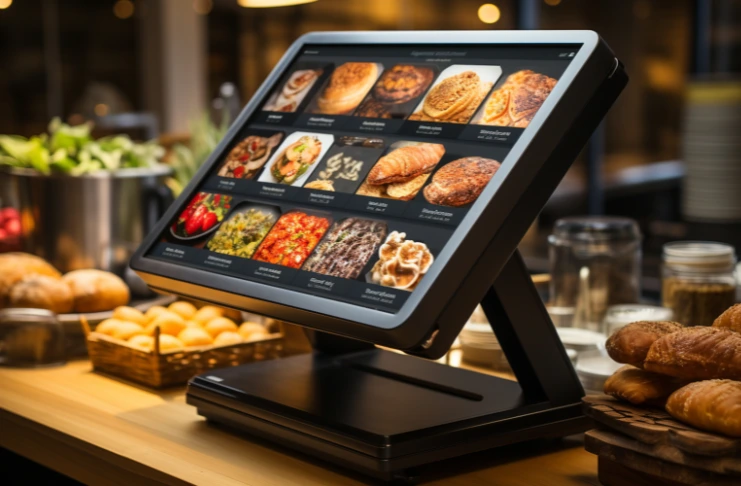
- Visual Menu Management: Lavu lets you design menus with images, colors, and icons that make order-taking more intuitive. Instead of scrolling through long text lists, staff can quickly tap on item images, which reduces the chances of selecting the wrong item.
- Kitchen Display System (KDS): Orders placed at the counter, via mobile, or online are instantly transmitted to digital kitchen screens. This eliminates paper tickets, reduces miscommunication between the front and back of house, and ensures that the kitchen can track orders in real time.
- Online and Mobile Ordering: Fast food outlets rely heavily on off-premise sales, and Lavu supports this by seamlessly integrating online and mobile orders with the POS. Customers can order ahead for pickup or delivery, and those orders flow into the same system as in-store transactions.
- Cloud-Based Management: Lavu’s cloud infrastructure allows you to run your restaurant without being tied to the store physically. Managers can log in from anywhere to update menus, monitor real-time sales, or check labor reports. Remote access also means you can push instant changes, like price adjustments or promotions, across all locations simultaneously.
- Integrated Payment Processing: Payments flow smoothly through Lavu’s built-in processing system, which supports credit cards, debit cards, mobile wallets, and contactless methods. Because payments are directly tied to the POS, reconciliation is faster and less error-prone compared to juggling third-party processors.
Benefits
- The iPad-based system is intuitive and easy to use, reducing training time for staff.
- Lavu offers a fast and straightforward setup process, allowing restaurants to get up and running quickly.
- Tailor the system to fit the specific needs of your restaurant, from menu items to pricing structures.
- Managers and staff can access the system from iPads or mobile devices, enabling quick adjustments and remote monitoring.
Pricing
Custom pricing
Rating
G2- 3.9/5
What is a POS System for a Fast Food Restaurant?
A POS software in a fast food restaurant is the technology that manages how orders are received, processed, and delivered. It extends beyond simple billing to manage the entire service flow, which is especially crucial when customer volumes are high and preparation times are short.
In practice, the system records sales and processes payments while ensuring that every order, whether it comes from the counter, a self-service kiosk, a mobile app, or the drive-thru, is instantly sent to the kitchen. It connects the front of house with the back of house, which reduces delays and miscommunication and keeps service consistent even during peak hours.
Many fast food operators also use their POS as a hub for broader functions like delivery integrations, loyalty programs, and inventory tracking. This gives owners and managers real-time insights into menu performance, ingredient levels, and labor productivity across locations. For staff, a streamlined interface reduces training time and enables them to process transactions more efficiently.
In a fast food environment, the POS system essentially acts as the backbone of operations. It ties together order-taking, fulfillment, payments, and reporting, allowing restaurants to meet customer expectations for speed and accuracy while controlling costs and improving overall efficiency.
What Does an Ideal POS System for Fast Food Restaurants Look Like?

An ideal POS system for fast food restaurants is designed for speed, accuracy, and high-volume efficiency. It enables quick order processing, real-time menu updates, and seamless integration with kitchen displays and payment systems.
Here are the key features to consider-
1. Speed of Service
Fast food customers expect short wait times, particularly during peak hours. A restaurant POS system that enables one-tap ordering, quick menu search, and the ability to recall frequently ordered items can significantly reduce checkout time.
Features like digital menu shortcuts and pre-configured combos allow staff to process transactions in seconds, keeping lines moving and improving throughput during busy shifts.
2. Order Accuracy
Mistakes in fast food service quickly translate into customer dissatisfaction and higher waste costs. A strong POS integrates directly with kitchen display systems (KDS), ensuring that every order is displayed clearly for preparation staff.
Order confirmation screens at the counter or drive-thru help customers verify selections before payment. The result is fewer remakes, tighter food cost control, and a better customer experience.
3. Multi-Channel Ordering and Integration
Fast food businesses now juggle multiple service channels, such as in-store, drive-thru, mobile apps, and third-party delivery platforms. A POS should serve as the central hub that synchronizes orders across these channels, ensuring consistency in pricing, menu availability, and reporting.
Without this level of integration, restaurants risk overloading kitchens or failing to fulfill orders accurately across platforms.
4. Inventory Management for High-Turnover Items
Fast food menus rely on high-volume, fast-moving ingredients. Real-time inventory tracking within the POS prevents stock-outs of popular items and avoids excess waste.
For multi-location operators, centralized inventory data also helps forecast demand, streamline supplier orders, and maintain consistency across outlets. This is critical in an industry where margins are tight and customer loyalty depends on product availability.
5. Staff Efficiency and Training
With high staff turnover common in fast food, a POS must be intuitive and easy to learn. Systems with clear layouts, touch-based navigation, and role-specific dashboards reduce training time and minimize errors from new employees.
Role-based access also ensures that staff can only perform functions relevant to their responsibilities, simplifying workflows and reducing operational risk.
6. Scalability and Cloud Support
Franchise operators and multi-location fast food chains need centralized control over pricing, promotions, and performance tracking.
Cloud-based POS systems make it possible to monitor operations in real time across multiple outlets, roll out menu updates instantly, and manage reporting without on-site intervention. For smaller outlets, cloud support offers flexibility to scale as they expand.
How POS Systems Transform Fast Food Operations?

Here’s how the right POS directly impacts operations on the ground-
1. Reducing Order Errors and Food Waste
In fast food, even small mistakes add up. Wrong orders mean wasted ingredients and lost sales. POS-integrated kitchen display systems and order confirmation screens eliminate the back-and-forth of handwritten tickets or verbal miscommunication.
When menus are synced across dine-in, drive-thru, and delivery platforms, every order reflects consistent pricing and item availability. This not only keeps customers satisfied but also prevents over-prepping or misfiring items that end up in the trash.
2. Faster Throughput at Peak Hours
Peak meal times can make or break a fast food outlet’s daily revenue. A restaurant POS system designed for quick-service environments enables cashiers to process more transactions per minute through tools like one-tap combo ordering, saved favorites, or automatic tax application.
Kitchens receive these orders instantly via digital displays, cutting wait times dramatically. For a high-traffic location, this can mean dozens of additional customers served per hour, turning busy rushes into opportunities rather than bottlenecks.
3. Driving Higher Revenue per Customer
The best POS systems help increase average ticket size by prompting staff or customers at kiosks, with upsell suggestions such as adding a drink or upgrading to a combo.
Similarly, loyalty integrations nudge customers to return by rewarding frequent visits or spending thresholds. Instead of depending solely on staff memory, the POS ensures upselling is systematic and consistent, translating into measurable revenue growth across outlets.
4. Customer Satisfaction and Repeat Business
Speed and accuracy are the foundation of customer loyalty in fast food. A POS that shortens wait times, ensures order precision, and delivers a smooth payment experience leaves customers more likely to return.
In a competitive market where alternatives are just minutes away, consistent reliability often makes the difference between a one-time visitor and a repeat customer.