

1. Restroworks
Restroworks is a cloud-based restaurant management platform that unifies POS, inventory, kitchen, digital ordering, analytics, and more into one system. Designed for both independent outlets and multi-unit chains, it gives you enterprise-level visibility while keeping day-to-day workflows simple for staff.
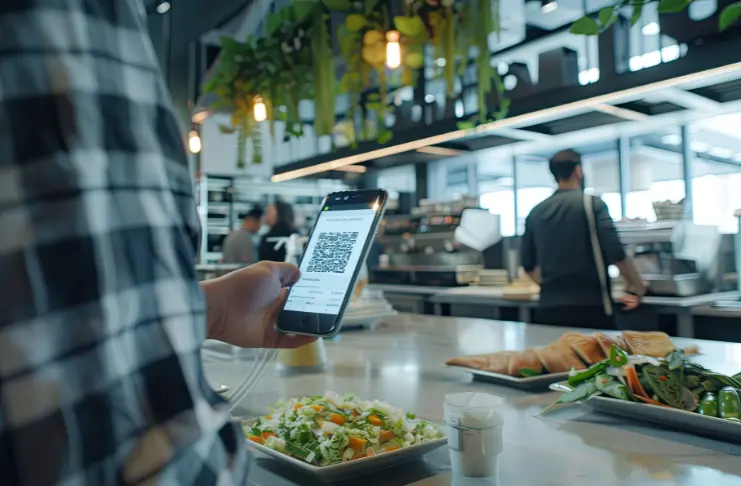
The platform supports multi-channel ordering through apps, websites, kiosks, and QR codes, and integrates with over 500 third-party tools across payments, delivery, and accounting.
With centralized menu control, real-time cost tracking, and fraud prevention features, Restroworks helps you improve efficiency, reduce losses, and scale with confidence.
Key Features:
- POS Ordering and Payment: Staff can take orders and payments via POS, manage table layouts, view order flow, and track waitlists from one screen. With multiple payment options and split billing features, payments become a breeze.
- Inventory and Recipe Management: Ingredient-level tracking connects recipes with live inventory, so managers know exactly what each dish costs and where waste occurs. If you have a multi-outlet restaurant chain, you can also easily transfer stock between locations and monitor a central kitchen, tightening cost control across the supply chain.
- Kitchen Display Systems: Orders appear instantly on digital screens in the kitchen, prioritized by prep time. This removes paper tickets, reduces errors between front- and back-of-house, and gives clear visibility into orders.
- Digital Ordering: You can launch branded websites, apps, kiosks, and QR-code menus while also syncing orders from delivery aggregators. This ensures all channels feed into the same system, preventing double entry and giving diners a consistent experience wherever they order.
- Analytics and Reporting: An analytics dashboard provides real-time insights across outlets, showing sales, costs, and suspicious activities like excessive voids. With outlet comparisons and detailed reports, leadership can spot inefficiencies quickly.
- Integrations: Restroworks supports 500+ integrations, from accounting tools to delivery partners. Open APIs allow operators to connect new systems without disrupting workflows, and the platform scales easily across different restaurant formats, from QSRs to fine dining.
Pricing: Custom pricing based on restaurant requirements
2. Square POS
Square for Restaurants is a point-of-sale system built for venues ranging from food trucks and small cafés to full-service, multi-location operations. It offers both front-of-house and back-of-house tools, such as order and menu management, kitchen display routing, staff management, and support for pickup, delivery, and QR / tableside payments.
What’s more, the tool offers immense flexibility to scale up or down and choose software features based on your needs as the base software is free, while the hardware is optional.
Key Features:
- Orders from dine-in, delivery, or takeout are routed to the correct prep stations, and digital displays in the kitchen help staff see prep priorities.
- You can track staff time, roles/permissions, badges, staff schedules, and shifts for better cost management and operational discipline.
- You can customize floor plans, manage tables and sections, use bar tabs, and take orders via multiple modes (counter, tableside, etc.).
- Reporting includes real-time sales, section sales, close-of-day reports, and insights into which menu items or times are performing best.
Pricing: Square for Restaurants offers 2 paid plans: Plus at $69 per location/month and Premium at $169 per location/month, with processing fees extra.
3. SevenRooms
SevenRooms is a CRM and operations platform built around reservations, table management, and guest lifecycle marketing. Used by ~15,000 restaurants globally, it lets you manage bookings, waitlists, seating, and guest preferences in one system.
The platform captures guest data over time, from reservation history to feedback, and uses it to personalize experiences and drive repeat visits.
With integrations and features for table reservations, event add-ons, loyalty perks, and feedback, it’s designed to turn guest interactions into long-term revenue streams.
Key Features:
- Automatically builds and enriches profiles with reservation history, spend patterns, and preferences.
- Tools to assign seating, manage waitlists dynamically, forecast table turns, and optimize floor layout for covers.
- Ability to send targeted email or SMS campaigns.
- Offers real-time performance dashboards, group reporting across locations, and integration via APIs.
- Support for special events, experiences, upsells, or add-ons tied to reservations.
Pricing: Customized plans

4. Restaurant365
Restaurant365 is a back-office restaurant management platform that ties together accounting, inventory, labor/scheduling, and payroll, aiming to bridge the gap between front-line operations and financial reporting.
With over 40,000 restaurants using it, the tool gives operators real-time visibility into prime costs, automates many routine administrative tasks, and ensures better forecasting and cost control. It’s designed for restaurants that want to reduce waste, streamline operations, and make financial decision-making faster and more accurate.
Key Features:
- Automates journal entries via POS integrations, general ledger support, budgeting and forecasting tools.
- Tracks inventory, recipes, prep, purchasing, and receiving, and helps you monitor prime cost and avoid overstock or stockouts.
- Forecasting tools help manage staffing needs, build schedules, track labor costs, and offer chat features for communication.
- Manages onboarding, time tracking, payroll, and compliance in an integrated way, reducing errors and administrative burden.
- Offers intra-day polling, real-time metrics, comparisons across locations, vendors, and vendor cost tracking.
Pricing: Custom pricing
5. Toast POS
Toast POS is a restaurant-centric point-of-sale platform built to support everything from food trucks and quick service to full service and enterprise dining. It integrates front-of-house, back-of-house, digital ordering, inventory, payroll, and customer engagement tools into one ecosystem.
Toast also offers 24/7 support and over 200 integrations, along with an offline mode that ensures operations continue even if internet connectivity drops. With flexible hardware options such as kiosks, handheld devices, POS terminals, and tools tuned for restaurant workflows, it aims to reduce friction, both in daily operations and scaling up multiple locations.
Key Features:
- Offers handheld POS devices, self-ordering kiosks, and kitchen display systems to fit different restaurant formats.
- Includes online ordering, branded websites, mobile apps, and integration with delivery services.
- Offers inventory tracking and food cost analytics, with features to help manage spoilage, supplier matching, and cost control.
- Real-time sales reporting and operational dashboards; offline mode ensures continued operation during connectivity disruptions, syncing data when back online.
Pricing: Toast POS features two paid plans, starting at $69/month, with a custom plan available.
Why Hospitality Tech Matters in 2025?
Restaurants are facing various operational challenges heading into 2025. Labor shortages make finding, training, and retaining skilled staff harder than ever. Plus, food inflation is affecting margins, forcing operators to keep a closer eye on inventory, portion control, and waste.
At the same time, delivery and pickup integration has become non-negotiable as customer expect seamless service across in-restaurant, online, delivery, and third-party channels. Without smooth workflows and systems that talk to each other, orders go astray, staff are overwhelmed, and the guest experience suffers.
But the right technology helps address these issues in the following ways-
1. Improves Operational Efficiency
Automating order routing, syncing the POS system with kitchen displays and inventory systems, and streamlining payment and billing processes reduces manual errors and speeds up service.
This not only saves labor hours but also allows staff to focus more on guest service rather than redundant operational tasks.
2. Helps Control Cost
With rising ingredient prices and supply chain volatility, inventory and cost-management tools are essential. Tracking real costs per dish, forecasting ingredient usage, and optimizing purchasing can help prevent waste and overstock, protecting profit margins.
3. Enhanced Guest Experience
Reservation systems and CRM tools allow restaurants to manage bookings better, reduce no-shows, collect guest preferences, and personalize the dining experience. Faster, accurate service and consistency make guests more loyal and more likely to return.

4. Helps with Data-Driven Decisions
Tools that aggregate sales data, guest feedback, and operational metrics allow operators to detect trends, what items are selling well, what hours are slow, and where waste is highest.
This lets you make targeted decisions on menu adjustments, staffing shifts, promotions, and other operational aspects rather than relying on intuition.
5. Scalability and Flexibility
As restaurants grow with more locations or more channels like takeout/delivery, they need systems that scale. This can include cloud-based POS, integrations, mobile orders, and multichannel dashboards.
As a result, the flexibility to adapt to changing consumer behavior, regulatory environments, or business models becomes crucial.
What are the Key B2B Hospitality Techs Restaurants Should Know?
There is a broad range of hospitality technologies available to restaurants that directly address efficiency, cost control, and guest satisfaction, forming the backbone of a modern restaurant tech stack. Let’s explore them-
A. POS Systems
The point of sale has evolved far beyond a cash register. Modern POS systems connect front-of-house and back-of-house, unify in-person and online transactions, and provide managers with detailed sales analytics.
Cloud-based platforms allow real-time monitoring across locations, enable contactless payments, and integrate with loyalty programs and delivery platforms.
By streamlining orders and payments while capturing operational data, POS systems are now critical decision-making hubs rather than just checkout tools.
B. Reservations and Table Management
Effective table reservation systems do more than book tables; they reduce no-shows, shorten wait times, and optimize seating turnover. Advanced platforms even manage walk-ins and waitlists alongside online bookings, while also tracking guest preferences and visit history.
This gives operators the ability to balance occupancy, increase average covers per shift, and create a smoother customer experience. In competitive urban markets, efficient table management often translates directly into higher revenue per square foot.
C. Inventory Management
With food costs at historic highs, inventory systems are essential for margin protection. Modern tools provide real-time visibility into ingredient usage, automate purchase orders, and forecast demand based on historical data.
Many also integrate recipe costing and supplier management, ensuring tighter control from procurement to plate. For operators, this means fewer stockouts, reduced waste, and clearer insight into where profitability is gained—or lost.
D. CRM and Guest Engagement
Building loyalty has become just as important as attracting new customers. CRM tools help restaurants centralize guest data, covering everything from dining frequency to menu preferences, and turn it into actionable insights.
This enables targeted campaigns, personalized promotions, and tailored loyalty programs. A well-implemented CRM can elevate casual diners into long-term regulars and provide measurable ROI by boosting repeat visits and customer lifetime value.
E. Kitchen Display Systems and Order Management
Speed and accuracy in the kitchen directly affect both costs and guest satisfaction. Digital kitchen display systems replace paper tickets with live screens that automatically route orders based on prep time. This not only reduces errors but also gives managers visibility into bottlenecks and staff performance.
When combined with POS and delivery integrations, kitchens can handle high order volumes without compromising quality, essential for hybrid dine-in and off-premise models.
F. Digital Ordering Systems and Delivery
Consumers now expect restaurants to meet them wherever they are: in-store, online, or on a mobile device. Digital ordering platforms, whether apps, kiosks, or QR menus, deliver that flexibility while reducing staff pressure at peak times.
They also feed directly into POS and CRM systems, ensuring consistency across channels and enabling data-driven upselling.
For you, the benefits are twofold: faster order flow and richer guest data that can guide menu design and promotions.