

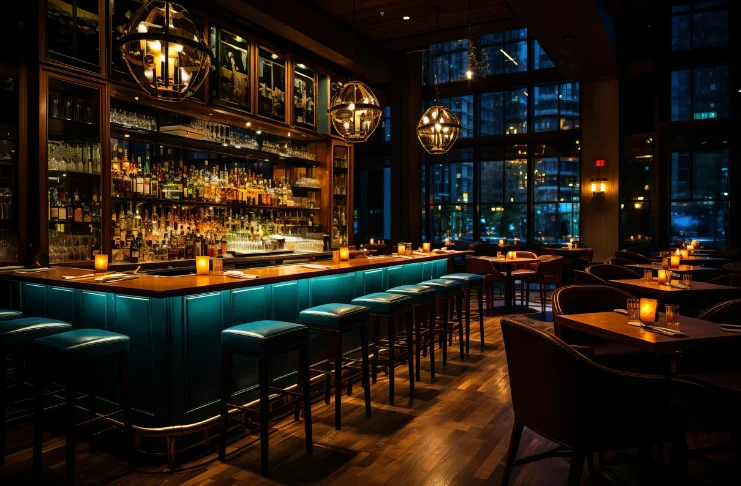
Major Cost Components of Opening a Bar in India
Setting up a bar in India is capital-intensive and compliance-heavy compared to restaurants or cafés. Licenses for alcohol service command some of the highest fees in the hospitality sector, and state-by-state variations can significantly alter the financial blueprint.
Beyond licensing, costs tied to prime real estate, specialized interiors, trained staff, inventory, and technology infrastructure demand precise budgeting. Below is a breakdown of the major setup costs of opening a bar in India-
1. Location and Property Costs
Choosing the right location is one of the most strategic and cost-heavy decisions in launching a bar. While renting offers flexibility and lower up-front commitment, making it ideal for new ventures, leasing for multi-year terms provides some control over rent escalation and tenure. But it usually comes with higher security deposits.
You can also consider purchasing a space, which offers maximum control but also demands significant capital and ties up liquidity that could otherwise fuel operations or marketing. The cost of acquiring a space depends on the city and locality, with estimated rents at Rs. 1.5 lakhs to 2 lakhs per month in a metro city.
Beyond monthly rent, you can also expect one-time costs such as security deposits (often 3–6 months’ rent), brokerage fees, move-in renovations, and legal/licensing fees that vary by city and property type.
2. Interior Design
Ambience is central to a bar’s appeal. Thoughtful and attractive interior design, from furniture and lighting to soundproofing and bar counters, creates the experience that keeps guests returning.
Across India’s hospitality sector, mid-range commercial design typically ranges between Rs. 1,500 to Rs. 2,500 per sq. ft., while premium spaces with high-end design can exceed Rs. 3,000 to Rs. 6,000 per sq. ft. in cities like Bangalore or Mumbai. Given these estimates, you can expect to spend between Rs. 15 lakhs and Rs. 40 lakhs or more for a mid-sized establishment.

3. Kitchen and Bar Equipment
Setting up a functional bar requires, at a minimum, essentials like chillers, refrigerators, ice machines, mixers, blenders, and keg systems. These kitchen equipment carry hefty costs, for instance, a stainless steel cocktail station may cost around Rs. 36,000, while a bar chiller can be about Rs. 78,000 per unit.
If you’re adding food to the mix, a mid-scale kitchen outfitting, complete with ovens, prep stations, and cold storage, typically costs around Rs. 10-20 lakhs.
4. Staffing and Training
Bartenders, mixologists, servers, chefs, and cleaning staff form the core team of your bar operations. The initial setup costs will also include the expenses of hiring, training, and salaries for these roles to ensure high-quality services.
In Tier-1 cities, bartender salaries average around Rs. 2-5 lakhs per year, while mixologists can earn Rs. 1-2 lakhs annually. Beyond hiring, factor in training expenses for cocktail skills, service etiquette, and compliance standards, which are often delivered through short-term workshops or vendor-led sessions. Overall, it can cost up to Rs. 8-9 lakhs for a staff of 20-30 people.
5. Licenses
Bars require a range of licenses, starting with the liquor license, which can vary based on location but often reaches up to Rs. 20-50 lakhs annually in metro cities. Additionally, you’ll need to apply for trade license, health department clearances, fire safety NOCs, GST registration, FSSAI (if you’re serving food), and music license via PPL/IPRS, each carrying its own fee, often in the range of Rs. 2 lakhs to Rs. 5 lakhs collectively.
Since bars often face stricter scrutiny than cafes or restaurants, from higher deposits to more frequent checks, this raises both one-time and ongoing costs. Plus, legal consultations and annual renewals add layers of cost that new operators must anticipate upfront.
6. Initial Inventory
Stocking the bar with the right mix of alcohol and mixers is critical to getting service running day one. A mid-sized bar should expect to spend Rs. 4.5 lakh or more on initial inventory, typically spanning liquor, beer, wine, and mixers.
You’ll also need suitable storage, such as temperature-controlled coolers and shelving, to maintain quality and avoid spoilage. Be strategic with your initial mix based on projected demand and menu focus to avoid overstocking while keeping the choices attractive.

7. Marketing Spend
In India, bar launches often budget Rs. 2-4 lakhs for marketing, covering pre-launch digital campaigns, influencer tie-ups, PR outreach, and a launch event or soft opening. Platforms like Instagram and local media outlets offer efficient targeting, while local influencers can amplify your brand in relevant communities.
8. Technology Spend
Technology is increasingly becoming a key differentiator in guest experience and operational efficiency. To ensure smoother bar operations, you must invest in POS systems, digital menus, QR-code ordering, and reservation platforms.
These SaaS solutions for inventory, billing, and customer analytics can run to tens of thousands per month, depending on features and scope of work. But the benefits outweigh the costs as these tools not only streamline daily operations but also provide insights, like stock movement and customer preferences, that help drive data-backed decisions.
Recurring Monthly Operating Costs for a Bar in India

Once your doors open, recurring costs become your primary focus. Here’s a breakdown of typical monthly expenses:
- Rent and utilities: Monthly rent is one of the largest fixed expenses, and when combined with electricity, water, air conditioning, and sound systems, these costs can be particularly heavy in metro locations.
- Salaries and staff benefits: Payroll forms a consistent share of operating expenses, covering not only salaries for bartenders, servers, and chefs but also incentives, overtime, and uniforms.
- Inventory replenishment: Regular restocking of alcohol and food to match sales volume can cost between Rs. 2-5 lakhs, depending on the demand, seasonality, and scale.
- License renewals: Some permits require monthly or quarterly fees, which makes it essential to allocate a buffer for renewals and any consultant support.
- Marketing and engagement: Ongoing promotions, themed events, and digital campaigns are necessary to keep customers engaged and maintain visibility in a competitive nightlife market, and may cost Rs. 50,000-2 lakhs per month.
Conclusion
The bar segment in India is formalizing, with stricter compliance requirements, higher licensing costs, and consumer expectations that go beyond basic service. Operators are increasingly competing on ambience, menu innovation, and experience delivery rather than just pricing.
For new entrants, this means that cost planning must account for design, operational efficiency, technology, and skilled staff, not only the liquor license. So when you’re wondering how much does it cost to open a bar and restaurant in India, it is less about fixed figures and more about understanding the different one-time and recurring costs to prepare realistic budgets and avoid unexpected financial strain.