

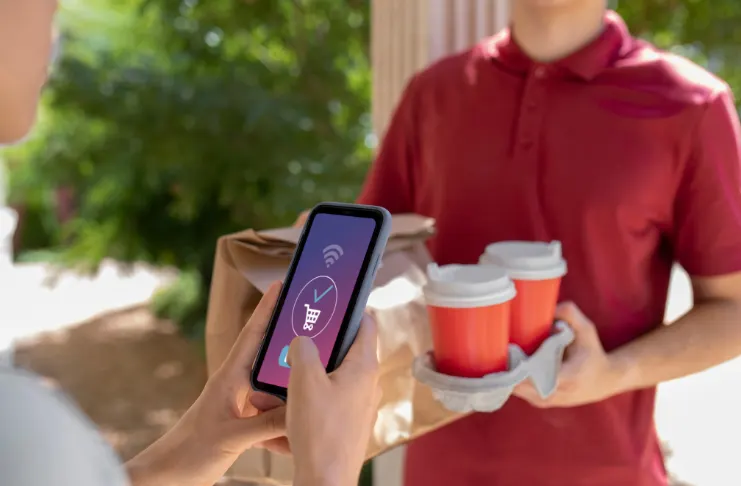
Across the world, restaurant mobile apps are no longer a secondary channel; they are becoming foundational to how operators acquire, retain, and engage with their customers. And the Australian restaurant app market is right with it.
In 2024, over 8.3 million Australians actively used online food delivery services through websites and apps, underscoring a deep behavioural shift. As the industry focuses more on efficiency and growth, digital tools like mobile ordering, delivery, and reservations are becoming essential for restaurant operations.
This widespread adoption has also driven remarkable changes in customer ordering behaviors, engagement patterns, and loyalty dynamics. Understanding these trends through the latest data is critical for restaurant operators to optimize app performance and maximize revenue.
This blog gives a comprehensive overview of Australia’s restaurant app statistics, revealing key user trends, growth metrics, and digital adoption patterns that define the sector today.
Food Service and Digital Adoption in Australia
Australia’s food service industry is growing consistently, expected to reach $115.8 billion by 2030, with a CAGR of 11.4% from 2025 to 2030. This growth is driven by increased consumer spending, which hit $160 per week in 2022, along with fundamental shifts in how Australians want to dine and interact with restaurants ever since the pandemic.
Contactless ordering, convenience of home deliveries, and personalized digital experiences have now become default consumer expectations. They want more convenience, speed, and control in their dining experiences through sources that let them browse, order, and pay without waiting in long queues.
Mobile apps are uniquely positioned to deliver on all these aspects, making them an excellent customer-facing solution and a strategic asset for restaurant operators.
How? There are over 34.4 million mobile connections in a country of just over 26 million people, and smartphone penetration now exceeds 87%, with forecasts hinting at 23.6 million devices by 2026.
More importantly, mobile users spend over 90% of their screen time in apps rather than websites, averaging nearly 3 hours and 45 minutes daily. This changing mobile behaviour offers opportunities for high engagement with restaurant-branded applications, pushing restaurant owners to meet consumers on native platforms rather than relying on third-party aggregators.

The State of Restaurant App Adoption in Australia
As mobile-first behavior becomes standard across Australia, restaurants are responding with strategic digital investments, particularly in mobile apps. Let’s explore how widely Australian restaurants are embracing mobile apps, which features are gaining traction, and what the data reveals about the future of the market.
- Restaurant mobile apps are rising: 20% of all digital orders in Australia now come through restaurant-owned mobile apps. While this is half of 41% of orders placed via websites, it signals a growing preference for apps as a primary ordering channel.
- Growth of digital ordering: Digital ordering visits grew at a 21% CAGR between 2011 and 2016, primarily driven by mobile ordering capabilities, while non-digital ordering saw only a 1% CAGR during the same period.
- Fast food apps are seeing high engagement: In 2024, Australia’s major fast food chains saw significant engagement on their apps. McDonald’s was leading the scene with over 51,000 new app downloads by mid-March, followed by KFC with 31,000 downloads by February, and Hungry Jack’s with over 21,000 app downloads.
- Customers want branded experiences: 93% of restaurant guests say they’d download a favorite restaurant’s app, showing a strong operator opportunity to own the channel.
- Increase in restaurant revenue: 34.5% of Australian restaurants now attribute over a third of their revenue to online food delivery services and apps.
- Consumers prefer restaurant-owned apps: Australian consumers are actively engaging with restaurant mobile apps in 2024, with weekly active users for brands going as high as 749,000 from January to March 2024.
EXPERT OPINION
Australia Restaurant App Statistics: User Trends
While restaurant operators continue investing in mobile platforms, understanding how Australians use these apps is critical for shaping the right strategy. Consumer behavior doesn’t just influence app adoption; it defines what features will succeed, how restaurants can build loyalty, and what ROI operators can expect.
Here’s a quick look at the key restaurant app adoption and food delivery statistics and trends among Australian users-
- 40% of Australians prefer ordering food from a restaurant’s own mobile app instead of a third-party food delivery platform.
- Restaurant customers in Australia are increasingly using online checkout (83%) and in-app payments (79%) to place their orders.
- Gen Z and Millennial diners between the ages of 18 and 43 are more comfortable with in-app payments at restaurants.
- On average, Australians spend $40 per week on food delivery through restaurant and third-party delivery apps.
- Overall pickup traffic via restaurants’ own apps and websites grew by 50% in the year to June 2024.
- By March 2024, McDonald’s reported 670,000+ weekly active mobile app users, followed by KFC, which reported 260,000 weekly active users.
- A 2024 DoorDash report shows 40% of Australians order from the same restaurant via app at least once a week.
- A survey by NPD Group revealed that consumers who use a mobile app for ordering over traditional methods are happier with their experience, with 32% reporting their overall experience as “Excellent”.
- 73% of Australian diners use apps for quick-service or pickup orders, indicating app use isn’t just for delivery.
As consumer expectations grow sharper and operational demands intensify, restaurants that invest in smart, integrated app solutions are better positioned to scale sustainably, boost retention, and gain a competitive advantage in the Australian restaurant industry.
How are Restaurant Mobile Apps Defining User Experiences in Australia?

From seamless in-venue experiences to personalized rewards, the most successful apps combine convenience, engagement, and revenue-driving features. Here’s an in-depth look at the core features of restaurant mobile apps that are redefining customer experiences in the Australian restaurant industry-
A. Online Ordering Capabilities
Online ordering via branded apps has become a core customer touchpoint. Mobile apps make it convenient for users to order their favorite food, whether for delivery or pickup, without the pressure of interacting with staff.
With apps, customers can browse the menu at their own pace, customize orders, and pay, all on their own. This is the easiest way to win repeat business, as it leads to faster services and higher customer satisfaction.
At the same time, customers repeatedly ordering from restaurant apps means they are bypassing third-party apps for your brand and service out of habit and loyalty. Local QSRs such as MyMacca’s and KFC are perfect examples. With weekly active user counts in the hundreds of thousands, their apps have become ingrained in customers’ routines.
Once done right, customers will love the convenience, and your restaurant will love the efficiency.
B. Contactless Restaurant Ordering and Payments
Restaurant mobile apps that integrate QR code ordering features are highly liked by restaurant app users in Australia. In the post-pandemic era, app-based ordering and contactless payments are soaring for on-premise dining.
This is because QR code ordering is easy, convenient, and accessible, whether a customer has accessibility or mobility issues or simply doesn’t want to interact with the staff.
For restaurants, QR/table ordering enhances operational efficiency by shifting staff focus from taking orders to offering better service. It also prompts high-order value from the customer, as people ordering via QR code spend 25% more on average than traditional dine-in orders.
Further, contactless payment is another essential mobile app feature that customers expect. They can easily pay for their meals through digital wallets, making the process hassle-free.
C. Personalized Dining Experiences
What makes a mobile app superior for user experience is the personalization features it offers. As customers expect more tailored dining experiences, restaurant mobile apps can collect relevant user data such as order history, frequency, payment preferences, favorite items, and so on to customize their offerings.
For instance, apps can recommend items based on past orders or suggest upselling with prompts like “Would you like to reorder your favorite drink with this meal?”. Similarly, a customer who regularly orders vegetarian items can be shown curated menus or chef specials matching that preference.
This is important because the likelihood of conversion increases significantly when diners see recommendations based on previous orders or preferred cuisines. Not to mention, it can easily increase the average order value for your restaurant without it being forceful on the customer.
D. Loyalty Programs and Rewards
Loyalty programs in restaurant apps are no longer just about giving away freebies. They’re a powerful means for reinforcing repeat purchases, increasing order frequency, and creating a brand relationship beyond monetary transactions.
According to a research study, 50% of Australian loyalty program members are active in all the loyalty programs they are a part of.
By integrating a loyalty program into your mobile app, you can incentivize customers with discount offers, complimentary items, or cashbacks on every visit. This can also include tiered loyalty systems to reward frequent diners with premium experiences, or behavior-triggered offers, such as birthday deals or reward milestones.
Moreover, customers can access their points via the app or check out the latest promotions, making them more likely to frequent the restaurant to redeem the offers.
E. Seamless Table Reservations
App-based bookings are steadily replacing phone calls and third-party reservation platforms. Instead of waiting at the restaurant for hours, unsure if they’ll get a table, customers can simply log in to the restaurant’s app to book a table in advance.
Plus, they can modify their reservation, get table confirmation, and receive wait time alerts in real time, which enhances the dining experience.
On the other hand, table bookings from customers in advance enable better staff scheduling and food preparation, enhancing operational efficiency. Restaurants can sync bookings with loyalty programs to increase dinner covers and encourage repeat visits.

Essential Functionalities of a Mobile Restaurant App
For Australian restaurants navigating rising competition, operational complexity, and shifting diner expectations, investing in the right mobile app features is crucial for driving long-term growth. A well-built app should go beyond basic ordering to streamline operations, enhance guest experience, and support scalable growth.
Here are the core functionalities that matter most:
1. Intuitive UI
A restaurant app’s UI is not all about aesthetics. It’s about how quickly and easily a user can view the menu, place an order, or redeem a reward. In practice, an intuitive UI reduces friction at every step. Whether a customer uses the app for the first time or reorders a favourite meal, the design should anticipate their needs.
For Australian restaurant operators, this means simplifying navigation, reducing steps in the checkout flow, and ensuring the app adapts seamlessly across screen sizes.
2. Loyalty Program Integration
Integrating your loyalty program into the app is the best way to ensure customers can enjoy its benefits. A loyalty engine connected to user profiles, order history, and location data can deliver highly personalized and valuable rewards.
For instance, if a customer usually visits during weekday lunches, sending them a Monday-only bonus meal deal has a greater chance of conversion than a generic 10% off.
Integrated loyalty also reduces operational workload. Since points can be calculated and applied automatically, rewards can be instantly redeemed via the app, so there’s no need for manual punch cards or external systems.
3. QR Code Ordering
For operators, a significant advantage of QR code integration is how it decentralizes service without compromising control. There’s less pressure on floor staff, fewer errors from manual inputs, and higher table turnover.
Plus, since all interactions stay within the app, restaurants retain customer data that would otherwise be lost to third-party tools. QR code ordering provides a flexible, scalable front-of-house solution for businesses running multiple formats (dine-in, takeaway, delivery).
4. Real-Time Order Tracking
In-app status updates, such as “Preparing your meal,” “Ready for pickup,” or “Serving soon,” offer peace of mind to customers and fewer interruptions for staff. When diners know exactly where their order stands, they’re less likely to chase down servers or call the counter.
It’s also an opportunity for restaurants to build trust and reduce perceived wait times. Integrating this feature with the POS or kitchen display system will further ensure the updates are accurate and automated.

5. Push Notifications
Push notifications are one of the most useful tools in restaurant apps. Done right, they become a direct line to your most valuable customers. From reminders about a forgotten loyalty reward to a new seasonal dish or a flash offer during slow hours, well-timed and relevant notifications drive engagement and sales.
The key here is personalization. Sending the same promo to everyone rarely works. But notifying a customer that their favorite burger order now earns double points? That gets attention and keeps the customers engaged with the restaurant.
6. Analytics
Embedded analytics dashboards give operators visibility into how customers interact with the app: what menu items are ordered the most, when users drop off during checkout, or which user segment responds to which promotions.
With this data at your disposal, restaurant operators can test new items, tweak pricing, or redesign menu flows based on real usage patterns.
Importantly, having analytics within the app ecosystem (along with your restaurant management platforms) allows for quicker decisions and tighter feedback loops across marketing and ops.
Challenges of Mobile App Adoption in Australian Restaurants
Australian restaurateurs keen to embrace mobile technology face a unique set of hurdles. Beyond standard tech implementation, they must navigate economic pressures, operational constraints, and local customer preferences.
Below are the most critical challenges the Australian restaurant industry faces in mobile app adoption-
1. Increasing Cost Pressures
Australia’s hospitality sector is under severe economic strain. A 2024 industry report revealed that 44% of restaurateurs said their financial position was worse than a year prior due to rising rents, utilities, wages, and raw material costs.
As a result, the cost of implementing a mobile app and justifying the ROI becomes a challenge, even if the long-term benefits outweigh the costs. Many are eventually forced to delay investment due to short-term cash flow constraints.
2. Skill Gap
The Australian tech skills gap is real. Despite collecting substantial customer data, many businesses admit they are “data-rich but data-dumb,” unable to fully utilize the data and systems they have at their disposal.
Without the right in-house training or skills to use the new technology, apps end up underutilized, affecting the everyday operations of the restaurant and the customer experience.

3. Customer Pushback
While many Australians support QR and app ordering, a significant group, especially those more comfortable with traditional service, resist over-digitization at restaurants. As a result, some venues are eliminating QR systems because patrons find them “frustrating” or impersonal, while some are implementing hybrid models with digital and paper menus to effectively cater to various guest expectations.
4. Staff Resistance
Resistance to new technologies like mobile apps doesn’t always come from the customers; it can come from within the team, too. Restaurant staff may feel overwhelmed with new systems and training, resisting change.
Successful rollout often requires early staff involvement, comprehensive training, and clear communication to enhance day-to-day efficiency, which may be challenging for many owners.
5. Cybersecurity Concerns
Small Australian businesses and restaurants are increasingly vulnerable to cybersecurity threats, and it remains an issue due to limited budgets and tech knowledge.
With customer data such as payment credentials, behavioral tracking, or analytics built into mobile apps, any security breach could result in both financial loss and reputational damage, undermining trust and brand loyalty.
Mobile App Integration in Australian Restaurants
It’s not enough for your app to simply capture orders or accept payments. It must connect with your POS system, CRM, loyalty platforms, and kitchen display systems (KDS) to ensure seamless operations and a smooth customer experience.
A modern restaurant app is just one face of a complex ecosystem: orders flow into your POS, customer data feeds CRM, loyalty redemptions update accounts in real time, and kitchen display systems manage the workflow. When everything is interconnected, restaurants can achieve-
- Higher order accuracy and speed since the app will directly update the order on the KDS and eliminate manual entry, which results in fewer mistakes and faster processing.
- Real-time customer insights through CRM integration to personalize marketing based on true behavior.
- Operational consistency by reducing friction between the app, front counter, and kitchen for smoother service during peaks.
Given the benefits, more restaurants and businesses in Australia are turning to technology and comprehensive software systems to improve efficiency.

Here’s how end-to-end mobile app integration with the restaurant technology can help operators-
A. Improved Operational Efficiency
When a mobile app is fully integrated with POS, kitchen display systems, and order management tools, restaurants can eliminate redundant processes and manual entry errors. For instance, a well-integrated system can automatically route dine-in QR orders to the correct prep station in the kitchen and reduce ticket mishandling during peak hours.
In restaurants, this ensures uniform order flow and faster fulfillment.
B. Unified Customer Data
Apps integrated with CRMs and loyalty programs capture granular data, such as what customers order, how often they visit, preferred payment methods, and more. This first-party data gives operators a 360-degree customer view, allowing them to launch targeted promotions and retention strategies.
C. Data-Driven Forecasting
When your app is integrated with sales and inventory systems, it enables demand forecasting based on real-time and historical order trends.
For instance, integrated analytics can predict peak items per daypart, enabling better prep and stock management. This helps reduce waste, manage supplier orders, and prepare the staff accordingly.
D. Faster Service
An integrated app speeds up service by syncing with POS and kitchen display systems in real time. Orders placed via the app are instantly queued for preparation, whether for dine-in, pickup, or delivery, minimizing wait times and improving order accuracy.
Additionally, since customers can order and pay directly from the app, they don’t have to wait around for a staff member to attend to them, leading to faster table turnovers.
E. Reduced Third-Party Costs
Comprehensive app integration allows restaurants to receive orders directly, reducing reliance on delivery aggregators like Uber Eats or DoorDash. By handling ordering and payments natively, restaurants retain full margin, avoid per-order commissions, and maintain full control of the customer experience.
Conclusion
The data tells us how the entire hospitality landscape is evolving with the integration of apps. Australian diners expect control, convenience, and hassle-free dining, and the most successful restaurants are the ones operationalizing those expectations through their mobile strategy.
While Australia’s restaurant industry is rapidly digitizing, simply launching an app is no longer a differentiator. With adoption rising across the board, the question for restaurant owners is no longer “Should we invest in a mobile app?” but “How do we extract the most value from it to help our larger business ecosystem?”
Looking at the current state of restaurant apps in Australia, the restaurants that treat mobile as a business model rather than a product will lead the country’s next wave of hospitality innovation.