

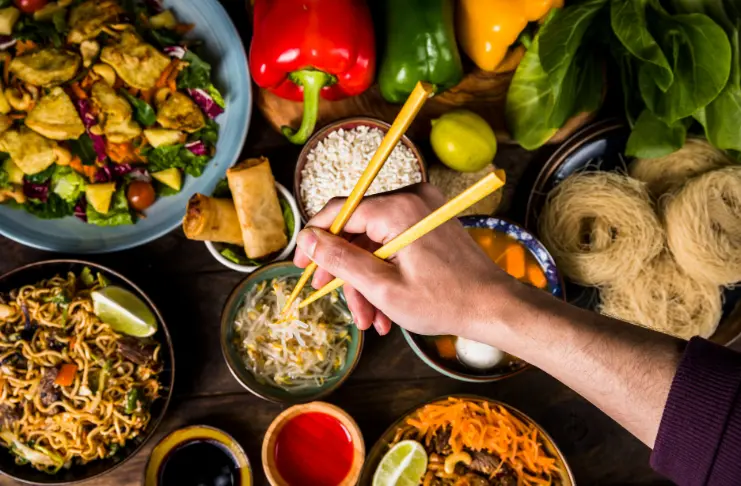
Food has always been a gateway to different cultures, and in recent years, diners worldwide have become more adventurous than ever.
As people seek flavors beyond their own traditions, Asian cuisine has emerged as a global favorite. From rich Korean ramen to delicate Japanese Sushi and flavourful Indian curries, Asian flavors are captivating palates across continents.
The Asian food market is expected to grow at a CAGR of 7.2% by 2032, fueled by a rising curiosity for international flavors, increased accessibility through global restaurant chains, and the influence of social media in shaping food trends.
For restaurant owners, this shift presents a unique opportunity. As diners embrace cross-cultural culinary experiences, Pan-Asian restaurants can thrive by offering authenticity, innovation, and a seamless dining experience. And understanding what drives this demand is the key.
This blog explores key Asian restaurants statistics, market insights, and emerging trends, including the rise of asian fusion cuisine, that make Pan-Asian cuisine a worldwide favorite.
Market Overview: The Rise of Asian Restaurants
The global Asian restaurant industry is experiencing remarkable growth, reshaping dining habits worldwide. As of 2023, the global Asian food market was valued at approximately $154.8 billion and is projected to surge to $269.9 billion by 2032.
This surge is fueled by Asia-Pacific’s rich culinary heritage and the rapid expansion of Asian food outlets in regions like North America, Europe, and Australia.

Current Landscape of Asian Restaurants in Different Countries
In the United States alone, the Asian food market reached an estimated $37.2 billion in 2024 and is forecasted to climb to $51.3 billion by 2031, with a steady CAGR of 4.7%.
Chinese cuisine leads the way, representing nearly 39% of all Asian restaurants in the U.S., followed by Japanese (28%) and Thai (11%) establishments. As a result, Asian restaurants now account for 12% of all U.S. restaurants, with their presence felt in 73% of all U.S. counties.
Europe mirrors this trend, as the market for Asian ready meals, including Thai and Korean, grew by 6.8% in 2023. As European consumers become more adventurous, demand for authentic Asian flavors and healthy, plant-based options is rising, driving restaurant and retail growth.
Similarly, Canada’s appetite for Asian food is booming, driven by immigration and a multicultural population. Asian foods are increasingly common on restaurant menus and in households, with Indian and Chinese cuisines leading the way.
Asian Restaurant Market and Consumer Preferences

Asian restaurants and delivery services are rapidly expanding worldwide, driven by consumer demand for convenience and innovation, which are key strengths of Asian concepts like poke bowls, bao buns, and bento boxes.
- The global Chinese takeout market alone is expected to reach $76.5 million in 2025, with a projected CAGR of 7.2% through 2035.
- Asian QSR sales are expected to grow at a CAGR of 11.8% in 2026.
- Bento boxes, in particular, are trending in the U.S. fast-casual sector, with brands expanding rapidly by offering customizable, grab-and-go meals that appeal to today’s on-the-move diners.
- Asian flavors are a major driver in the global delivery market. East Asian food (like Chinese and Thai food, or Japanese and Korean food) accounts for 35% of all global delivery orders, second only to Western food.
- In the UK, supermarket sales of bao buns—a fast-casual Asian favorite—jumped 45% YoY, with restaurant offerings doubling as Asian snack trends go mainstream.
- Restaurants serving Japanese food account for 28% of Asian restaurants in the U.S, making it the second most popular asian cuisine.
- 45% of Asian restaurants are concentrated in five states: New York, Texas, California, Washington, and New Jersey.
- Research shows 44% of Asian consumers always scrutinize ingredient lists, favoring restaurants with health-forward, transparent menus.
- The Asia Pacific ethnic food market was estimated at $10.5 billion in 2024 and is projected to reach $26.1 billion by 2034, at a CAGR of 9.5%.
- Reports suggest that Chinese and Japanese dishes rank amongst the top five favourites globally, across all age groups.
EXPERT OPINION
Asian Restaurants Statistics: Popularity by Cuisine
The Asian restaurant market consists of diverse sub-cuisines from multiple asian origin groups, each contributing to the sector’s robust global growth, both in terms of restaurant openings and consumer demand.
- Chinese Cuisine: Chinese food remains the dominant force, holding the largest market share among Asian cuisines worldwide. In the Asia-Pacific ethnic food market, Chinese cuisine accounted for 34.54% of revenue in 2024.
- Japanese Cuisine: Japanese restaurants have seen impressive global growth, driven largely by the rising popularity of sushi, ramen, and izakaya-style dining. The global Japanese restaurant market was valued at $18.86 billion in 2024 and is projected to reach $24.53 billion by 2032, growing at a CAGR of 3.99% over the forecast period.
- Korean Cuisine: Korean restaurants have experienced significant growth in Western markets. The number of Korean restaurants in the US grew by over 10% in 2024 alone, with 450 new establishments nationwide.
- Thai and Vietnamese Cuisine: Thai and Vietnamese restaurants are thriving, driven by their reputation for fresh, healthy, and flavorful offerings. In the Asia-Pacific ethnic food market, these cuisines are recognized for their plant-based and vegan-friendly options, aligning with global health trends.
Consumer Trends Driving Growth of Asian Restaurants
According to recent studies, 65% of Gen Z consumers actively seek value for money in their dining and food choices, with Asian flavors now overtaking traditional European cuisines in popularity.
So why are Asian restaurants thriving? And not just in Asia but in every major market globally? It comes down to more than flavor. Consumers today are drawn to Asian cuisine for its authenticity, convenience, and visual appeal. Here are some of the major trends driving the growth of Asian restaurants across the globe-
1. Authenticity
Modern consumers prioritize a traditional dining experience. They seek authentic flavors, cultural atmosphere, or regional recipes that reflect culinary traditions.
A 2025 industry analysis of over seven million orders from 3,000+ Asian restaurants in the U.S. found that established, traditional dishes, such as General Tso’s Chicken and Sesame Chicken, are dominating, reflecting diners’ desire for authenticity and comfort.
2. Demand for Plant-Based Asian Dishes
Plant-based versions of traditional Asian dishes such as vegan ramen, tofu dumplings, and jackfruit curries are in high demand. The global vegan Asian food market hit USD 20.48 billion in 2025 and is projected to grow to USD 37.03 billion by 2035, at a 6.1% annual CAGR.
Younger consumers, in particular, are driving this trend, favoring restaurants that offer plant-forward options without sacrificing flavor and quality.

3. Enthusiasm for Fusion Foods
Globally, fusion foods like Korean-Mexican and Japanese-Peruvian are gaining traction, particularly through social media. The blending of traditional and contemporary flavors caters to adventurous palates and keeps menus fresh and exciting.
This willingness to explore new formats and flavors is a major driver behind the global growth of Asian restaurants.
4. Influence of Social Media
Social media is overwhelmed with food photography, which means it actively shapes where people eat and what they order. A 2025 survey by MGH found that 58% of TikTok users visited or ordered from a restaurant after seeing it on the platform, up from 38% in 2022.
Viral trends on TikTok and Instagram, such as sushi burritos, ramen burgers, and colorful bao, have driven consumer curiosity and foot traffic to Asian restaurants, especially among younger audiences.
Conclusion
Beyond the impressive growth in statistics on Asian food in restaurants and the evolution of dining formats, what truly sets this segment apart is its innovation. From bustling street corners in Bangkok to sleek urban hubs in London and Los Angeles, Asian restaurants are redefining dining preferences through flavor, heritage, culture, and authenticity.
What’s emerging now is a clear competitive advantage for those who invest in data-driven decision-making. Tracking local and global demand patterns, experimenting with digital ordering, and optimizing kitchen operations for dine-in and delivery are essential. Additionally, the rapid rise of plant-based and health-focused Asian dishes offers a significant opportunity for menu development that appeals to younger, health-conscious diners.