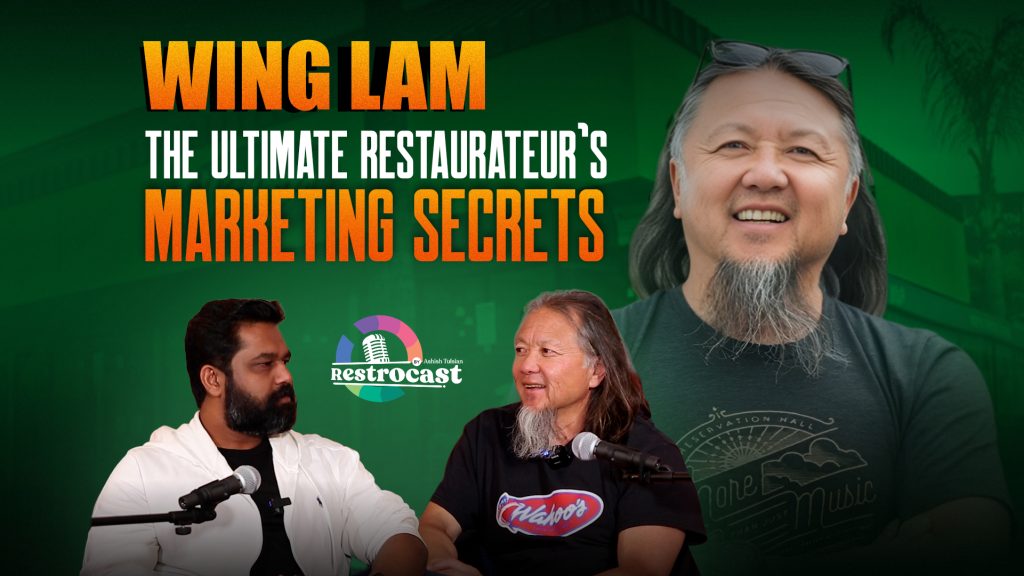

In the ever-evolving restaurant industry, staying relevant for over three decades is no small feat. Yet, Wahoo’s Fish Tacos has not only survived but thrived, expanding its footprint while staying true to its roots. At the heart of this success is Wing Lam, the co-founder and face of Wahoo’s, whose approach to marketing, leadership, and business resilience has set his brand apart.
In this exclusive conversation, Wing shares insights on the birth of Wahoo’s Fish Tacos, marketing, the secret to getting customers in the door, the changing landscape of restaurant marketing, and more. Stay tuned.
Wing, you’ve been in the restaurant business for over three decades. Who are you as a restauranteur?
Wing Lam: At the beginning, I was just doing whatever needed to be done. Since I was the oldest and had a family to support, I needed a paycheck. I was the cashier, server, busboy, cook—you name it, I did it. We couldn’t afford much labor, so my brothers would fill in as they could.
As the business grew, I naturally became the face of Wahoo’s, not by choice but by necessity. Asians, by nature, tend to stay in the background, but I had to step up—networking, doing interviews, speaking at events. People now recognize me as the Wahoo’s guy, but really, it was just something that had to be done.
How did the journey of Wahoo’s Fish Tacos begin?
Wing Lam: It was a mix of passion and timing. My brother Ed was finishing school, and we both loved surfing but weren’t good enough to go pro. Orange County was the mecca for action sports—surfers, skateboarders, BMX riders. In 1988, we found a struggling Italian restaurant for sale in Costa Mesa. It was in a great location, near major surf brands, so we decided to turn it into Wahoo’s Fish Tacos.
Was there any part of running a restaurant that you realized early on wasn’t for you?
Wing Lam: It’s not so much about what I hated, but I quickly understood that unlike a regular job, where you get a paycheck no matter what, as a business owner, if people don’t come through the door, there’s no paycheck on Friday. That realization kept me up at night.
That’s when I shifted my mindset. Instead of just counting the money we made, I focused on getting more people in the door. I tell new entrepreneurs all the time: restaurants don’t fail because they make bad food; they fail because they can’t get customers in.
You’ve always been a creative marketer. What are some of the craziest marketing strategies you’ve used?
Wing Lam: One of the biggest ones was leveraging influencers before social media even existed. We ran print ads featuring up-and-coming surfers, snowboarders, and musicians—kids who were on the rise. The ad was about them, not us.
Many of those kids never went pro, but some did—like Sean White and Donovan Frankenreiter. They never forgot us. I bet on young talent, knowing that if they ate at Wahoo’s, their fans might, too. Even today, marketing isn’t about talking about yourself; it’s about celebrating the people who love your brand. That’s what makes them share it.
Lately, I’ve been hearing from major restaurant brands that they feel the U.S. market is saturated, so they’re shifting to global expansion. Meanwhile, new local restaurants are popping up everywhere. How do you see the industry evolving?
Wing Lam: The key now is creating an experience. Customers need a reason to leave their house. Think about movie theaters—the only ones thriving are those that offer luxury experiences, like reclining seats and full meal service. For restaurants, it’s about finding the right location and pairing your brand with an experience—whether it’s next to a surf park, a golf range, or a major event venue. That’s why I love concepts like Topgolf—it turns a simple activity into a full-blown experience.
Do you think the restaurant industry is in trouble because younger generations aren’t interested in it?
Wing Lam: Yes, and it’s not just about hard work. Younger generations are used to interacting through screens. The idea of dealing with an angry customer face-to-face terrifies them. Mike Tyson once said, “People are brave online because they know they won’t get punched in the face.” That’s the problem—people hide behind their screens. They struggle with real-life conflict resolution. In restaurants, you have to deal with people who don’t agree with you, who are upset, who complain. That’s a skill that’s disappearing.
Do you think that’s why things like self-ordering kiosks and mobile ordering are growing?
Wing Lam: 100%. People would rather tap a screen than talk to a cashier. I see it all the time—customers order through our app while sitting inside the restaurant just to avoid talking to our staff. It’s crazy, but that’s the world we live in now. Kids will be out together, but instead of talking, they’re all on their phones. That’s why old-school diners feel special—they still have human interaction.
You’ve been in this business for over 35 years. What’s your biggest challenge today?
Wing Lam: Costs. Food prices have gone up over 50%, and labor is up 50%, but customers still complain when we raise prices. People go to the grocery store and accept price increases, but at a restaurant, a 25-cent price hike on a taco is a big deal.
Hasn’t delivery helped?
Wing Lam: Not really. Most people don’t order drinks with delivery, and that’s where restaurants make their margins. Plus, takeout food isn’t the same. A hot, crispy taco at the restaurant turns mushy by the time it gets home. If we went fully delivery-based, we’d have to raise prices by 50% to make up for lost margins. Nobody would pay that.
What keeps you motivated after all these years?
Wing Lam: The people. Seeing customers who have been coming for decades, seeing kids grow up eating at Wahoo’s—it’s special. Yes, it’s tough. But at the end of the day, this business is about relationships—customers, vendors, staff. If you focus on the people, success follows.
Conclusion
Wing Lam’s story isn’t just about tacos—it’s about resilience, smart marketing, and the power of relationships. From betting on young talent before influencer marketing was a thing to navigating the changing restaurant landscape, his journey offers valuable lessons for anyone in business.
His advice? Stop talking about yourself. Focus on your customers. Build real relationships. And if you’re going to be in the restaurant business, be ready to work.