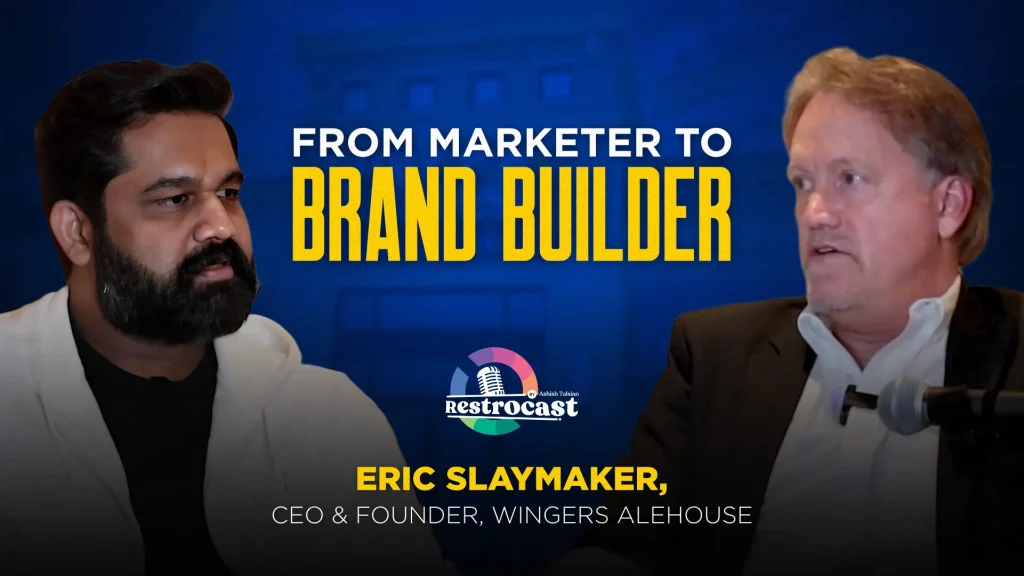

In the world of hospitality, where success is often measured by staying power and adaptability, few journeys are as instructive as that of Eric Slaymaker, CEO and Founder of Wingers Alehouse. With a foundation in marketing and a strong family legacy, Eric transitioned from crafting advertising campaigns to creating a restaurant brand known for both quality and community presence. His insights into the industry reveal a story of resilience, adaptability, and a commitment to integrity. In this in-depth conversation, Slaymaker opens up about his path—from family business origins to building Wingers, overcoming substantial financial hurdles, and innovating with the Wingers Alehouse concept.
You started in advertising, right? How did that experience shape your approach to the restaurant industry?
Eric Slaymaker: Yes, I actually got into restaurants through marketing. My father was a franchisee with brands like Sizzler and TGI Friday’s, and I led marketing for those franchises. That gave me a unique perspective – I wasn’t in day-to-day operations, but I was immersed in branding and positioning. I started my agency, Eric Slaymaker Advertising, and helped other clients too. But the entrepreneurial drive kept pushing me to start my own restaurant brand.
What inspired you to start Winger’s?
Eric Slaymaker: I saw an opportunity. I loved the energy and experience at places like TGI Friday’s, but their 6,500-square-foot layout wasn’t practical for smaller markets. I wanted to capture that fun dining vibe in a more accessible 2,800-square-foot format. And so, Winger’s was born, with our signature sauces and a more compact design that could thrive in smaller towns and suburban areas.
You’ve seen a lot of highs and lows, especially with your experiences as a franchisee. Can you talk about one of the most challenging periods?
Eric Slaymaker: Absolutely. In the late ’90s and early 2000s, we were the largest franchisee for Tony Roma’s, but the brand struggled and ultimately collapsed. We were left with about $22 million in debt. We could have filed for Chapter 11, but instead, we negotiated with our creditors and landlords and committed to paying off every dollar over the next 15 years. That period taught me resilience and the importance of long-term commitment, even when things get tough.
You’ve mentioned that your business is still family-driven. How has that impacted your journey?
Eric Slaymaker: My brother, Scott, and I combined our businesses after our father passed away in 1995. Since then, we’ve worked side by side, which has been a constant in an ever-evolving industry. Having family involved has kept us grounded and motivated through good times and tough ones.
Eric, looking back, do you have any regrets about not opting for Chapter 11 when Tony Roma’s faced difficulties?
Eric Slaymaker: Part of me wonders if we should have done it, just reorganized quickly. But I’m proud we didn’t because it was about integrity. For 15 years, nearly all our profits went back to paying off debt. We had to honor our commitments, even if it meant we couldn’t grow for that period.
When a brand struggles, what impact does it have on franchisees who still operate stores?
Eric Slaymaker: The parent company didn’t collapse, but Tony Roma’s lost market share. Our sales dropped alongside that decline. Baby back ribs, once a popular, affordable item, became too expensive by the ‘90s. Steakhouse brands like Outback and Texas Roadhouse also began eating into our market. By the early 2000s, we had to sell and close several stores, and we eventually exited the brand by 2004. Thankfully, our TGI Fridays and Winger’s locations were doing well, which helped us avoid total collapse.
How did Winger’s transition into the Alehouse concept come about?
Eric Slaymaker: That was in 2016. We had an underperforming store in Nampa, Idaho, and decided to try something new. We remodeled the store, rebranded it as Winger’s Restaurant and Alehouse, and added 28 beer taps for a total of 40. The response was incredible—we saw a 70% increase in sales immediately. Since then, we’ve expanded the Alehouse model, with some locations offering up to 55 taps. Our goal is to make each Winger’s Alehouse a top destination for both dining and craft beer.
That’s an interesting evolution. Given the mix of company-owned and franchised stores, what’s your stance on franchising versus company-owned expansion?
Eric Slaymaker: I genuinely love being a franchisor. Franchisees bring unique local insights, and some even outperform company-owned stores in their regions. But there’s a delicate balance. Franchisees are business owners with their own perspectives, and if they don’t align with the brand’s standards, they can’t stay. We’ve learned how to manage these relationships over the years. There’s an art to creating a system that supports franchisees while maintaining consistency across the brand.
Eric, how do you keep track of performance, especially when rolling out new menu items?
Eric Slaymaker: We start with a solid rollout plan, but during postmortems, we often find we need even more pre-training sessions. In the restaurant business, accuracy in food preparation really comes down to practice and repetition. Our cooks get better because they’ve made the item over and over. Early on with a new menu, they’re still figuring it out, which can slow things down. Two months in, those early mistakes typically disappear because they’ve had enough reps to perform smoothly.
What’s your feedback mechanism to know if things are on track?
Eric Slaymaker: We rely heavily on our Quality Assurance (QA) team, which conducts inspections and in-store visits. During new menu rollouts, we’re focused on feedback related to new items specifically. This helps us spot early issues. We realized we should start training even earlier and have more sessions to ensure our team is fully comfortable before the launch.
How have customer feedback systems evolved over time for you?
Eric Slaymaker: Years ago, we relied a lot on secret shoppers. Now, feedback is instant and public through reviews on platforms like Yelp and Google. We have a team that goes through each review, particularly negative ones, to address issues directly with customers. Beyond individual feedback, we look for patterns, like if one location is slow on service or has inconsistent food quality.
What personal challenges are you working on as a leader?
Eric Slaymaker: I continually work on improving my communication. As a visionary, it’s one thing to have big ideas, but it’s another to communicate them clearly to inspire the team. Our mission at Wingers is about creating amazing experiences, and I want that passion to resonate with anyone who interacts with our brand.
Eric Slaymaker’s journey through the restaurant industry offers a wealth of insights into what it takes to build and sustain a successful brand in a highly competitive field. From his early experiences in marketing to adapting the Wingers concept for evolving customer preferences, Slaymaker demonstrates that the key to longevity lies in continuous learning and adaptability. His emphasis on understanding local markets, maintaining strong franchise relationships, and rigorously refining operations showcases a blueprint for growth that values quality and consistency.