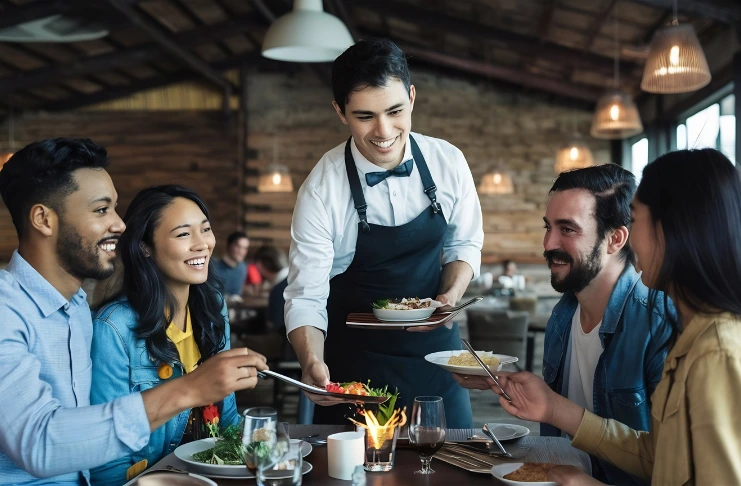

Quick service restaurants (QSRs) and full service restaurants (FSRs) operate on very different models, yet both are central pillars of the dining industry. QSRs are built around speed, consistency, and affordability, while FSRs focus on service, atmosphere, and longer dining occasions. These differences influence not only how customers interact with them, but also how they generate revenue and grow.
Comparing the two reveals important insights into where the restaurant industry is heading. QSRs tend to capture higher volumes through convenience and scalability, while FSRs maintain strength by offering richer dining experiences that customers are still willing to pay a premium for. Each segment also reacts differently to economic shifts, technology adoption, and changing consumer habits.
This blog will explore quick service restaurant vs full service statistics and how these formats stack up against each other across market size, revenue performance, employment, growth trends, and consumer demand.
Global and U.S. Restaurant Market Overview
A. Defining the Segments
Quick service restaurants (QSRs) focus on service speed, scale, and affordability. They feature standardized menus, streamlined operations, and formats like drive-thru or takeaway that allow them to serve large volumes at low price points.
Full-service restaurants (FSRs), on the other hand, prioritize service and experience. Their key features include table service, broader menus, and higher average check sizes, making them attractive for social or occasion-driven dining. These structural differences directly shape revenue potential, cost models, and consumer expectations across both categories.
B. Market Size and Share
Globally, QSRs represent one of the fastest-growing foodservice segments. The quick service restaurant sector was valued at about $1.07 trillion in 2024. By comparison, the global full-service restaurant market is larger in absolute value at $1.65 trillion in 2025.
When it comes to the U.S. food service industry, QSRs dominate the market, all thanks to a thriving drive-thru culture, heavy franchising, and broad digital adoption. As a result, the U.S. quick service restaurant market stands at an impressive $447.2 billion in 2025, with over 250,0000 restaurants operating in the industry.
Conversely, FSRs remain a powerful segment as well, at $360.9 billion in 2025 and expected to more than double by 2030 as dining-out occasions rebound and digital engagement rises.
C. Growth Trends
Quick Service Restaurants (QSRs) are expanding rapidly due to their convenience, affordability, and digital ordering capabilities. The U.S. QSR market is projected to reach $617.4 billion by 2030, growing at a 11.3% CAGR.
In contrast, full-service restaurant industry is experiencing slower growth. The U.S. FSR is estimated to reach $731.6 billion by 2030, at a CAGR of 10.35%, indicating steady demand despite slower expansion.
QSR vs FSR Revenue Performance

A. Average Unit Volume (AUV)
Quick Service Restaurants (QSRs) and Full Service Restaurants (FSRs) operate on fundamentally different business models, which is reflected in how they generate revenue. Leading QSR chains, such as Chick-fil-A, report average sales in the US exceeding $12.8 billion.
Similarly, brands like Raising Cane’s and Shake Shack are driving industry revenue growth with approximately $1,722 million and $550 million in sales, respectively.
Similarly, LongHorn Steakhouse, a full-service restaurant in the US, achieved average weekly sales of $96,905 in 2023, up from $76,101 weekly sales in 2020.
B. Profitability
QSRs generally operate with net profit margins between 6% and 9%, benefiting from streamlined operations, standardized menus, and relatively lower labor costs. FSRs face higher expenses in labor and operations, which limit margins to around 3% to 5%, even though their higher revenue per guest partially compensates for the slower volume.
C. Number of Outlets
The scale of operations also tells an important story. The U.S. hosts over 250,000 QSR locations, illustrating how the segment has leveraged efficiency and convenience to dominate the market.
FSRs operate around 300,000+ locations, highlighting a larger footprint, higher investment per unit, and more complex service requirements that constrain rapid expansion.
D. Revenue Mix
- QSRs: Drive-thru is the primary revenue channel, accounting for approximately two-thirds of QSR sales in the US. Additionally, off-premise sales, which include online food delivery and restaurant takeout, represented 83% of total sales.
- FSRs: While dine-in is the primary source of revenue for full-service restaurants, online delivery sales have also increased, reaching 30% of the total sales in 2024.
Taken together, revenue, profitability, unit volume, and restaurant spending patterns demonstrate that QSRs succeed through speed and scale, while FSRs thrive by offering elevated experiences and higher value per customer.
INDUSTRY INSIGHT
Quick Service Restaurant vs Full Service Statistics: Consumer Behavior and Trends
1. Demographic Insights
- Age Demographics: Approximately 52% of U.S. adults are frequent QSR diners, with a significant concentration among young adults aged 18-34 (65%) and men (52%).
- Income Influence: Consumers earning less than $50K annually report a 40% decrease in fast food consumption, indicating a sensitivity to pricing among lower-income groups.
- Regional Preferences: Residents in the South and West regions of the U.S. exhibit higher fast food consumption, with 10% reporting more than 10 visits per month.
2. Dining Frequency and Habits
- QSR Visit Frequency: 44% of U.S. adults order from QSRs at least once a week, with 8% dining there daily.
- FSR Visit Frequency: In contrast, FSR visits are less frequent, typically occurring once or twice a month, reflecting the higher cost and more formal dining environment.
- Takeout Trends: Approximately 60% of Americans order takeout from quick service or fast food restaurants, while only 2% opt for takeout from fine dining.
- In-Restaurant Dining: Only 18% of QSR customers typically eat their meal inside the restaurant, with the majority preferring to dine at home or on the go.
3. Payment Preferences and Spending Behavior
- Digital Payments: In full-service restaurants, 62% of customers prefer using contactless or mobile payment, while 57% would use digital wallets to settle the payment.
- Spending Thresholds: 47% of U.S. adults consider $5-$9.99 a fair price for a full QSR meal, while 33% deem $10-$14.99 acceptable.
- Price Sensitivity: Approximately 36% of U.S. guests prioritize price when choosing where to eat, indicating a strong influence of affordability on dining decisions.
- Shrinkflation Awareness: 35% of consumers have noticed “shrinkflation” in QSRs, where portion sizes are reduced without a corresponding decrease in price.

4. Motivations and Occasions
- Convenience and Speed: Consumers primarily visit QSRs because they offer quick and reliable service. Meals are prepared efficiently, making it easier for busy professionals, families, and students to fit dining into their daily routines without sacrificing quality or flavor.
- Affordability and Value: Price-conscious diners are drawn to QSRs due to accessible menu options and predictable costs. Even with recent price increases, the balance of convenience and cost-effectiveness remains a strong motivator for repeat visits.
- Celebratory and Special Occasions: FSRs are often selected for milestone events, such as birthdays, anniversaries, or promotions. Guests seeking a dining experience that combines a curated menu, attentive staff, and a pleasant atmosphere often prefer FSRs to make their special occasions memorable.
- Social Interaction and Leisure: Dining at these restaurants frequently serves as a social activity, where meals become an opportunity to connect with friends, family, or colleagues. The leisurely pace, ambiance, and focus on service make FSR visits suitable for meaningful interactions and memorable experiences.
5. Digital Engagement and Technology
- Mobile App Usage: Approximately 70% of restaurant customers use a smartphone app to place orders at QSRs. Among those QSR customers aged 18-54, 70% utilized mobile order-ahead features, and 43% used this feature among the 55-75 age group.
- Touchscreen Ordering: 65% of adults would be happy to order from a kiosk, indicating a strong preference for self-service options in QSRs. Additionally, 78% of QSR customers would prefer kiosks over interacting with a cashier.
- Loyalty Programs: 81% of Americans hold a QSR loyalty membership, reflecting the significant role these programs play in customer retention and repeat visits.
- Automation Trends: The global food automation market, encompassing robotics, smart equipment, and control systems, was estimated at $15.04 billion in 2024, with projections to reach $23.2 billion by 2032, highlighting the rapid adoption of automation technologies in QSRs.
FSRs vs QSRs: Employment and Labor Statistics
A. Workforce Size
The restaurant industry is one of the largest private-sector employers in the U.S., with 15.9 million workers projected in 2025.
Of this, quick service restaurants absorb a significant share of the workforce due to their high unit counts and labor-intensive operating hours, while full service restaurants employ fewer people overall but require larger teams per location to support table service.
This heavy dependence on labor across both models has created one of the sector’s most pressing challenges: persistent staff shortages. In 2024, nine in ten restaurant operators reported struggling to fill open positions, underscoring the gap between labor demand and supply.
B. Role Distribution and Staffing Trends
- Front-of-house (FOH) vs Back-of-house (BOH): BOH roles (chefs, prep, kitchen staff) are especially the hardest to staff, with 59% full-service restaurants reporting having difficulty in filling these BOH roles.
- Part-time / Seasonal vs Full-Time: QSRs, more than FSRs, rely heavily on part-time, seasonal, or entry-level workers. The transient nature of these roles contributes to high turnover rates.
C. Wage and Turnover Data
- Average Hourly Wages: Employees in QSRs earn lower base pay compared to FSR staff. In 2024, the median hourly wage for fast food and counter workers was $14.65, while waitstaff in full-service restaurants earned $23.88 per hour, including tips. The difference may seem modest, but tips substantially increase overall earnings for many FSR workers.
- Turnover Rates in QSRs: Quick-service restaurants report some of the highest employee churn in the U.S. economy, with annual turnover rates exceeding 130% for hourly staff. High-volume hiring, part-time reliance, and limited career progression contribute to this cycle.
- Turnover in FSRs: Full-service establishments experience lower but still significant churn, typically between 75% and 100% annually, depending on the role and market segment. Retention is often stronger among tipped positions but weaker in back-of-house roles.
- Early Attrition Challenges: In addition to the existing labor shortage and high turnover in QSRs, early attrition is another big challenge, with only about half of new employees staying beyond 90 days. This short tenure forces restaurant operators to invest continually in recruitment and training.
- Financial Impact of Turnover: Replacing an hourly restaurant worker can cost operators nearly $6,000 in recruitment, onboarding, and lost productivity. These costs compound in high-turnover QSR environments, directly pressuring margins.
Technology and Digital Adoption in Quick and Full-Service Restaurants

Technology has become a defining factor in how both QSRs and FSRs operate. While quick service chains led the way with mobile apps, kiosks, and drive-thru enhancements, full service restaurants have been steadily catching up, particularly since the pandemic reshaped customer expectations.
Here are five key trends shaping digital adoption across the two formats-
A. Self-Ordering Kiosks
Self-ordering kiosks have become a cornerstone of the QSR digital transformation, reshaping how customers interact with restaurants. Their appeal lies in faster order processing, reduced wait times, and the ability to upsell more effectively through suggestive prompts.
In fact, the global restaurant kiosk market grew by 43% between 2021 and 2023, reaching 350,000 units worldwide, and is expected to double by 2028.
Self-service kiosks in restaurants reduce reliance on front-of-house labor, a critical advantage amid ongoing staffing shortages. While QSRs have led the charge, some FSR chains are cautiously experimenting with table-side kiosks or handheld ordering tablets to improve efficiency without compromising the dining experience.
B. Mobile and Online Ordering
Mobile apps have shifted from being a convenience feature to a competitive necessity in QSRs. About 72% of QSR customers now place orders via mobile or online channels, reflecting a broader preference for speed, customization, and contactless experiences.
App-based ordering not only streamlines the customer journey but also enables operators to gather behavioral data, target promotions, and drive loyalty.
C. AI, Data Analytics & Personalization
Artificial intelligence is transitioning from buzzword to operational tool in both QSR and FSR segments. Around 34% of U.S. restaurants have already implemented AI solutions, with another 48% planning to do so in 2025.
In QSRs, AI powers predictive ordering at drive-thrus, inventory optimization, and dynamic menu boards that adapt to time of day or weather conditions. FSRs, on the other hand, are using AI-driven analytics to optimize reservation management, personalize offers for repeat guests, and reduce food waste.
Beyond operational gains, personalization is also the key to customer loyalty. Over 68% of QSR customers are more likely to visit a quick service restaurant again if it offers them a personalized experience.
D. Delivery Platforms and Off-Premise Growth
Few technological shifts have been as transformative as the rise of delivery and takeout platforms. In QSRs, off-premise channels now account for as much as 65% of total sales, underscoring their reliance on speed and accessibility.
The growth of delivery apps has also blurred traditional segment lines, which means that investing in your own online ordering website or third-party delivery partnerships will help you remain competitive. Post-pandemic, even fine-dining operators have explored curated takeout menus or hybrid service models.
While these platforms provide incremental sales opportunities, they also pressure margins due to high commission fees, pushing some brands to double down on first-party delivery apps to maintain profitability and customer ownership.
E. Contactless Payments
The demand for frictionless payments has accelerated rapidly, particularly among younger diners who expect cashless, tap-to-pay, and mobile wallet options as standard. Roughly 65% of QSRs in the U.S. have already implemented contactless payments, and adoption continues to climb across the FSR segment.
In addition to this, technology is redefining the end-to-end customer journey, from digital waitlist management to real-time order tracking, where 85% of consumers say they expect live updates on their order status.
Conclusion
Quick service and full service restaurants will continue to grow, but for different reasons and in different ways. One thing that may get overlooked is how much each format shapes the other; while QSRs raise the bar for speed and convenience, FSRs set the standard for hospitality and experiences in the restaurant industry.