
How Much Does It Cost to Start a Microbrewery?
A microbrewery is a small-scale brewing operation, focused on producing limited batches of unique, high‑quality beer. These facilities combine aspects of production and hospitality, often including taprooms that generate direct sales and create a welcoming space for the local community. In 2023, the U.S. had roughly 2,090 microbreweries and 3,900 taproom breweries, out of a total of around 9,700 craft breweries.
Microbreweries continue to attract new business owners thanks to steady consumer demand for local, small-batch beer experiences. In 2024, U.S. breweries generated $28.9 billion in retail sales, holding nearly 25% of the beer market by value. Taprooms have also become social hubs, drawing steady foot traffic and offering breweries a direct-to-consumer model that strikes a balance between brand control and higher profit margins.
The cost of opening a brewery can vary widely, depending on production capacity, location, whether a taproom is included, and the level of automation. That said, below is the estimated cost you can expect to incur:
- Nano-brewery: $50,000 – $150,000 for a production volume of 100-500 barrels/year. This is a small-scale operation, such as local tasting rooms with small batch production.
- Mid-size microbrewery: $250,000 – $2 million for a production volume of 500 to 15,000 barrels a year. These venues often include both taproom operations and local/regional distribution.
- Brewpub: $500,000 – $1.5 million for a production volume of 300 to 1,500 barrels/year. These venues combine production and restaurant operations under one roof.
- Large/regional breweries: $2 million to $10 million+ for a production volume of 15,000+ barrels/year. These are large-scale operations ideal for mass production and distribution.
On average, opening a microbrewery requires significant investment, ranging between $50,000 to $1.5 million, based on various factors.
A Breakdown of Major Brewery Setup Costs

Let’s explore a detailed breakdown of the various startup and operational costs to open a microbrewery-
1. Initial Planning and Licensing Costs
1.1 Business Registration and Legal Fees
When launching a brewery, the first step is to set up a legal entity, typically an LLC or corporation. The business license fee varies depending on the state and the type of brewery, ranging from $25 to $7,000.
Additionally, if you are seeking legal advice to manage ownership structure, liability protection, and licensing compliance, the cost can range from $2,000 to $20,000.
1.2 Licenses and Permits
Microbreweries need to meet a range of regulatory requirements at the local or national level to operate. The primary licensing requirements include-
- Brewing license: $500 – $2,500 (Depending on the region)
- Sales license: $1,000 – $5,000
- Environmental permit: $1,000 – $10,000
In addition, key license requirements can also include liquor license, health department permits, and zoning approvals, and the licensing costs can come around $5,000 to $20,000.
2. Equipment Costs
2.1 Brewing System
At the heart of your brewery lies the brewhouse: mash tun, kettle, hot liquor tank, lauter tun, designed to handle several barrels in one cycle. In a 5- to 10-barrel system, these components alone can cost between $100,000 and $150,000, sometimes reaching $350,000 for high-end or larger configurations.
This includes stainless steel vessels, basic piping, and control systems. Smaller nano setups may come in around $50,000, but they often sacrifice flexibility or efficiency. Further, fermentation tanks for 5-10 barrels can cost between $3,500 and $10,000.
2.2 Cooling, Heating, and Water Systems
Glycol chillers manage fermentation conditions and wort cooling, while water treatment safeguards flavor consistency and equipment longevity. A reliable glycol chiller system, including tanks, lines, and installation, typically adds $5,000 to $15,000.
2.3 Ancillary Equipment
Ancillary gear, such as kegs (usually $100-$125 each), automated keg washers ($10,000 to $14,000), pumps, hoses, valves, and cleaning-in-place systems ($2,000-$10,000+), adds another $10,000 to $25,000 to the brewery costs.
2.4 Bottling, Canning, and Packaging Equipment
If you’re packaging on-site, basic bottling or manual canning setups often start at $20,000 to $60,000, covering labeling and simple filling tools.
Fully automated canning or bottling lines, which offer speed and efficiency, begin around $10,000 and can exceed $50,000 depending on capacity and technology. Many startups begin with keg sales and contract packaging to defer this cost until volume warrants the investment.

3. Location and Facility Costs
3.1 Lease/Rent Deposits
Commercial lease rates are heavily influenced by city, neighborhood, and square footage. Breweries generally need 3,000-8,000 sq ft of space for brewing beer, storage, cold rooms, and, if needed, a taproom or kitchen.
Based on the location, monthly rent or mortgage payments can range from $20 to $30 per sq ft in urban locations with upfront deposits for three months or more, amounting to $15,000-$45,000. Urban areas and high-footfall locations demand a premium, while industrial zones offer lower rates but may need more renovation.
3.2 Renovation and Build-Out
Most commercial spaces aren’t brewery-ready. This means renovation becomes a necessary expense, such as installing proper drainage systems, a sloped flooring to prevent water pooling, upgraded plumbing, additional ventilation, and reinforcement to support brewing equipment.
These brewery-specific build-outs typically cost between $50,000 and $300,000, depending on the building’s condition and the complexity of its layout.
3.3 Utilities
Brewing equipment requires substantial power, gas, and water supply upgrades. One-time utility installation and connection fees can range from $1,000 to $8,000, depending on equipment size and local utility rates.
4. Taproom and Front-of-House Expenses
If your brewery includes a taproom or brewpub component, front-of-house expenses will form a major part of your startup budget.
4.1 Furniture and Interior Design
Your taproom is your brand’s storefront. Interiors such as curved-steel bars, high‑traffic tables and chairs, art, lighting, and signage all contribute to the atmosphere, and costs typically range from $50,000 to $150,000 for well‑executed interiors that balance aesthetics and durability.
4.2 Service Equipment and Technology
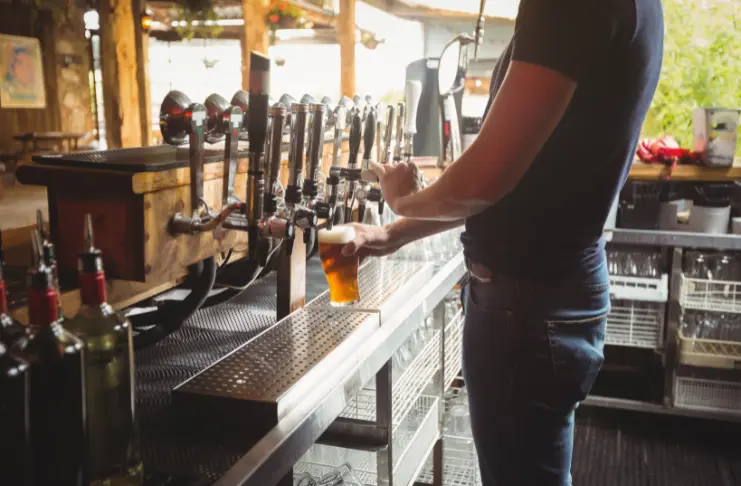
An efficient taproom setup includes a draft beer system (with glycol chillers and tap towers), glassware, and a POS solution for smooth transactions. This typically costs $10,000-$25,000, depending on the number of taps and the service tech.
4.3 Kitchen Setup
If you plan to serve food, the scope of your kitchen, ranging from light snacks to full meals, affects costs dramatically. A basic prep space might cost $20,000-$40,000, while a full-service kitchen with commercial equipment can exceed $100,000.

5. Staffing and Operational Costs
A small microbrewery would need to hire a head brewer, assistant brewers, plus taproom staff, and possibly a manager. While the initial salaries vary by region, it is a good idea to keep a conservative reserve for the first three months of payroll, ranging between $50,000 and $150,000.
In addition, labor costs also include insurance to cover worker injuries, general liability, and alcohol-related risks. Breweries can expect to pay between $1,000 and $5,000 per month for insurance policies.
6. Marketing
6.1 Branding and Design
A strong brand includes your logo, website, menus, and building signage. Professional design agencies typically charge between $2,000 and $10,000 to establish or refresh a brand identity. Clear, consistent visuals across digital and physical touchpoints are important to create a recognizable presence and support higher perceived value.
6.2 Social Media and Ongoing Marketing
To maintain visibility and support brewery launch and growth, allocate monthly budgets for social platforms, content creation, photo/video production, and scheduling tools. A typical spend here is $400 to $2,500 per month, which aligns with microbrewery marketing practices.
This investment supports regular posting, event promotion, and community engagement to build a loyal customer base from day one.
7. Ongoing Operating Expenses
7.1 Raw Material
Grains, hops, yeast, adjuncts, and water treatment supplies are the lifeblood of your brewing process. For a microbrewery producing several batches per week, inventory can cost between $3,000 and $20,000 per month, depending on batch size, recipe complexity, and sourcing commitments. This includes variable grain and hop prices as well as yeast and quality control expenses.
7.2 Packaging and Distribution
If you’re selling beer in cans or bottles, ongoing costs include packaging materials, labels, and logistics, whether you self-distribute or use a contractor. Expect these expenses to range from $3,000 to $8,000 per month, depending on volume, route density, and packaging complexity.
7.3 Maintenance and Cleaning
Regular equipment maintenance and sanitation are essential for maintaining consistent beer quality and ensuring safety compliance. Maintenance contracts, spare parts, and sanitation chemicals can cost $1,000 to $3,000 per month, depending on downtime risk and equipment.