
Statistics of Consumers’ Restaurant Habits: Where Are They Dining Today?
When consumers choose a meal, they’re deciding how they want to dine, whether at a table, a counter, or on the couch. That decision influences everything: service design, kitchen workflow, menu layout, and even real estate.
Channel-wise Breakdown
In 2025, U.S. consumers are dining from restaurants across multiple formats, often within the same week. While dine-in remains a preferred format for planned meals, especially for socializing, the biggest behavioral shift lies in the growing dependence on off-premise channels.
According to recent statistics, 75% of restaurant traffic in the U.S. comes from off‑premise channels, including takeout, delivery, and drive‑thru. Even more telling, 47% of adults say they order takeout weekly, and 70% of U.S. diners report ordering delivery in the past month.
With these changes, hybrid models have become the norm. As per the National Restaurant Association, 30% of full-service and 40% of limited-service restaurant owners have reconfigured spaces (interiors or parking) to accommodate off-premise business better.
A. Dine in
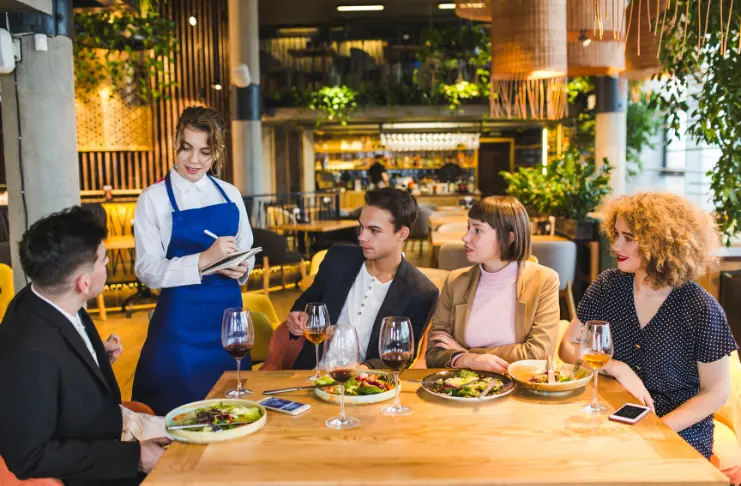
Nearly 90% of adults say they enjoy going to restaurants, and 66% feel comfortable dining at sit-down establishments. These visits typically align with social occasions, weekend plans, or when guests prioritize atmosphere and service. At the same time, 64% of full-service customers say experience matters more than price, reinforcing that when people choose to dine in, quality must justify the premium.
B. Takeout
Takeout has become the go-to option for those seeking fresh food with minimal friction. A clear majority, around 75% of consumers, highlight convenience as a driver, and 57% explicitly say they prefer takeout over dining out.
C. Delivery
Food delivery is something that started as a convenience for most consumers during COVID but has now become embedded in consumers’ lives. On average, Americans order delivery 4.5 times per month, slightly more often than dine in at 3 times per month.
Why? The primary motivations behind online ordering and delivery include-
- Ease of use (49%)
- Convenience (42%)
- Familiarity (22%)

Preferences by Generation, Income & Location
Younger consumers—Gen Z and Millennials—are the main drivers behind the rising preference for delivery and takeout, with 60% increasing their takeout activity year-over-year. In contrast, Gen X spends more per year on dining out, around $3,872, than Millennials ($3,455) and Gen Z ($2,483), per BLS-based data. Even if dining out frequency is lower, the higher overall spending is high.
Similarly, urban customers, especially in higher‑density environments, have greater access to delivery options and virtual brands.
Lastly, income also plays a key role in shaping consumer behavior and preferences. For instance, 42% of households earning under $50K dine out weekly, compared to 64% of those earning over $200K, indicating cost sensitivity also impacts the frequency of dining habits.
Where Are Consumers Spending Their Restaurant Dollars?
The U.S. restaurant and food service industry is projected to hit approximately $1.5 trillion in sales in 2025, rising about 4% over 2024. As the average cost of dining out increases, consumers remain committed to restaurant meals, but how they spend varies widely.
According to the Bureau of Labor Statistics, spending on food away from home rose 8.1% in 2023, even amid inflation-driven pressure on household budgets.
Spending by Segment
A. Quick‑Service Restaurants (QSR)
- QSRs accounted for over 80% of consumer transaction volume in restaurant spending during 2024, highlighting how much consumers rely on them for convenience and affordability.
- A survey found that 60% of Americans order takeout from fast food restaurants, the highest among restaurant types, while only 2% order from fine dining when choosing takeout.
- Despite inflation, QSR inflation was lower (3.6%) than full‑service restaurants (4.3%), helping maintain consumer spending within this segment.
B. Fast Casual
- Fast-casual foot traffic outperformed QSR in H1 2024 with 3.2% vs. 0.4% year-over-year growth.
- Consumer spending on fast-casual dining is projected at $81.5 billion in 2025, signaling robust demand for higher-quality, still-convenient options.
- Fast casual is a preferred dining option for many consumers on weekdays, with foot traffic growing by 2.8% vs 0.2% for QSRs.
C. Full-Service Restaurants
- Full-service restaurants represented just under 20% of consumer spending transactions in 2024, compared to the dominant share of limited-service.
- Over one-third of full-service diners prioritize experience and service over price, reflecting a willingness to pay more when perceived value aligns.
- In December 2024, consumer receipts fell even as transaction counts rose. Full-service restaurant average ticket size declined by 7.4% year-over-year, suggesting that while more people may be dining out or visiting, they’re often trading down to affordable items or skipping extras.
Interestingly, Technomic data reveals that 56% of diners choose restaurants based on lower price points, the highest on record. However, what “value” means for the customer has changed. It is now a combination of quality, convenience, and experience rather than just price.
EXPERT OPINION
Dining Preferences: What Consumers Want From Restaurants
1. Personalization
Today, consumers expect meals that reflect their tastes, preferences, and history. According to recent survey data, 57% of diners prefer personalized offers based on their order history, while only 34% opt for generic discounts, underscoring the demand for relevance over volume.
This indicates diners expect restaurants to remember their preferences, which not only encourages repeat visits but also makes them feel recognized.
2. Focus on Sustainability
According to a PwC consumer survey, many consumers are willing to pay 9.7% more for sustainably produced products despite cost pressures. This is a signal that sustainability remains a priority even amid price sensitivity. Meanwhile, 68% of consumers report making more sustainable choices in the last year, including shifts toward local, less processed, and climate-friendly foods.
3. Speed and Convenience
For many diners today, time is the true currency. With increasingly busy lifestyles and growing reliance on on-demand services, consumers expect meals that match the pace of their day.
To meet this, restaurants are responding with automation and digital ordering. Restaurants implementing automation, such as a kitchen display system, see kitchen errors reduced by 30% and total order prep time drop by 21%.
And it’s not just chains. 85% of restaurants report they plan to invest in automation, recognizing its role in meeting consumer expectations and reducing human error.

4. Global Flavors and Innovation
For younger consumers, in particular, dining is as much about exploration as quality and taste. The rising popularity of global flavors—Asian, Indian, Middle Eastern, and more—reflects an openness to novelty, cultural curiosity, and even social sharing.
In a survey, 34% of Gen Z say they order innovative and trendy items, compared to 15% of Baby Boomers, highlighting a marked generational gap in flavor curiosity.
5. Experiential Dining
In an age of screen fatigue and hybrid work, eating out is becoming less about convenience and more about socializing. Whether it’s a cozy ambiance, live music, or Instagram-worthy plating, diners increasingly seek an experience.
According to American Express MarketBriefing, 62% of diners would pay more for better ambiance at dinner, with similarly strong figures at lunch (59%) and even breakfast (54%).
The Rise of Tech-Driven Dining Experiences
- 60% of diners prefer ordering via mobile apps over traditional methods, reflecting the primacy of mobile-first ordering.
- 55% of restaurant customers are willing to pay more for a seamless digital ordering experience, signaling premium value attached to frictionless tech.
- Restaurants without self-service tools are losing ground. 61% of U.S. consumers actively want more kiosks at ordering points, especially in QSRs and fast casual. This is up from 36% just two years ago.
- Among restaurant consumers, 55% say they’ll spend more for a smooth digital ordering experience, showing that seamless UX directly drives revenue.
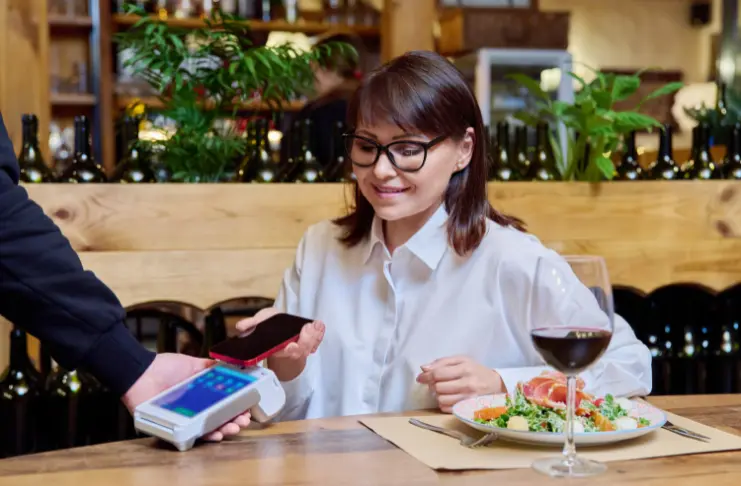
- A significant 68% of millennials prefer paying via contactless or mobile, reshaping POS set-ups for restaurants.
- According to recent data, 40% of diners order more frequently from restaurants that offer personalized loyalty programs online or via the app.
- One in two restaurant operators now plan to integrate AI-powered recommendation engines to make dining more personalized for the customers.
Conclusion
Today’s diners are making their dining decisions based on timing, mood, budget, and expectations across multiple restaurant formats. For restaurants, understanding the restaurant industry statistics is crucial, as they are constantly evolving.
Success now lies in adapting in real-time to customer preferences, whether it’s combining dine-in and off-premise models, refining pricing to match spend signals, or introducing tech based on who your diners are and what stage of the journey they’re in.