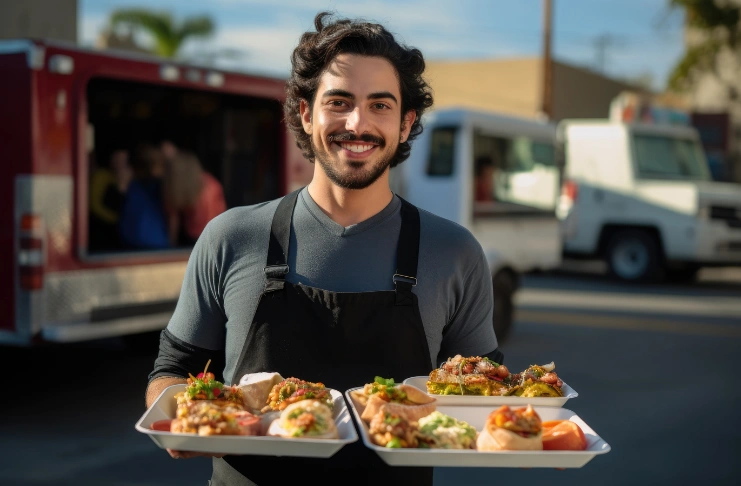

Accounting for 80% of the total consumer spending in the U.S., limited-service restaurants have become the operational backbone of the U.S. food service sector. Defined by speed, streamlined service, and increasingly digital-first customer journeys, this segment includes both quick-service and fast-casual formats—models that are built for scale, consistency, and efficiency.
While full-service restaurants continue to rebound post-pandemic, the limited service space is setting the pace for growth and innovation. From automated kitchens and loyalty-driven mobile apps to evolving off-premise strategies, operators are redefining what “fast” really means in a market shaped by shifting preferences and rising expectations.
This blog will unpack the major limited service restaurant statistics, including market performance, consumer shifts, and the factors defining the future of limited-service dining in the U.S.
Market Overview of Limited Service Restaurants Statistics
Global and U.S. Market Size
- Global Market: The global limited-service restaurant market was estimated at $871.02 billion in 2025 and is expected to grow at a rate of 5.7% to reach about $1436 billion by 2034.
- U.S. Market: The U.S. market for limited-service restaurants is estimated at $97.85 billion in 2025 and projected to grow at a CAGR of 6.45% to reach $133.71 billion by 2030.
Nationwide Presence
As of 2025, the U.S. has over 159,000 limited-service restaurant (LSR) locations, including quick-service restaurants, fast-casual brands, and hybrid delivery-first formats. Chains like Subway (20,000+ outlets), Starbucks (17,000+), and McDonald’s (13,600+) dominate the market with high unit counts.
These outlets make up a major share of the country’s dining infrastructure, offering counter service and optimized kitchen models that prioritize speed and consistency.

Sales Contribution
According to the National Restaurant Association, the U.S. restaurant industry is projected to cross $1.5 trillion in annual sales by the end of 2025. Limited service formats account for a large and growing portion of that total, with sales of $548.9 billion in 2024.
In fact, on the Technomic 2024 Top 500 report, limited‑service chain sales outpaced full‑service counterparts, growing 8.5% vs. 5.0%, while fast‑casual establishments saw a robust 11.2% increase. This momentum reflects how consumers are favoring higher-quality food with fast-food convenience.
Further, LSRs now slightly edge out full-service restaurants in terms of off-premise dining spend, capturing 35.7% of total consumer foodservice spend, compared to 35.5% for full-service formats. This is a clear sign of consumer preference shifting toward convenience and speed.
Fast-Casual and QSR Growth
The QSR market is projected to reach $330.56 billion in 2025, up from $311.54 billion the previous year. By 2029, it is further expected to grow at a CAGR of 7.2% to reach $436.07 billion.
Similarly, the fast-casual restaurant segment is expected to grow consistently, generating $84.5 billion in revenue between 2025 and 2029 with a CAGR of 13.7%.
This growth is fueled mainly by increased consumer demand for convenience, the rise of digital ordering, and the preference for accessible and affordable dining options.
EXPERT OPINION
Leading Players in the U.S. Limited Service Restaurant Market
The U.S. limited-service and quick-service restaurant space is heavily consolidated, with a few dominant chains capturing a significant share of the market. McDonald’s leads with 13,500+ locations, while Starbucks follows with over 16,000 outlets. Chick-fil-A, despite a smaller footprint, ranks third by revenue and has over 3000+ outlets across the U.S.
The top U.S. QSR chains by sales in 2024 are-
- McDonald’s- $53.5 billion
- Starbucks- $31.5 billion
- Chick-fil-A- $22.7 billion
- Taco Bell- $16.2 billion
- Wendy’s- $12.6 Billion
Limited Service Restaurants: Key Consumer Preferences and Trends
As limited-service restaurants scale, consumer expectations are evolving just as fast. Today’s diners prioritize speed, consistency, digital convenience, and price transparency.
They control when and how they interact with a restaurant, and behavior is shifting toward seamless, tech-enabled experiences that maximize value. Here are key limited service restaurant statistics highlighting the current consumer trends-
- 65% of quick-service restaurant visitors report using mobile order-ahead apps, with nearly 90% of 18-24-year-olds doing so.
- 95% of consumers rate speed as “critical” to their takeout experience.
- 63% of QSR customers now favor mobile ordering, while 78% of brands reported year-over-year increases in digital orders during 2022.
- 44% of LSRs planned to install self-service kiosks in 2024, while 50% of QSRs saw 11-25% of sales and 50% of fast casuals saw 26-50% of sales come through digital. This signals a shift towards digital-first journeys and consumer preference for convenience.
- When choosing a limited-service restaurant, 57% of consumers prioritize proximity to home or work, while 59% cite great taste as a top motivator.
- Limited-service restaurants (QSRs + fast-casual chains) using kiosks and apps see 8-15% higher checks compared to counter-ordering.
- McDonald’s loyalty program now supports ~150 million users, who spend nearly twice as much as non-loyalty customers. This highlights how crucial loyalty programs and rewards have become in boosting LSR revenue.

Major Technological Trends Driving LSR Growth
As competition intensifies and consumer expectations shift, LSR operators implement technology to optimize operations and scale strategically.
1. Digital Ordering
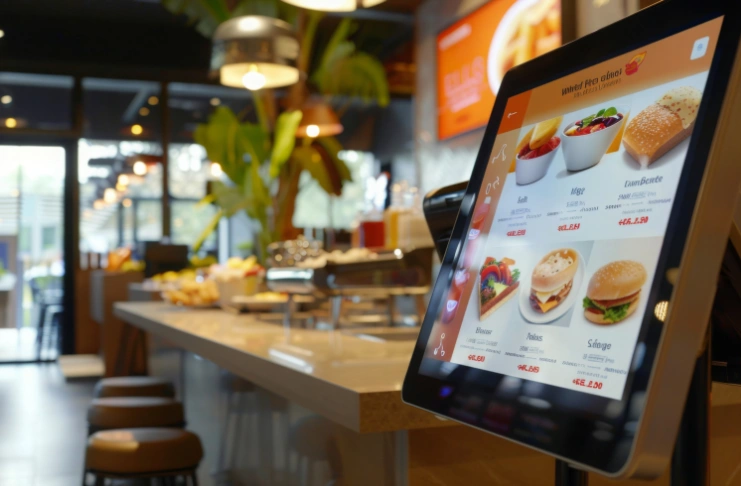
Consumers are actively seeking restaurants that offer the speed and convenience of digital ordering. For limited-service restaurants, technologies like self-service kiosks, mobile apps, or QR code menus reduce the burden on front-of-house staff, increase order accuracy, and boost check sizes.
For instance, fast food chains like Shake Shack have implemented kiosks for in-store orders and, through smart upselling prompts, saw an average ticket size increase by 10%.
2. Operational Automation
Automation is helping limited-service restaurants maintain operational consistency during peak demand. In the front-of-house, technologies like smart POS systems and self-checkout kiosks minimize human error, reduce wait times, and simplify the order process.
On the kitchen side, automated food prep tools and smart cooking equipment, like Miso Robotics’ Flippy Fry Stations, are enhancing throughput by standardizing tasks that are repetitive and labor-intensive. Thus, streamlining workflows and reducing staff dependency in LSRs.
3. Loyalty Programs and Analytics
In limited service formats, mobile app-enabled loyalty programs help turn casual diners into repeat guests through rewards and discount incentives.
Plus, they capture detailed customer data such as purchase frequency, order value, location, and time of visit. This data delivers actionable insights, allowing operators to segment audiences, identify high-value customers, and predict churn.
In fact, around 37% of operators are already using AI to power loyalty programs, including segmentation, churn prediction, and personalized offers. Loyalty programs give LSRs a scalable, low-cost way to build retention and grow lifetime customer value.
Conclusion
As the data shows, LSRs are leading the foodservice market in the U.S. through consistent revenue performance, consumer loyalty, and digital maturity. With evolving formats and expanding market share, this segment is setting the benchmark for agility in a changing industry.
Whether it’s through digital ordering, loyalty programs, or operational automation, LSR establishments in the U.S. are finding new ways to grow efficiently while meeting rising customer expectations.