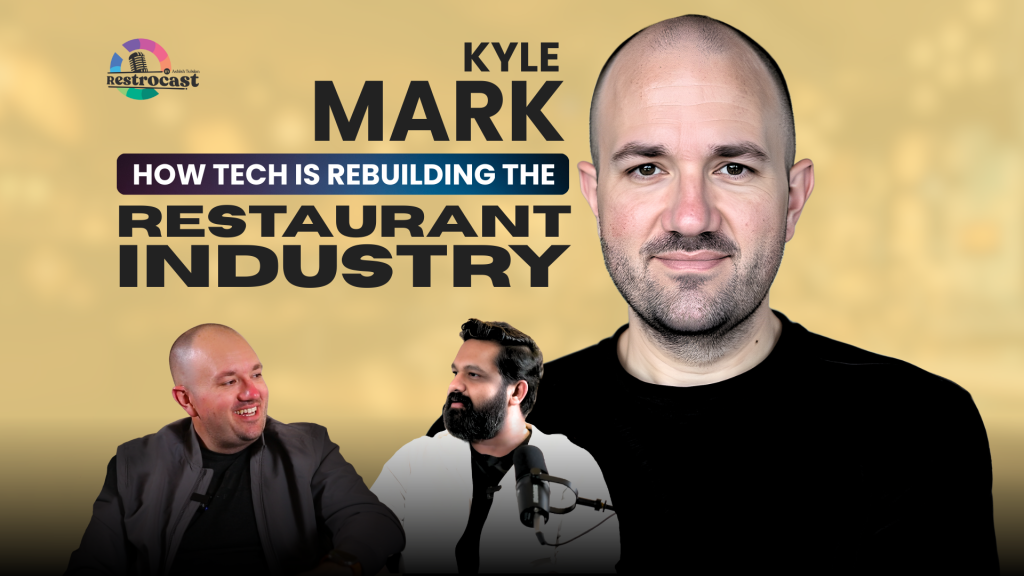

In this episode of Restrocast, Restroworks CEO Ashish Tulsian sits down with Kyle Mark, a seasoned technology leader who’s charted an impressive course from Apple’s Genius Bar to leading tech strategy at WOWorks, a growing restaurant group with 100+ locations. Their conversation covers Kyle’s unique career journey, hard-won insights on restaurant tech implementation, and what it takes to align systems, strategy, and teams across a multi-brand operation.
Kyle, welcome to Restrocast! Where did you grow up? How did Apple happen? And what was the journey to becoming an Apple Genius?
Kyle Mark: Thanks, Ashish. I grew up in Glen Ellyn, Illinois, and studied computer systems at Western Illinois University. While working at my campus bookstore’s computer section, I got connected, through both my boss and my dad, to a manager at Apple’s Chicago store. That led to an interview and a job offer. I started on the sales floor, selling iPods and Macs, but my tech background helped me naturally move toward troubleshooting. After moving to Memphis, I was selected for the “Genius” role, and Apple flew me out to Cupertino for an intense three-week program —10 hours a day, full immersion in Apple tech.. It was a great experience that laid the foundation for everything that came after.
You spent five years at Apple—what made you shift to the restaurant and retail world, and what was your first impression?
Kyle Mark: I wanted a new challenge. At Apple, I was mentoring tech teams and opening new stores, but growth beyond retail was tough. I decided to explore new opportunities and got an offer from Standard Market, a grocery and restaurant group, as a store and restaurant systems analyst. It was a big change—managing PCs, Microsoft Dynamics, and backend tools I’d never used. But that’s what drew me in—the chance to learn something completely new.
What took you from Standard Market to Florida, and how did your journey with Datum Technologies begin?
Kyle Mark: After moving back to Chicago, the harsh winter pushed us to consider a change. We bought a Jimmy John’s franchise license in Naples, Florida, but real estate challenges made it tough, so we sold it and stayed in Sarasota. There, I connected with a family friend who ran Datum Technologies, an outsourced IT firm for restaurants. I joined in 2015 as a consultant, helping brands without internal tech teams with POS decisions and bridging gaps between operations, marketing, and technology. I stayed there for about three and a half years and more, and led technology there until 2019.
Kyle, you’ve worked across quick service, table service, and hybrid models. What did that spectrum teach you, and what stood out most from your time at Datum?
Kyle Mark: It gave me a deep understanding of how different service models demand different tech solutions. At Datum, I worked with a wide range of clients—from First Watch to Earl Enterprises—and saw how varied those needs could be. The tech needs of a franchisee can differ drastically from those of a company-owned store. One highlight was taking over an entire client’s tech team as part of our engagement, which was a unique and eye-opening experience.
Then came your role at Fresh Kitchen—what was that like, and how did the team handle the sudden shift during the pandemic?
Kyle Mark: I joined Fresh Kitchen, a Florida-based fast-casual bowl concept in November 2019, just before COVID hit. They had 11 locations across Florida and no online ordering in place. My first priority was launching online ordering and prepping for third-party delivery partnerships. Luckily, we had an online setup running by January 2020, just in time. We began discussions with Uber Eats and DoorDash just before lockdowns started. When the pandemic hit, delivery jumped from 0% to 100% within eight weeks. It was a complete shift. Teams were adapting to new tech in real time, and everything had to scale fast.
Would you say COVID was the turning point for restaurant tech, and when did you personally start seeing it as a strategic growth lever?
Kyle Mark: Before COVID, restaurant tech teams often reported to the CFO—it was seen as a cost center. But the pandemic made it the only revenue channel, cementing its strategic value. I’ve always believed in tech’s impact—even at Gecko’s, bringing me in from outsourced IT showed they did too. COVID just forced everyone else to see it. It forced executive teams to listen to tech and invest in it. I had to learn how to make a business case, use data to justify upgrades, and sell internally, which has helped me immensely since.
And this brought you to your current role at WOWorks?
Kyle Mark: Yes, in 2021, I joined FTR Hospitality, which managed accounting and IT for Saladworks, which is now WOWorks. This 100+ unit brand is preparing to acquire new concepts like Frutta Bowls and Garbanzo. They needed help rebuilding their tech foundation, and I led that effort. Within months, we built a 10-person IT team.
You had to consolidate tech across brands—was the problem with the tools themselves or how they were implemented? And do you often see tech decisions being driven by the wrong teams?
Kyle Mark: It wasn’t the tools—it was poor implementation. We had five POS systems across three brands, and franchisees were unhappy. The database was messy, modifiers were confusing, and reporting was broken. Even simple tasks like 86ing an item were painful. Once we rebuilt the backend and streamlined workflows, everything improved fast. But yes, I see this often—sometimes marketing drives POS builds, trying to recreate legacy systems and force workflows that don’t fit modern tech. That kind of misalignment can ruin even the best platforms.
What’s your take on the “best-in-class” approach, especially when restaurant brands end up using multiple tools that don’t integrate well—even when they come from the same company?
Kyle Mark: Best-in-class doesn’t mean picking the most hyped tool in a category—it’s about choosing what truly fits your brand, with solid support and a clear roadmap. My job is to ensure those tools work together, not just technically, but operationally. Integration isn’t just syncing data—it’s aligning workflows. And even when vendors own multiple products, if their teams don’t collaborate, it all falls apart.
Shifting to the strategic side, what’s changed for you as a tech leader in the last four years?
Kyle Mark: Everything. Tech now has a real seat at the table. Every initiative—whether it’s driving average order value with kiosks or improving margins through back-office systems—requires technology. What’s shifted for me is that I no longer just think like a tech lead. I need to understand operations, marketing, finance—so I can present proactive solutions, not just react to tickets. If marketing is trying to acquire more users or operations wants efficiency, I need to speak their language and bring answers before they ask.
What do you do to keep yourself sharp and continuously learning?
Kyle Mark: Last year, I set a personal goal to read more—especially professional development and self-help books. The one that impacted me the most was “The 5AM Club.” I used to be a hardcore night owl, working late into the night. But that book shifted something in me. I started waking up before 5 a.m., almost daily. It completely changed my energy and focus. It’s not just about waking early—it’s about how you spend those early hours. I’m more productive, more mindful, and more intentional with my time now.
Conclusion
Kyle Mark’s journey from Apple Genius to leading restaurant tech at WOWorks shows how valuable the right mix of technology, strategy, and hands-on experience can be. His story is a great example of how tech, when aligned with operations and business goals, can transform how restaurants run and grow. Today, restaurant tech is no longer behind the scenes—it’s driving the future of the industry.