
In today’s visually driven world, we don’t just eat with our mouths—we eat with our eyes first, highlighting the importance of plating and presentation. Scroll through Instagram or TikTok, and you’ll find beautifully plated dishes going viral, not just for their taste but for their presentation. Whether you’re a professional chef, a restaurant owner, or a passionate home cook, mastering the art of food plating is essential to stand out in a crowded digital dining scene.
Food presentation plays an important role in how guests perceive flavor, quality, and even value. Studies have shown that customers are more likely to enjoy and pay more for a visually appealing dish created using effective presentation techniques. The right plating technique can elevate even the simplest ingredients, turning a meal into a memorable experience—and a share-worthy moment.
For restaurants where social media trends increasingly influence dining, aesthetics matter just as much as taste. Diners want food that delights them on the plate and on their feed, making modern food plating techniques not just a creative skill but a powerful marketing tool.
In this blog, we’ll explore some of the most effective and visually impactful ways to plate food in 2025. From the rule of thirds to sauce artistry and vertical stacking, these creative food plating ideas will help you enhance presentation, boost customer engagement, and bring your culinary brand to life—one beautifully styled plate at a time.
Importance Of Plating Food

Plating isn’t just about making food look pretty—it’s a crucial element of the dining experience that influences how guests perceive taste, quality, and effort. Thoughtful presentation reflects the chef’s attention to detail and passion for their craft, turning a simple meal into a memorable experience. Whether it’s a fine-dining setting or a casual restaurant, plate using effective food arrangement techniques plays a vital role in storytelling, brand image, and customer satisfaction.
Industry Insight
Top Plating Techniques To Make Your Dishes Stand Out
1. The Rule Of Thirds
Inspired by photography and visual design, the Rule of Thirds is a compositional guideline that divides the plate into a grid of nine equal parts using two horizontal and two vertical lines. Rather than centering the food, chefs place the main components along these lines or at their intersections to create visual balance and tension.
This technique draws the eye across the plate and allows you to emphasize your star ingredient while showcasing sides or garnishes.
1.1 Pro Tips:
Avoid overfilling the center of the plate: When food is concentrated in the middle, the plate can look cramped and uninspired. Positioning elements off-center adds visual interest and mimics natural focal points used in photography.
Place your protein or main element off-center: Placing the star of the dish slightly off-center draws attention while giving room to arrange supporting elements around it. It feels intentional and balanced.
Use sauces or garnishes to guide the eye subtly: A well-placed swoosh of sauce or sprinkle of herbs can act as a visual guide, directing attention toward the key components on the plate.
2. Negative Space Plating
Negative space plating is all about minimalism. Instead of filling every inch of the plate, you intentionally leave areas blank to highlight the food’s texture, shape, and color. This technique is especially popular in upscale and modern American restaurants where less is more.
Leaving space between elements helps create a feeling of elegance and refinement while allowing each component to breathe visually.
2.1 Benefits Of Negative Space Plating:
Highlights the artistry of individual ingredients: Negative space plating allows each ingredient to stand out visually, drawing attention to its shape, color, and texture.
Creates a clean, modern aesthetic: This style aligns perfectly with current modern food plating trends by embracing simplicity and elegance.
Encourages portion control without compromising perceived value: By arranging food with ample negative space, you can serve smaller portions that still feel premium and satisfying.
2.2 Pro Tips:
Use white or matte plates to emphasize contrast: Neutral-toned plates help your food stand out and allow bold colors to shine without visual distraction. Matte finishes also reduce glare in photography.
Place the hero item toward one side of the plate: Leaving blank space on the opposite side creates a modern, minimalist aesthetic. It also helps highlight the main component as the focal point.
Let sauces act as visual connectors across empty space: Sauces or purees can connect different elements of the dish without cluttering the plate. They maintain harmony while enhancing presentation.
3. Vertical Stacking And Height
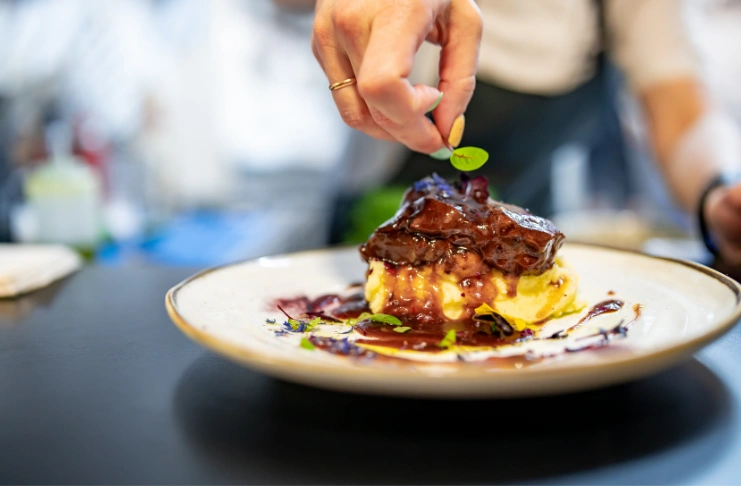
Adding height to your plate instantly adds drama. Stacking ingredients creates visual interest and depth that draws the eye upward. It can turn an otherwise flat dish into a multi-dimensional showpiece.
This technique works particularly well with proteins, starches, and greens layered thoughtfully. But remember: it should always enhance the eating experience—not make it difficult to eat.
3.1 Why Chefs Love It:
Adds dimension and elegance: Vertical stacking introduces height to the plate, instantly adding dimension and visual appeal. This technique transforms flat presentations into eye-catching creations, aligning with the trend of elevated food plating styles seen in upscale restaurants.
Helps control plating space and composition: By stacking elements, chefs can use limited plate space more efficiently while maintaining a well-balanced layout. It allows for a cleaner, more structured food presentation that guides the diner’s eye naturally.
Elevates simple dishes to fine dining standards: Even basic ingredients like mashed potatoes or sautéed vegetables can look luxurious when plated with height.
3.2 Pro Tips:
Use ring molds for structure: Ring molds help stack ingredients neatly, especially for layered dishes like tartares or composed salads. They provide shape and height with clean edges.
Stack soft and firm textures together for stability: Pairing soft bases (like mash or polenta) with firmer proteins creates a stable, attractive stack. This prevents the tower from collapsing during service.
Place the most colorful or texturally interesting element on top: The top layer draws the most attention, so make it count. Crispy garnishes, vibrant herbs, or a pop of color can crown the dish beautifully.
4. Natural And Organic Arrangement
Gone are the days of stiff, symmetrical plating. Today’s diners crave a more natural, free-flowing aesthetic that mimics organic forms—like scattered herbs, rustic plating, and nature-inspired layouts.
This style feels authentic and relaxed, perfect for farm-to-table restaurants or venues focused on fresh, seasonal ingredients.
4.1 Why It’s Trending:
Feels fresh, local, and sustainable: Today’s diners are increasingly drawn to restaurants that prioritize sustainability and seasonal sourcing. This approach aligns perfectly with the farm-to-table dining trend and appeals to environmentally conscious guests.
Connects visually with natural ingredients: Natural and organic plating mirrors the raw beauty of ingredients, allowing their unique textures and colors to shine.
Photographs beautifully for social media: With its mix of textures, vibrant garnishes, and organic flow, this style creates visually engaging dishes that stand out in social feeds.
4.2 Pro Tips:
Smears of beet puree or herb yogurt under roasted vegetables: These earthy, colorful smears add depth and visual grounding to naturally plated vegetables. They create a painterly base without overpowering the dish.
Scattered microgreens, toasted seeds, or edible flowers: This style mimics elements found in nature—wild, varied, and imperfect. It enhances freshness and aligns well with farm-to-table or seasonal menus.
Imperfect lines and irregular shapes that add charm: Organic arrangements feel more authentic than rigid symmetry. They reflect the ingredients’ origins and showcase your creativity as a chef.
5. Sauce Art And Brush Strokes

Sauce plating has become an art form in itself. Whether it’s a silky reduction, colorful coulis, or a bold aioli, the way you apply sauces can dramatically transform your dish’s visual appeal.
Modern plating often includes paintbrush techniques, sauce dots, drizzles, or swooshes that bring movement and vibrancy to the plate. Color theory is both a science and an art that explains how colors interact and influence our perception. While it may seem complex, applying it to food plating is quite straightforward. In plating, color theory simply helps you choose and combine colors to make dishes visually appealing and appetizing.
5.1 Why It Works:
Adds color and contrast: Sauces are an excellent way to introduce bold colors that contrast with the base ingredients, making the dish pop visually. This approach is beneficial for creating Instagram-worthy food presentations that stand out.
Create flow and direction on the plate: Sauce strokes or dots can guide the eye across the plate, helping to connect elements and create a visual journey. It’s a key technique in modern restaurant plating that balances form and function.
Highlights complementary flavors in a visually exciting way: Beyond aesthetics, well-placed sauces enhance the flavor experience by pairing harmoniously with specific ingredients. Presenting them artfully makes the dish feel more refined while inviting guests to explore the components interactively.
5.2 Pro Tips:
Use squeeze bottles for control and consistency: Squeeze bottles allow precise application of sauces in dots, lines, or grids. They’re perfect for quick service and consistent plating.
Try brushes or the back of a spoon for elegant swooshes: Using tools like a silicone brush or spoon gives sauces a sweeping, artistic look. It adds a sense of motion and texture to the plate.
Avoid over-saucing—less is more: Too much sauce can overpower the plate and overwhelm the flavors. A minimalist approach lets the ingredients shine and maintains plate balance.
6. Deconstructed Elements
Deconstruction involves separating the components of a dish and presenting them individually rather than fully assembled. This technique tells a story by letting each ingredient speak for itself while still contributing to the whole.
Popular in molecular gastronomy and modern American fine dining, this technique adds theatricality and lets guests experience familiar dishes in a new way.
6.1 What It Communicates:
Culinary confidence and creativity: Deconstructed plating showcases a chef’s skill and creativity by breaking traditional expectations. It’s a bold move that aligns with innovative restaurant plating trends and appeals to diners seeking a more artistic culinary experience.
A deeper look at ingredients and techniques: Separating elements allows guests to appreciate each component’s individual flavors, textures, and preparations. It highlights the craftsmanship behind the dish and gives diners insight into the recipe’s complexity.
An elevated, intellectual dining experience: Deconstructed dishes invite guests to think, taste, and assemble flavors in new ways, turning the meal into an interactive experience. It appeals to adventurous food lovers looking for a thoughtful, multi-sensory journey.
6.2 Pro Tips:
Maintain balance and harmony among flavors: Though plated separately, all elements should still complement each other in flavor and intention. Each bite should still deliver the complete dish.
Make sure each element is instantly recognizable: Clarity is key—diners should understand what each part is and how it contributes to the whole. Use distinct cuts, colors, or textures for clarity.
Use space to separate components clearly: Spacing out ingredients helps avoid visual clutter and invites the diner to explore. It also reinforces the thoughtful structure of a deconstructed dish.
7. Color Contrast And Texture Balance

A dish that pops with color and offers varied texture doesn’t just look appealing—it elevates the dining experience. Color contrast catches the eye, while textural variation keeps the palate engaged.
Today’s plating trends emphasize dishes that are not only visually bold but also satisfying through their multi-sensory composition.
7.1 Why It’s Essential:
Increases visual excitement: A well-balanced contrast of colors instantly makes a dish more eye-catching and vibrant. Using bright elements like herbs, fruits, or sauces against neutral backgrounds creates strong visual interest.
Keeps diners intrigued with every bite: Combining different textures—such as crispy, creamy, crunchy, and smooth—adds depth and complexity to the dining experience. It keeps each bite engaging and helps elevate even simple dishes by offering multi-sensory satisfaction.
Reflects thoughtfulness and creativity: Deliberately balancing color and texture shows attention to detail and artistic intent. It communicates that every element on the plate has a purpose, both visually and flavor-wise.
7.2 Pro Tips:
Pair bright ingredients with neutral tones: Juxtaposing vibrant vegetables or sauces against neutral proteins or grains creates striking visual contrast and makes each element easier to distinguish.
Combine crunchy elements with soft bases: Texture layering is key to a memorable dish. Think crispy shallots over creamy risotto or seeds atop whipped goat cheese.
Use garnishes like microgreens, seeds, or crumbles to add contrast: These small finishing touches introduce new texture and visual variety. They elevate presentation and enhance mouthfeel with minimal effort.
Plating And Technology: The Rise Of Social Media-Ready Dishes
In today’s digital-first dining culture, food presentation doesn’t just impress guests at the table—it has the power to reach thousands online. As a result, chefs and restaurateurs are now designing social media-ready dishes that are not only delicious but visually striking.
Modern restaurant plating techniques are heavily influenced by how dishes look on camera. Bold colors, clean lines, dramatic height, and elegant garnishes help a plate stand out in a crowded feed. Diners are more likely to share a beautifully presented dish, turning your customers into brand advocates and content creators.
To truly maximize visibility, restaurants must also consider lighting and background setup for mobile photography. Creating a “photo-friendly” plating station or tableside moments can boost engagement and encourage content creation.
Conclusion
Thoughtful food plating is more than just an aesthetic choice—it’s a powerful way to elevate your dish, enhance the dining experience, and make a lasting impression. In a world where visual appeal influences everything from customer satisfaction to social media visibility, mastering modern plating techniques is essential for chefs, restaurateurs, and even home cooks.
With a little practice and intention, you can turn every dish you serve into a work of edible art.